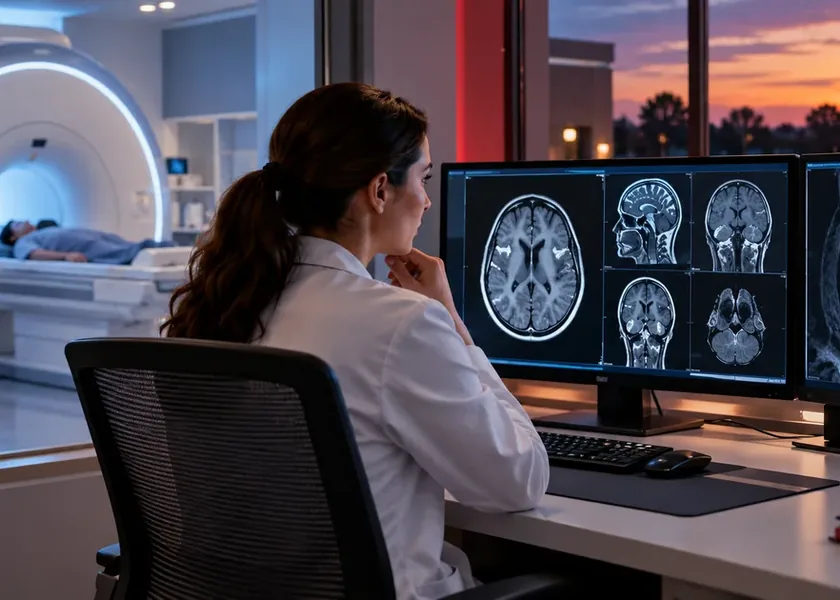
Outpatient imaging centers have become an important part of diagnostic healthcare, providing patients with convenient access to MRI examinations for neurological, musculoskeletal, abdominal, and other medical conditions. As facilities expand appointment availability to accommodate patient demand, radiology reading schedules may need to accommodate a growing number of late-day and weekend studies.
For imaging center administrators, maintaining reliable interpretation services involves coordinating scanner availability, radiologist schedules, reporting expectations, and communication with referring physicians. A facility may have the technical capacity to complete additional examinations, but the reporting workflow also needs sufficient radiologist coverage to support those appointments.
Outpatient MRI interpretation services can help imaging centers manage these scheduling challenges while maintaining access to qualified radiologists and established reporting procedures.
MRI Demand and the Changing Outpatient Imaging Environment
MRI continues to play a significant role in diagnostic imaging because of its ability to provide detailed views of soft tissue, joints, the brain, spine, and internal organs without using ionizing radiation.
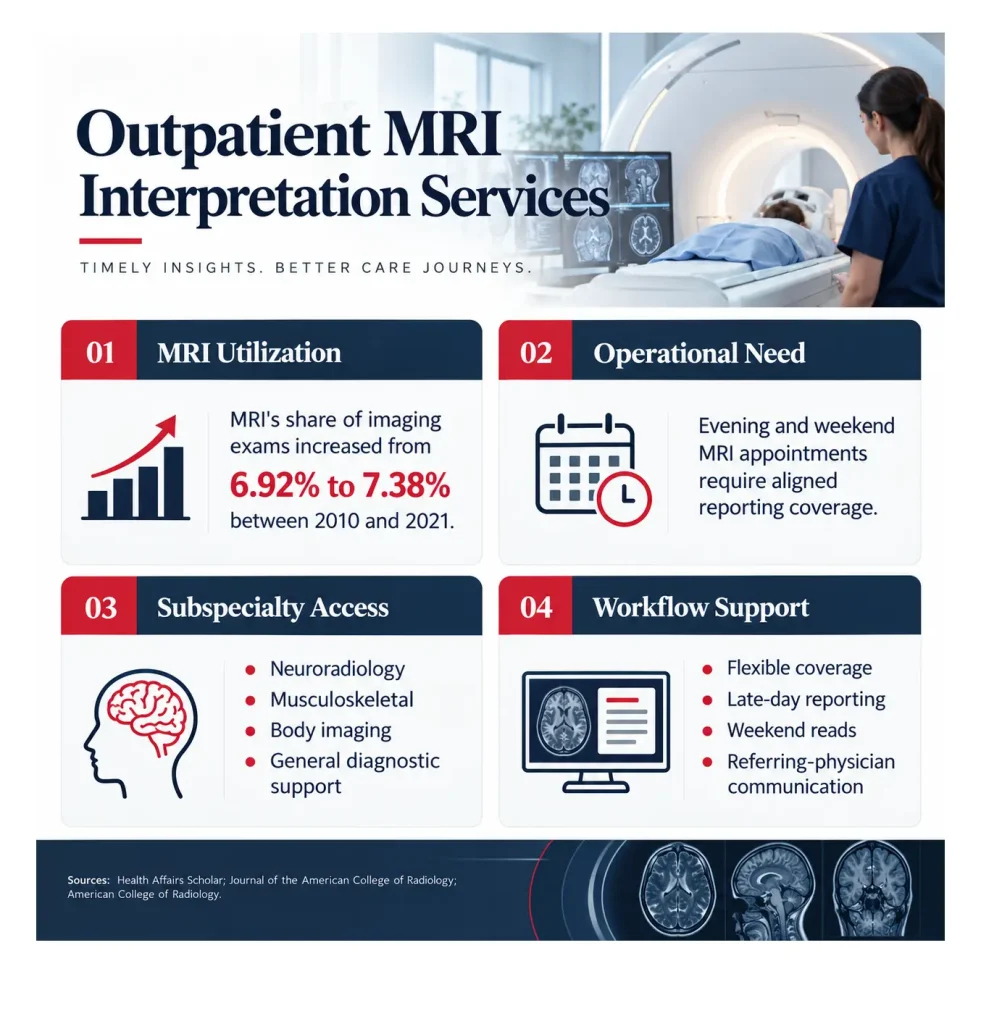
A 2024 analysis published in Health Affairs Scholar examined medical imaging utilization among commercially insured Americans between 2010 and 2021. Researchers found that MRI’s share of imaging examinations increased from 6.92% to 7.38% during that period. CT and ultrasound also accounted for larger shares of imaging utilization.
Although the findings describe historical changes within an employer-insured population rather than current national MRI volumes, they illustrate MRI’s growing proportion of diagnostic imaging services over the study period.
For outpatient centers, changes in demand can influence appointment scheduling, staffing, equipment utilization, and reporting arrangements. Some facilities offer evening or weekend appointments to provide greater flexibility for patients, particularly those balancing work schedules, caregiving responsibilities, or travel requirements.
Extending scanning hours, however, also requires administrators to consider how those studies will be interpreted and when reports will be available to referring providers.
Why Late-Day MRI Reporting Can Become Complicated
MRI examinations are not necessarily completed at the same pace throughout the day. A complex study may require additional sequences, certain patients need more time in the scanner, and unexpected scheduling changes can affect the number of examinations completed before closing.
When the final patients of the day finish their examinations, the interpreting radiologist may already be approaching the end of a scheduled shift. If the imaging center depends on a limited number of radiologists, reporting workloads can carry into the following business day.
Over time, these interruptions may complicate reporting schedules, particularly during vacations, staffing changes, or periods of increased examination volume.
An outpatient MRI interpretation arrangement can provide additional reading capacity during designated hours or when a facility experiences an unexpected increase in studies.
The most appropriate coverage model depends on the center’s examination volume, report delivery requirements, available radiologists, and the types of MRI studies performed.
The Importance of Timely MRI Interpretation
Completing an MRI examination is one stage of the diagnostic process. The interpreting radiologist must review the images, consider relevant clinical information, and prepare a report that can be communicated to the referring provider.
Research has highlighted the importance of timely outpatient MRI access. A 2024 study in the Journal of the American College of Radiology, titled Factors Associated With Timeliness and Equity of Access to Outpatient MRI Examinations, examined factors associated with delays between MRI orders and completed examinations at a large healthcare system.
The researchers specifically evaluated prolonged scheduling intervals, including examinations completed more than 10 days beyond their expected timing criteria.
While that research focused on obtaining examinations rather than reporting turnaround times, it reinforces the importance of evaluating the complete imaging process. Facilities seeking to improve access should consider whether interpretation and reporting capacity can accommodate additional examinations.
For example, an imaging center that expands Saturday appointments may benefit from arranging corresponding weekend reading services rather than allowing the entire reporting workload to accumulate for Monday.
Access to Subspecialty MRI Interpretation
MRI studies cover a wide range of clinical applications, and different examinations may benefit from radiologists with additional expertise in particular areas.
A center performing high volumes of orthopedic examinations may require musculoskeletal radiology support, while facilities providing brain and spine MRI examinations may benefit from access to neuroradiology expertise.
Other centers may need body imaging specialists for abdominal and pelvic examinations or broader general diagnostic interpretation services for a varied patient population.
Teleradiology allows imaging facilities to access a network of U.S. board-certified radiologists without requiring every interpreting physician to be physically present at the center.
This can be particularly useful for smaller facilities that perform several MRI examination types but do not have enough volume in each category to support dedicated onsite subspecialists.
The American College of Radiology maintains practice parameters covering MRI interpretation and specific examinations, including imaging of the brain, spine, abdomen, and musculoskeletal system. These resources provide professional guidance concerning a
ppropriate performance and interpretation practices.
Building a Reporting Workflow Around the Imaging Center
Outpatient MRI interpretation works best when the reading arrangement aligns with the facility’s existing systems and operational requirements.
Before establishing outside reading services, administrators should evaluate how studies will be transmitted, how reports will return to the facility, and what clinical information will be available to interpreting radiologists.
Compatibility with picture archiving and communication systems (PACS), radiology information systems (RIS), and other reporting infrastructure can help avoid unnecessary manual steps.
Facilities should also establish expectations for report turnaround times, coverage schedules, and procedures for communicating findings that require additional attention.
The ACR’s practice parameter for communicating diagnostic imaging findings addresses both routine reporting and situations requiring additional communication. These recommendations are relevant to outpatient providers because certain findings may need prompt attention even when the original examination was scheduled as routine.
A well-planned reporting arrangement should account for the referring physician’s needs while minimizing unnecessary changes to how the imaging center operates.
Flexible Coverage for Changing MRI Volumes
Not every imaging center requires the same level of outside radiology support.
Some facilities need consistent interpretation services throughout the week, while others may require additional reading capacity only during evenings, weekends, or seasonal fluctuations. Centers may also use teleradiology to supplement existing radiologists during vacations or periods of unusually high examination volume.
Vesta Teleradiology provides nationwide radiology services through U.S. board-certified radiologists, including general diagnostic and subspecialty interpretation.
With 24/7 coverage capabilities and flexible service arrangements, Vesta can work with imaging centers to develop interpretation support around their scheduling, modality, and reporting needs.
For outpatient imaging facilities considering expanded appointment hours or additional reading resources, coordinating radiologist availability with scanner schedules can help create a more manageable and consistent reporting workflow.
Explore Vesta Teleradiology’s outpatient imaging services to discuss MRI interpretation, subspecialty support, and flexible radiology coverage for your facility.
References
- Decomposition of Medical Imaging Spending Growth Between 2010 and 2021 in the US Employer-Insured Population. Health Affairs Scholar, 2024. https://academic.oup.com/healthaffairsscholar/article/2/3/qxae030/7636360
- Factors Associated With Timeliness and Equity of Access to Outpatient MRI Examinations. Journal of the American College of Radiology, 2024. https://doi.org/10.1016/j.jacr.2023.12.028
- American College of Radiology. Practice Parameters and Technical Standards. https://gravitas.acr.org/ppts
- American College of Radiology. Practice Parameter for Communication of Diagnostic Imaging Findings. https://gravitas.acr.org/PPTS/GetDocumentView?docId=74