Outpatient MRI Interpretation Services: Managing Late-Day and Weekend Reporting


Outpatient imaging centers have become an important part of diagnostic healthcare, providing patients with convenient access to MRI examinations for neurological, musculoskeletal, abdominal, and other medical conditions. As facilities expand appointment availability to accommodate patient demand, radiology reading schedules may need to accommodate a growing number of late-day and weekend studies.

For imaging center administrators, maintaining reliable interpretation services involves coordinating scanner availability, radiologist schedules, reporting expectations, and communication with referring physicians. A facility may have the technical capacity to complete additional examinations, but the reporting workflow also needs sufficient radiologist coverage to support those appointments.

Outpatient MRI interpretation services can help imaging centers manage these scheduling challenges while maintaining access to qualified radiologists and established reporting procedures.

MRI Demand and the Changing Outpatient Imaging Environment

MRI continues to play a significant role in diagnostic imaging because of its ability to provide detailed views of soft tissue, joints, the brain, spine, and internal organs without using ionizing radiation.

A 2024 analysis published in Health Affairs Scholar examined medical imaging utilization among commercially insured Americans between 2010 and 2021. Researchers found that MRI’s share of imaging examinations increased from 6.92% to 7.38% during that period. CT and ultrasound also accounted for larger shares of imaging utilization.

Although the findings describe historical changes within an employer-insured population rather than current national MRI volumes, they illustrate MRI’s growing proportion of diagnostic imaging services over the study period.


For outpatient centers, changes in demand can influence appointment scheduling, staffing, equipment utilization, and reporting arrangements. Some facilities offer evening or weekend appointments to provide greater flexibility for patients, particularly those balancing work schedules, caregiving responsibilities, or travel requirements.

Extending scanning hours, however, also requires administrators to consider how those studies will be interpreted and when reports will be available to referring providers.

Why Late-Day MRI Reporting Can Become Complicated

MRI examinations are not necessarily completed at the same pace throughout the day. A complex study may require additional sequences, certain patients need more time in the scanner, and unexpected scheduling changes can affect the number of examinations completed before closing.

When the final patients of the day finish their examinations, the interpreting radiologist may already be approaching the end of a scheduled shift. If the imaging center depends on a limited number of radiologists, reporting workloads can carry into the following business day.

Over time, these interruptions may complicate reporting schedules, particularly during vacations, staffing changes, or periods of increased examination volume.

An outpatient MRI interpretation arrangement can provide additional reading capacity during designated hours or when a facility experiences an unexpected increase in studies.

The most appropriate coverage model depends on the center’s examination volume, report delivery requirements, available radiologists, and the types of MRI studies performed.

The Importance of Timely MRI Interpretation

Completing an MRI examination is one stage of the diagnostic process. The interpreting radiologist must review the images, consider relevant clinical information, and prepare a report that can be communicated to the referring provider.

Research has highlighted the importance of timely outpatient MRI access. A 2024 study in the Journal of the American College of Radiology, titled Factors Associated With Timeliness and Equity of Access to Outpatient MRI Examinations, examined factors associated with delays between MRI orders and completed examinations at a large healthcare system.

The researchers specifically evaluated prolonged scheduling intervals, including examinations completed more than 10 days beyond their expected timing criteria.

While that research focused on obtaining examinations rather than reporting turnaround times, it reinforces the importance of evaluating the complete imaging process. Facilities seeking to improve access should consider whether interpretation and reporting capacity can accommodate additional examinations.

For example, an imaging center that expands Saturday appointments may benefit from arranging corresponding weekend reading services rather than allowing the entire reporting workload to accumulate for Monday.

Access to Subspecialty MRI Interpretation

MRI studies cover a wide range of clinical applications, and different examinations may benefit from radiologists with additional expertise in particular areas.

A center performing high volumes of orthopedic examinations may require musculoskeletal radiology support, while facilities providing brain and spine MRI examinations may benefit from access to neuroradiology expertise.

Other centers may need body imaging specialists for abdominal and pelvic examinations or broader general diagnostic interpretation services for a varied patient population.

Teleradiology allows imaging facilities to access a network of U.S. board-certified radiologists without requiring every interpreting physician to be physically present at the center.

This can be particularly useful for smaller facilities that perform several MRI examination types but do not have enough volume in each category to support dedicated onsite subspecialists.

The American College of Radiology maintains practice parameters covering MRI interpretation and specific examinations, including imaging of the brain, spine, abdomen, and musculoskeletal system. These resources provide professional guidance concerning a

ppropriate performance and interpretation practices.
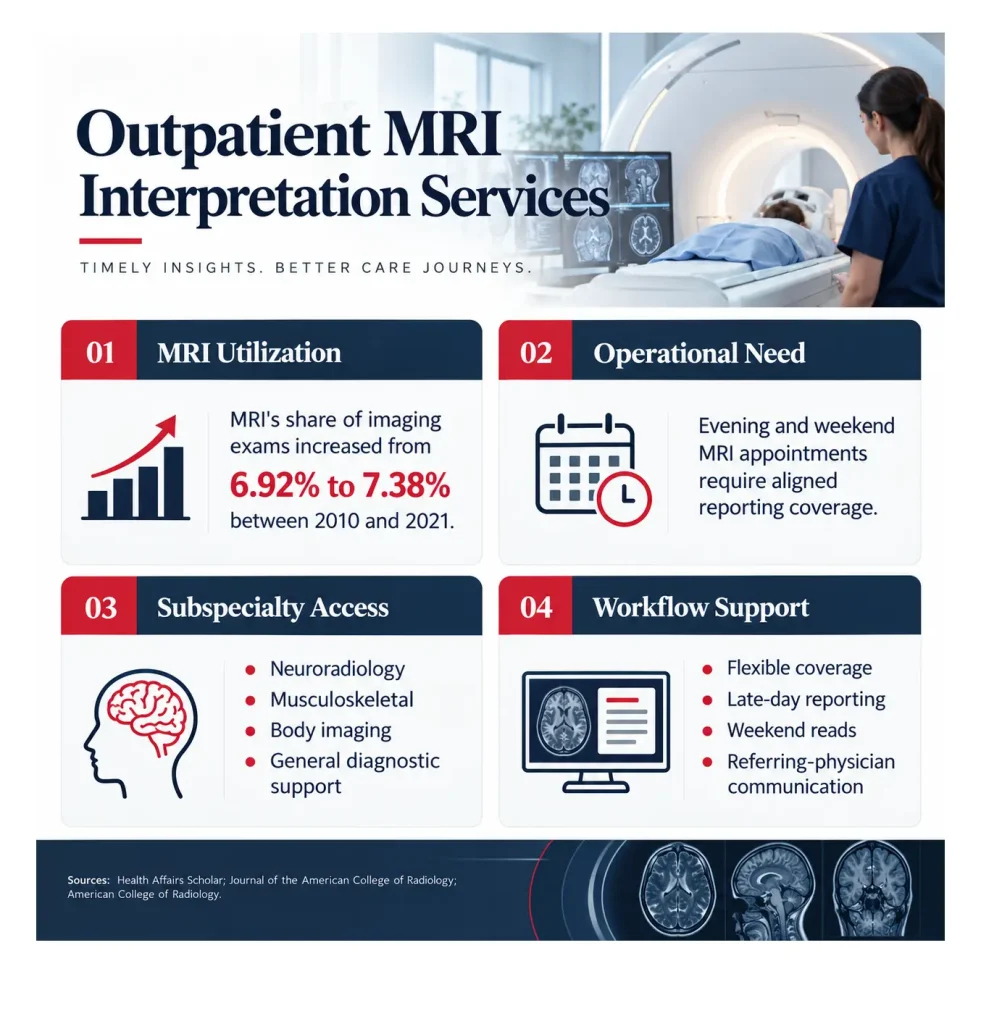
Infographic highlighting MRI utilization trends, evening and weekend interpretation needs, subspecialty radiology access, and flexible outpatient MRI reporting workflows.

Building a Reporting Workflow Around the Imaging Center

Outpatient MRI interpretation works best when the reading arrangement aligns with the facility’s existing systems and operational requirements.

Before establishing outside reading services, administrators should evaluate how studies will be transmitted, how reports will return to the facility, and what clinical information will be available to interpreting radiologists.

Compatibility with picture archiving and communication systems (PACS), radiology information systems (RIS), and other reporting infrastructure can help avoid unnecessary manual steps.

Facilities should also establish expectations for report turnaround times, coverage schedules, and procedures for communicating findings that require additional attention.

The ACR’s practice parameter for communicating diagnostic imaging findings addresses both routine reporting and situations requiring additional communication. These recommendations are relevant to outpatient providers because certain findings may need prompt attention even when the original examination was scheduled as routine.

A well-planned reporting arrangement should account for the referring physician’s needs while minimizing unnecessary changes to how the imaging center operates.

Flexible Coverage for Changing MRI Volumes

Not every imaging center requires the same level of outside radiology support.

Some facilities need consistent interpretation services throughout the week, while others may require additional reading capacity only during evenings, weekends, or seasonal fluctuations. Centers may also use teleradiology to supplement existing radiologists during vacations or periods of unusually high examination volume.

Vesta Teleradiology provides nationwide radiology services through U.S. board-certified radiologists, including general diagnostic and subspecialty interpretation.

With 24/7 coverage capabilities and flexible service arrangements, Vesta can work with imaging centers to develop interpretation support around their scheduling, modality, and reporting needs.

For outpatient imaging facilities considering expanded appointment hours or additional reading resources, coordinating radiologist availability with scanner schedules can help create a more manageable and consistent reporting workflow.

Explore Vesta Teleradiology’s outpatient imaging services to discuss MRI interpretation, subspecialty support, and flexible radiology coverage for your facility.

References

  1. Decomposition of Medical Imaging Spending Growth Between 2010 and 2021 in the US Employer-Insured Population. Health Affairs Scholar, 2024. https://academic.oup.com/healthaffairsscholar/article/2/3/qxae030/7636360
  2. Factors Associated With Timeliness and Equity of Access to Outpatient MRI Examinations. Journal of the American College of Radiology, 2024. https://doi.org/10.1016/j.jacr.2023.12.028
  3. American College of Radiology. Practice Parameters and Technical Standards. https://gravitas.acr.org/ppts
  4. American College of Radiology. Practice Parameter for Communication of Diagnostic Imaging Findings. https://gravitas.acr.org/PPTS/GetDocumentView?docId=74
 

When Modality Expansion Starts Straining Coverage: What Radiology Directors Should Plan for Next

Growth in imaging services usually looks positive on paper. More referrals, broader service lines, and greater modality depth can all signal momentum. The operational picture gets more complicated once that growth starts stretching reading coverage, scheduling coordination, and subspecialty access. For radiology directors, that is often the point where planning needs to shift from volume management to infrastructure strategy. As hospitals and imaging centers expand into more advanced imaging, the effects reach far beyond scanner utilization. CT, MRI, mammography, nuclear medicine, and PET each bring their own workflow patterns, staffing implications, and interpretation needs.

Coverage models can drift out of sync with the modality mix

This is where radiology directors often run into a hidden problem. The original coverage structure may have worked well for a simpler imaging environment, then slowly becomes less aligned with the department’s current reality. Turnaround pressure rises in certain modalities. Overnight support feels harder to balance. Reading assignments become more fragmented. Referring clinicians start asking for more subspecialty input. That usually means the coverage model was built for an earlier stage of growth.

Staffing pressure makes the gap more obvious

Recent workforce data has made that planning challenge even more urgent. The ACR’s 2026 workforce update pointed to continuing attrition pressures across radiology, while Neiman Health Policy Institute has also highlighted higher attrition among several radiologist subgroups and practice settings. For radiology directors, that reinforces a practical point: growth planning and coverage planning can no longer sit in separate conversations.

Subspecialty access becomes a bigger leadership issue

As modality mix broadens, subspecialty interpretation often becomes more important to both clinical quality and referrer confidence. That is especially true in departments where advanced neuro, MSK, breast imaging, or other specialized studies are becoming a larger part of the case mix. A department can continue moving studies through the system, yet still create downstream tension if clinical teams feel they are working without enough interpretive depth in key areas.

Workflow tools matter, but the fit matters more

Technology often enters the conversation at this stage too. The FDA’s public list of AI-enabled medical devices continues to grow, and radiology remains one of the leading categories in that landscape. At the same time, recent national reporting has underscored that AI’s value in radiology depends heavily on how it fits into real-world workflow rather than on novelty alone. Tools that help prioritize time-sensitive studies or streamline repetitive tasks can support busy departments. Tools that add friction tend to create more resistance than relief.

Recent leadership conversations point in the same direction

This broader operational shift has stayed visible in 2026 reporting. Becker’s has continued covering the radiology workforce and the way staffing strain intersects with AI adoption and access. Meanwhile, AHRA’s annual meeting this July will again bring imaging managers and department leaders together around the practical challenges of running imaging operations in a period of continued change.

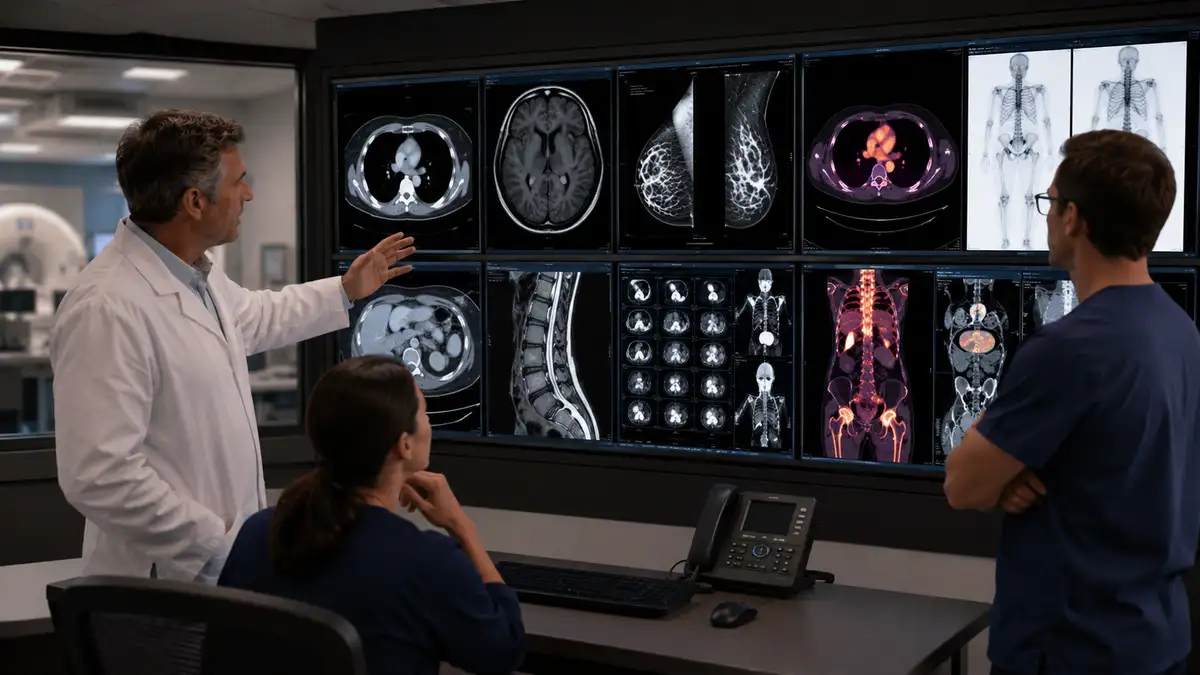
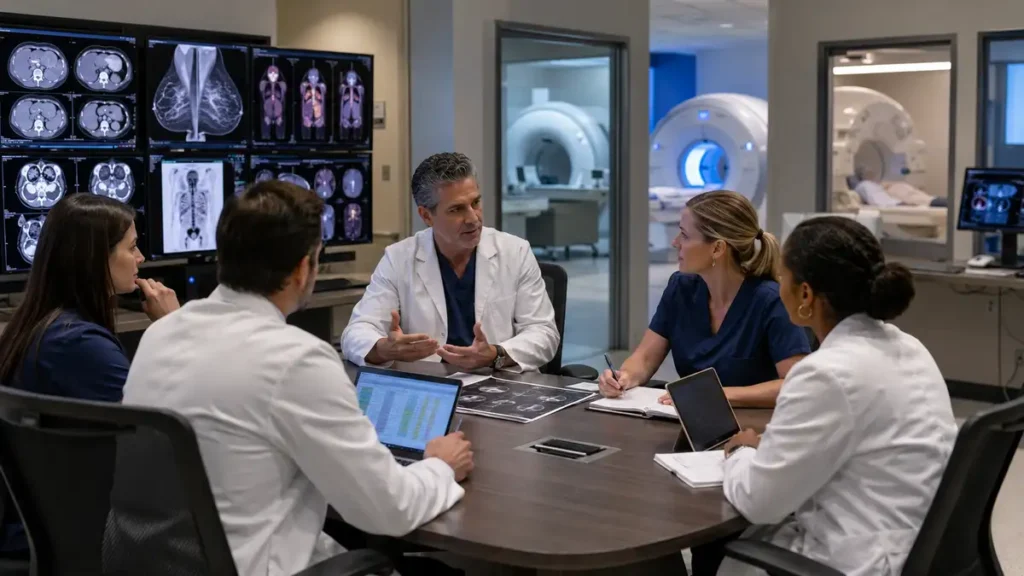
Imaging leadership team discussing modality expansion, workflow, and coverage strategy in a hospital setting

A planning checklist for radiology directors

  • Compare the current coverage model against the department’s actual modality mix, including CT, MRI, breast imaging, nuclear medicine, and PET where applicable.
  •  Identify where turnaround pressure is clustering by modality, time of day, or service line.
  • Review whether overnight, overflow, and subspecialty support still match current operational demands.
  • Look for early signs of strain such as fragmented reading assignments, growing call burden, or repeated referrer requests for specialized review.
  • Evaluate whether workflow tools are reducing friction or adding another layer of complexity for staff and radiologists.

What radiology directors should plan for next

The planning conversation should start with a few grounded questions. Is the current coverage structure built for today’s modality mix? Are certain studies creating repeated bottlenecks? Does overnight or overflow support still fit the department’s service profile? Are referrers asking for more specialized reads than the current model can comfortably support? Those questions matter because modality expansion often creates pressure gradually. The early signs may look like minor workflow friction, growing call burden, or more scheduling complexity. Over time, those patterns can affect turnaround, staff experience, physician confidence, and the department’s ability to keep growing smoothly. The departments that handle this well usually plan ahead of the pain curve. They look closely at coverage structure, workflow fit, and interpretive depth before operational strain starts showing up everywhere else.

FAQs

Why does modality expansion strain coverage? Because broader imaging services often increase complexity in scheduling, reading assignments, subspecialty needs, and turnaround expectations, even when total volume growth feels manageable.

Why should radiology directors care about coverage alignment? A coverage model that fit a narrower service mix may create friction once advanced imaging becomes a larger share of the department’s work.

How does AI fit into this conversation? AI can support prioritization and efficiency when it fits naturally into workflow. Its value depends on practical implementation and continued clinical oversight.


How Vesta Can Help

As imaging departments expand into broader modality mixes, coverage strategy becomes more important to long-term stability. Vesta Teleradiology helps hospitals and imaging centers support growing demands across CT, MRI, mammography, nuclear medicine, X-ray, and ultrasound with flexible on-site and remote coverage models built around real operational needs. From overnight support and overflow coverage to subspecialty reads and radiologist-led workflow support, Vesta helps radiology leaders build a stronger foundation for growth without adding unnecessary disruption to existing processes.


Sources

https://www.vizientinc.com/insights/reports/diagnostic-imaging/the-growing-demand-for-imaging-services-key-trends-shaping-the-future

https://vizientinc-delivery.sitecorecontenthub.cloud/api/public/content/08120908acee435984d854d55a2e6a19

https://www.acr.org/Clinical-Resources/Publications-and-Research/ACR-Bulletin/2026/radiologist-shortage-work-force-update

https://www.neimanhpi.org/press-releases/attrition-from-the-radiology-workforce-is-higher-for-subspecialists-vs-generalists-and-nonacademic-vs-academic-radiologists/

https://www.fda.gov/medical-devices/software-medical-device-samd/artificial-intelligence-enabled-medical-devices

https://www.beckershospitalreview.com/radiology/radiology-in-2026-the-workforce-crisis-meets-the-ai-revolution/

https://www.beckershospitalreview.com/radiology/

https://www.washingtonpost.com/health/2025/04/05/ai-machine-learning-radiology-software/

https://www.businessinsider.com/radiology-embraces-generative-ai-to-streamline-productivity-2025-6


What Brick-and-Mortar Imaging Centers Should Look for in a Radiology Partner

Why imaging centers need a more specific kind of partner

Not every imaging center needs the same radiology arrangement. Some centers need overflow help during busy periods. Others need low-volume overnight support, stronger subspecialty access, or more consistent turnaround across a broader modality mix. For brick-and-mortar imaging centers, the real priority is finding a teleradiology partner that fits how the center actually operates.

That is an important distinction because many conversations in the market still center on urgent care or mobile imaging use cases, where the study mix often leans heavily toward X-ray and ultrasound. Traditional imaging centers tend to have broader needs. CT, MRI, mammography, and sometimes nuclear medicine all bring different workflow and interpretation demands.

Modality depth should be one of the first questions

A group that mainly supports basic X-ray and ultrasound may not be the right fit for a center built around advanced imaging. The more useful question is whether the radiology partner can support the center’s current modality mix and continue to do so as the center grows.

That matters even more as outpatient imaging expands. Vizient reported that outpatient settings now account for a large share of imaging volume and projected long-term growth in advanced imaging, especially CT and PET. As that demand rises, imaging centers need coverage models that can support both volume and complexity.

Subspecialty support can strengthen both quality and referrals

Imaging center staff coordinating remote radiology workflow with a radiologist

Not every case requires a subspecialist, but some studies clearly benefit from one. Centers that offer more advanced workups or want to strengthen referrer confidence often value access to neuroradiology, musculoskeletal radiology, breast imaging expertise, or other subspecialty support.

This can have practical business value. Referring physicians notice when reports are timely, clear, and clinically useful. They also notice when a center can support a broader range of studies without avoidable delays.

Reporting workflow and communication matter just as much

Turnaround time always matters, but reporting consistency matters too. Imaging center leaders want reports that are readable and dependable, and they want communication pathways that work when something urgent appears. A strong radiology partner should fit the center’s existing workflow rather than forcing staff to work around unnecessary friction.

Technology decisions increasingly affect that experience. The FDA’s list of AI-enabled medical devices continues to grow, and radiology remains one of the leading categories. For imaging centers, the takeaway is not to chase every new tool. It is to work with partners that can support practical workflow improvements without complicating reporting, communication, or case prioritization.

Flexibility is essential for growing centers

Volume rarely stays perfectly steady. Referral patterns shift. Staffing changes. Some months are busier than expected, while others are more uneven. The right teleradiology partner should be able to absorb those swings without leaving the center overcommitted when volume softens or under-supported when it spikes.

That is especially important for centers that want to offer a broad menu of imaging services while keeping operations efficient. A flexible, full-service partner can help the center scale intelligently rather than reactively.

What the best partnerships look like

The strongest radiology partnerships for imaging centers tend to feel operationally integrated. They support the center across modalities, maintain dependable turnaround, provide access to subspecialty reads, and make workflow easier rather than harder.

For brick-and-mortar imaging centers, that kind of fit is often the difference between basic coverage and a partnership that actually strengthens the business.

FAQs

Why does modality coverage matter when choosing a teleradiology partner? Because many imaging centers perform more than basic X-ray and ultrasound. A strong partner should be able to support CT, MRI, mammography, and other modalities relevant to the center.

Should imaging centers look for subspecialty reads? Yes, especially if they perform advanced studies or want to improve quality, referrer confidence, and clinical depth.

How important is technology compatibility? It is very important. Reporting, communication, and workflow tools should support efficiency without creating unnecessary complexity for staff or referring providers.

Vesta is Your Partner


For brick-and-mortar imaging centers looking to strengthen coverage, improve turnaround, and support a broader range of modalities, the right radiology partner can make a meaningful difference. Vesta Teleradiology works with imaging centers in key markets including Texas, California, Florida, Georgia, Illinois, Ohio, North Carolina, and Kentucky, offering full-service radiology support designed around real operational needs. From CT and MRI to mammography, ultrasound, X-ray, and more, Vesta provides flexible on-site and remote coverage that helps imaging centers grow with confidence.

Sources

https://www.vizientinc.com/insights/reports/diagnostic-imaging/the-growing-demand-for-imaging-services-key-trends-shaping-the-future

https://radiologybusiness.com/topics/healthcare-management/healthcare-economics/9-trends-watch-diagnostic-imaging

https://www.fda.gov/medical-devices/software-medical-device-samd/artificial-intelligence-enabled-medical-devices