When Modality Expansion Starts Straining Coverage: What Radiology Directors Should Plan for Next

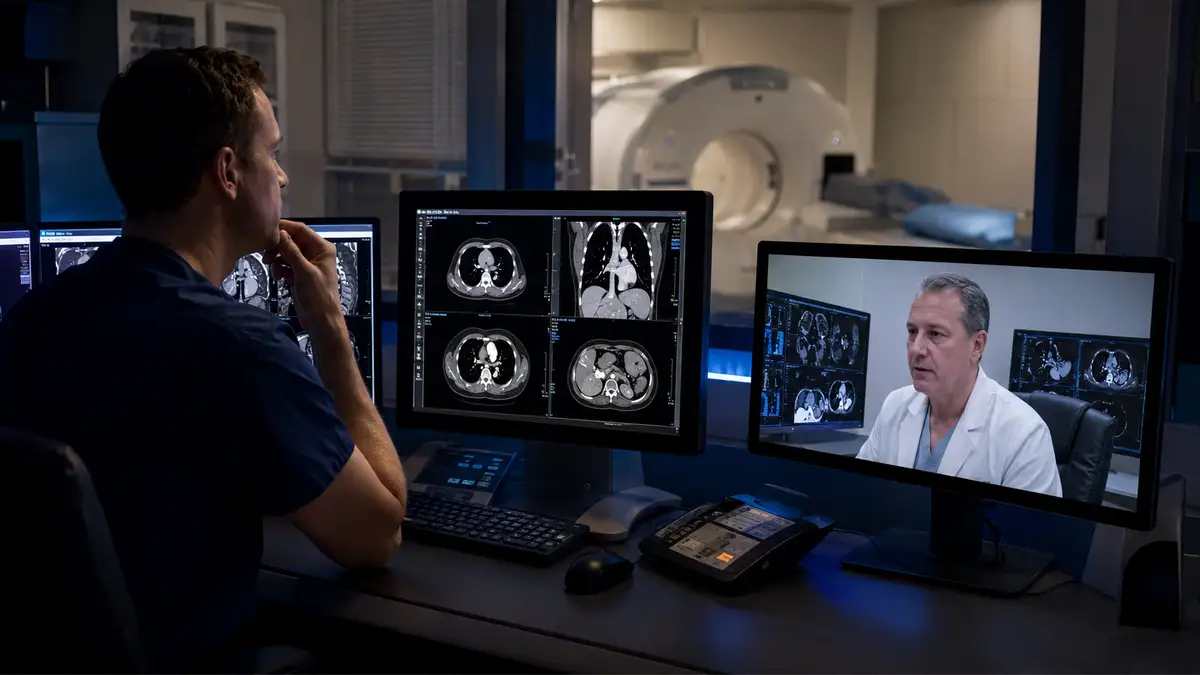
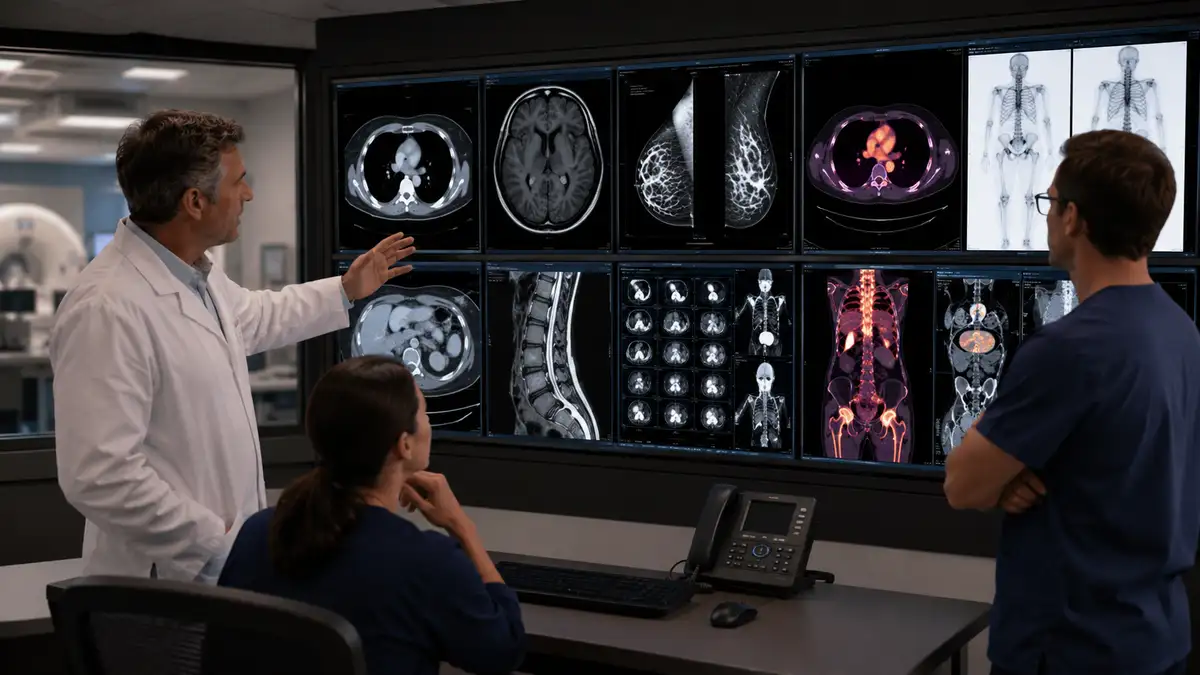
Growth in imaging services usually looks positive on paper. More referrals, broader service lines, and greater modality depth can all signal momentum. The operational picture gets more complicated once that growth starts stretching reading coverage, scheduling coordination, and subspecialty access. For radiology directors, that is often the point where planning needs to shift from volume management to infrastructure strategy. As hospitals and imaging centers expand into more advanced imaging, the effects reach far beyond scanner utilization. CT, MRI, mammography, nuclear medicine, and PET each bring their own workflow patterns, staffing implications, and interpretation needs.

Coverage models can drift out of sync with the modality mix

This is where radiology directors often run into a hidden problem. The original coverage structure may have worked well for a simpler imaging environment, then slowly becomes less aligned with the department’s current reality. Turnaround pressure rises in certain modalities. Overnight support feels harder to balance. Reading assignments become more fragmented. Referring clinicians start asking for more subspecialty input. That usually means the coverage model was built for an earlier stage of growth.

Staffing pressure makes the gap more obvious

Recent workforce data has made that planning challenge even more urgent. The ACR’s 2026 workforce update pointed to continuing attrition pressures across radiology, while Neiman Health Policy Institute has also highlighted higher attrition among several radiologist subgroups and practice settings. For radiology directors, that reinforces a practical point: growth planning and coverage planning can no longer sit in separate conversations.

Subspecialty access becomes a bigger leadership issue

As modality mix broadens, subspecialty interpretation often becomes more important to both clinical quality and referrer confidence. That is especially true in departments where advanced neuro, MSK, breast imaging, or other specialized studies are becoming a larger part of the case mix. A department can continue moving studies through the system, yet still create downstream tension if clinical teams feel they are working without enough interpretive depth in key areas.

Workflow tools matter, but the fit matters more

Technology often enters the conversation at this stage too. The FDA’s public list of AI-enabled medical devices continues to grow, and radiology remains one of the leading categories in that landscape. At the same time, recent national reporting has underscored that AI’s value in radiology depends heavily on how it fits into real-world workflow rather than on novelty alone. Tools that help prioritize time-sensitive studies or streamline repetitive tasks can support busy departments. Tools that add friction tend to create more resistance than relief.

Recent leadership conversations point in the same direction

This broader operational shift has stayed visible in 2026 reporting. Becker’s has continued covering the radiology workforce and the way staffing strain intersects with AI adoption and access. Meanwhile, AHRA’s annual meeting this July will again bring imaging managers and department leaders together around the practical challenges of running imaging operations in a period of continued change.
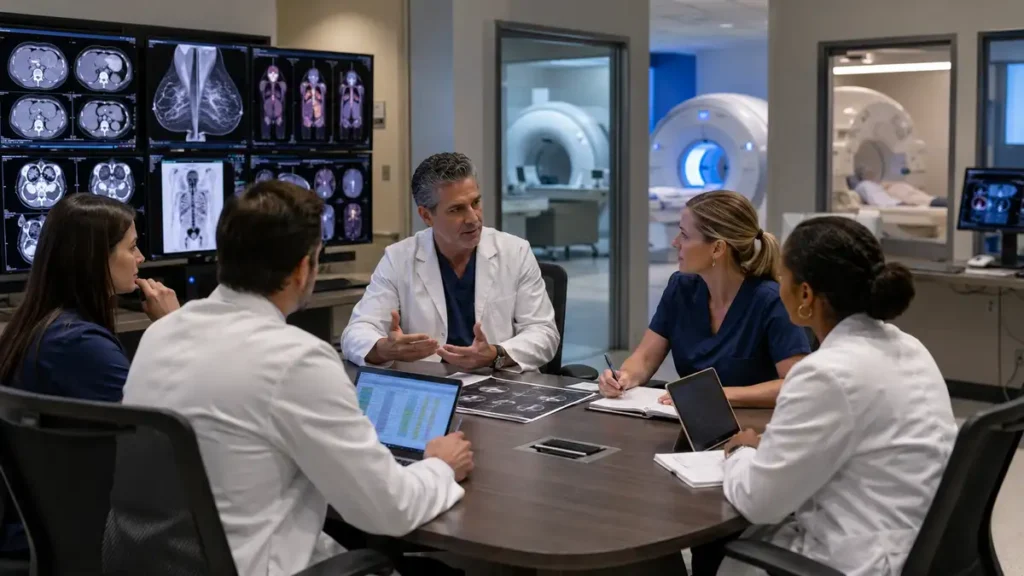
Imaging leadership team discussing modality expansion, workflow, and coverage strategy in a hospital setting

A planning checklist for radiology directors

  • Compare the current coverage model against the department’s actual modality mix, including CT, MRI, breast imaging, nuclear medicine, and PET where applicable.
  •  Identify where turnaround pressure is clustering by modality, time of day, or service line.
  • Review whether overnight, overflow, and subspecialty support still match current operational demands.
  • Look for early signs of strain such as fragmented reading assignments, growing call burden, or repeated referrer requests for specialized review.
  • Evaluate whether workflow tools are reducing friction or adding another layer of complexity for staff and radiologists.

What radiology directors should plan for next

The planning conversation should start with a few grounded questions. Is the current coverage structure built for today’s modality mix? Are certain studies creating repeated bottlenecks? Does overnight or overflow support still fit the department’s service profile? Are referrers asking for more specialized reads than the current model can comfortably support? Those questions matter because modality expansion often creates pressure gradually. The early signs may look like minor workflow friction, growing call burden, or more scheduling complexity. Over time, those patterns can affect turnaround, staff experience, physician confidence, and the department’s ability to keep growing smoothly. The departments that handle this well usually plan ahead of the pain curve. They look closely at coverage structure, workflow fit, and interpretive depth before operational strain starts showing up everywhere else.

FAQs

Why does modality expansion strain coverage? Because broader imaging services often increase complexity in scheduling, reading assignments, subspecialty needs, and turnaround expectations, even when total volume growth feels manageable.

Why should radiology directors care about coverage alignment? A coverage model that fit a narrower service mix may create friction once advanced imaging becomes a larger share of the department’s work.

How does AI fit into this conversation? AI can support prioritization and efficiency when it fits naturally into workflow. Its value depends on practical implementation and continued clinical oversight.


How Vesta Can Help

As imaging departments expand into broader modality mixes, coverage strategy becomes more important to long-term stability. Vesta Teleradiology helps hospitals and imaging centers support growing demands across CT, MRI, mammography, nuclear medicine, X-ray, and ultrasound with flexible on-site and remote coverage models built around real operational needs. From overnight support and overflow coverage to subspecialty reads and radiologist-led workflow support, Vesta helps radiology leaders build a stronger foundation for growth without adding unnecessary disruption to existing processes.


Sources

https://www.vizientinc.com/insights/reports/diagnostic-imaging/the-growing-demand-for-imaging-services-key-trends-shaping-the-future

https://vizientinc-delivery.sitecorecontenthub.cloud/api/public/content/08120908acee435984d854d55a2e6a19

https://www.acr.org/Clinical-Resources/Publications-and-Research/ACR-Bulletin/2026/radiologist-shortage-work-force-update

https://www.neimanhpi.org/press-releases/attrition-from-the-radiology-workforce-is-higher-for-subspecialists-vs-generalists-and-nonacademic-vs-academic-radiologists/

https://www.fda.gov/medical-devices/software-medical-device-samd/artificial-intelligence-enabled-medical-devices

https://www.beckershospitalreview.com/radiology/radiology-in-2026-the-workforce-crisis-meets-the-ai-revolution/

https://www.beckershospitalreview.com/radiology/

https://www.washingtonpost.com/health/2025/04/05/ai-machine-learning-radiology-software/

https://www.businessinsider.com/radiology-embraces-generative-ai-to-streamline-productivity-2025-6

 

What Brick-and-Mortar Imaging Centers Should Look for in a Radiology Partner

Why imaging centers need a more specific kind of partner

Not every imaging center needs the same radiology arrangement. Some centers need overflow help during busy periods. Others need low-volume overnight support, stronger subspecialty access, or more consistent turnaround across a broader modality mix. For brick-and-mortar imaging centers, the real priority is finding a teleradiology partner that fits how the center actually operates.

That is an important distinction because many conversations in the market still center on urgent care or mobile imaging use cases, where the study mix often leans heavily toward X-ray and ultrasound. Traditional imaging centers tend to have broader needs. CT, MRI, mammography, and sometimes nuclear medicine all bring different workflow and interpretation demands.

Modality depth should be one of the first questions

A group that mainly supports basic X-ray and ultrasound may not be the right fit for a center built around advanced imaging. The more useful question is whether the radiology partner can support the center’s current modality mix and continue to do so as the center grows.

That matters even more as outpatient imaging expands. Vizient reported that outpatient settings now account for a large share of imaging volume and projected long-term growth in advanced imaging, especially CT and PET. As that demand rises, imaging centers need coverage models that can support both volume and complexity.

Subspecialty support can strengthen both quality and referrals

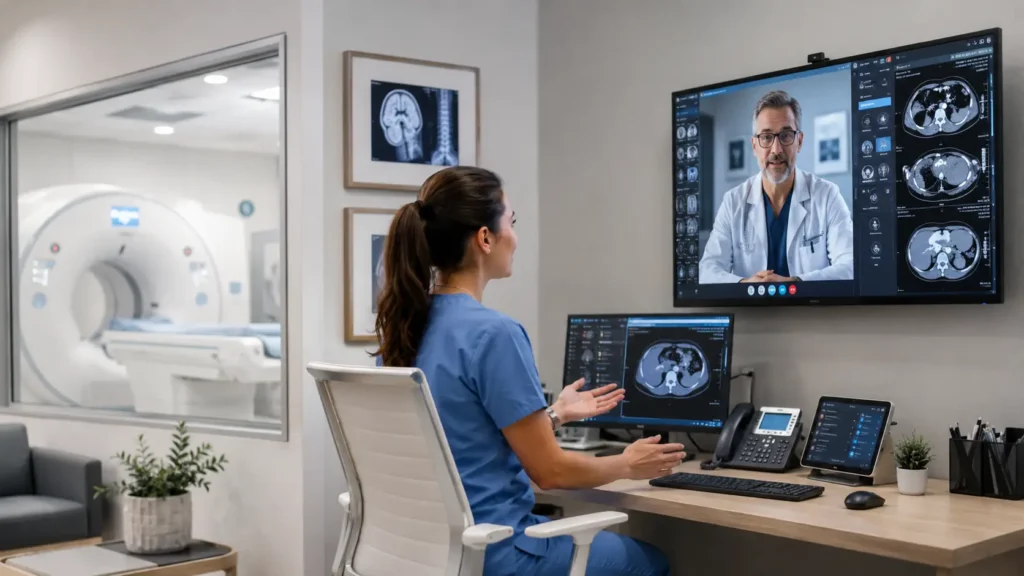
Imaging center staff coordinating remote radiology workflow with a radiologist

Not every case requires a subspecialist, but some studies clearly benefit from one. Centers that offer more advanced workups or want to strengthen referrer confidence often value access to neuroradiology, musculoskeletal radiology, breast imaging expertise, or other subspecialty support.

This can have practical business value. Referring physicians notice when reports are timely, clear, and clinically useful. They also notice when a center can support a broader range of studies without avoidable delays.

Reporting workflow and communication matter just as much

Turnaround time always matters, but reporting consistency matters too. Imaging center leaders want reports that are readable and dependable, and they want communication pathways that work when something urgent appears. A strong radiology partner should fit the center’s existing workflow rather than forcing staff to work around unnecessary friction.

Technology decisions increasingly affect that experience. The FDA’s list of AI-enabled medical devices continues to grow, and radiology remains one of the leading categories. For imaging centers, the takeaway is not to chase every new tool. It is to work with partners that can support practical workflow improvements without complicating reporting, communication, or case prioritization.

Flexibility is essential for growing centers

Volume rarely stays perfectly steady. Referral patterns shift. Staffing changes. Some months are busier than expected, while others are more uneven. The right teleradiology partner should be able to absorb those swings without leaving the center overcommitted when volume softens or under-supported when it spikes.

That is especially important for centers that want to offer a broad menu of imaging services while keeping operations efficient. A flexible, full-service partner can help the center scale intelligently rather than reactively.

What the best partnerships look like

The strongest radiology partnerships for imaging centers tend to feel operationally integrated. They support the center across modalities, maintain dependable turnaround, provide access to subspecialty reads, and make workflow easier rather than harder.

For brick-and-mortar imaging centers, that kind of fit is often the difference between basic coverage and a partnership that actually strengthens the business.

FAQs

Why does modality coverage matter when choosing a teleradiology partner? Because many imaging centers perform more than basic X-ray and ultrasound. A strong partner should be able to support CT, MRI, mammography, and other modalities relevant to the center.

Should imaging centers look for subspecialty reads? Yes, especially if they perform advanced studies or want to improve quality, referrer confidence, and clinical depth.

How important is technology compatibility? It is very important. Reporting, communication, and workflow tools should support efficiency without creating unnecessary complexity for staff or referring providers.

Vesta is Your Partner


For brick-and-mortar imaging centers looking to strengthen coverage, improve turnaround, and support a broader range of modalities, the right radiology partner can make a meaningful difference. Vesta Teleradiology works with imaging centers in key markets including Texas, California, Florida, Georgia, Illinois, Ohio, North Carolina, and Kentucky, offering full-service radiology support designed around real operational needs. From CT and MRI to mammography, ultrasound, X-ray, and more, Vesta provides flexible on-site and remote coverage that helps imaging centers grow with confidence.

Sources

https://www.vizientinc.com/insights/reports/diagnostic-imaging/the-growing-demand-for-imaging-services-key-trends-shaping-the-future

https://radiologybusiness.com/topics/healthcare-management/healthcare-economics/9-trends-watch-diagnostic-imaging

https://www.fda.gov/medical-devices/software-medical-device-samd/artificial-intelligence-enabled-medical-devices

Full-Service Radiology Coverage for Rural Hospitals: Supporting CT, MRI, Mammography, Nuclear Medicine, and Overnight Reads

Why broader coverage matters in rural settings

Rural hospitals are asked to do a great deal with limited staff, tight budgets, and uneven access to specialty care. Imaging is part of that pressure every day. A smaller hospital may not need the same staffing model as a large urban system, but it still needs dependable support for a wide range of studies, including CT, MRI, mammography, nuclear medicine, and emergency overnight work.

A full-service radiology model helps close that gap. The issue is rarely just finding someone to read studies after hours. More often, hospital leaders are trying to build coverage that fits real volumes, supports multiple modalities, and gives clinicians timely answers when the case is urgent.

The challenge is continuity, not just coverage

That distinction is becoming more important. In an April 2026 discussion on rural radiology, the American Hospital Association highlighted the need for partnerships that help hospitals keep care local and avoid disruptions tied to staffing instability, retirements, and shifting group coverage. For rural facilities, continuity matters. The reading group has to feel like part of the care team, not a disconnected overnight vendor.

In practical terms, that means asking whether a radiology partner can support the hospital across the full imaging landscape. CT and MRI are central to that conversation because advanced imaging demand continues to grow. Vizient has pointed to continued expansion in CT and PET volume and sustained growth in outpatient and hospital-based imaging demand, which means small hospitals cannot afford to think only about today’s schedule.

A better fit for low-volume overnight needs

Many rural hospitals sit in an in-between category. They may not have the volume to justify round-the-clock in-house subspecialty staffing, yet they still treat stroke symptoms, trauma, abdominal pain, oncology patients, and other cases that require timely reads. Low-volume overnight coverage is where a flexible partner can make the biggest difference.

The right model supports overnight preliminary or final reads without forcing a hospital into an arrangement built for a much larger facility. It should also account for modality mix. A hospital that depends on CT after midnight has different needs than one that is mainly handling basic X-ray work.

Why modality depth and subspecialty access matter

Mammography and nuclear medicine deserve attention here as well. These are not side considerations for many community facilities. They often involve more scheduling coordination, tighter reporting expectations, and a stronger need for specialized interpretation. When hospitals rely on patchwork coverage, the first stress points often show up in the studies that require deeper expertise or more reliable workflow.

That is why radiology directors and hospital administrators should look beyond simple turnaround promises. The better questions are whether the group can read across modalities, whether subspecialty support is available when the case calls for it, and whether communication is strong enough to support real clinical decision-making.

Planning for a tighter workforce environment

The workforce backdrop makes this even more relevant. The American College of Radiology reported in 2026 that radiologist attrition rates more than doubled from 2014 to 2022, with higher attrition in practices serving rural sites. That does not mean rural hospitals are out of options. It does mean they benefit from partners built for stability, flexible coverage, and long-term relationships.

For hospitals under 100 beds, full-service radiology coverage is often less about having every radiologist on site and more about having the right structure in place. A combination of on-site and remote support, broader modality coverage, overnight availability, and dependable communication can help protect local access without overextending internal teams.

What hospital leaders should look for

The hospitals that navigate this well usually move beyond the question of who can cover nights. They look for a radiology partner that can support the service line as a whole. That includes advanced modalities, low-volume overnight reads, subspecialty access, and a workflow that fits the hospital’s day-to-day reality.

For rural hospitals trying to keep care close to home, that kind of partnership can make a meaningful difference.

FAQs

What does full-service radiology coverage mean for a rural hospital? It usually means support across multiple modalities and workflows, which may include on-site and remote coverage, overnight reads, subspecialty access, and interpretation beyond basic X-ray and ultrasound.

Why is low-volume overnight coverage important? Even hospitals with modest overnight volume still face urgent clinical decisions. Timely imaging interpretation can support emergency care, admissions, transfers, and treatment planning.

Which modalities should hospitals consider when evaluating a radiology partner? Many facilities should look beyond X-ray and ultrasound and ask about support for CT, MRI, mammography, and nuclear medicine based on their patient mix and service lines.


Why Rural Hospitals Partner With Vesta Teleradiology

For rural hospitals working to maintain access, improve turnaround times, and support a wider range of imaging needs, the right radiology partner can help create a more stable path forward. Vesta Teleradiology supports rural hospitals in key markets including Texas, California, Florida, Georgia, Illinois, Ohio, North Carolina, and Kentucky, providing full-service radiology coverage for CT, MRI, mammography, nuclear medicine, X-ray, ultrasound, and overnight reads. With flexible on-site and remote support, Vesta helps hospitals strengthen coverage without overextending internal teams.

Sources

https://www.aha.org/member-knowledge-exchange/2026-04-23/keeping-care-local-radiology-as-catalyst-rural-transformation

https://www.aha.org/system/files/media/file/2026/04/ke-radiology-group-closing-the-digital-divide.pdf

https://www.vizientinc.com/insights/reports/diagnostic-imaging/the-growing-demand-for-imaging-services-key-trends-shaping-the-future

https://www.acr.org/Clinical-Resources/Publications-and-Research/ACR-Bulletin/2026/radiologist-shortage-work-force-update