Teleradiology Onboarding: How to Launch Coverage Without Disrupting Your Imaging Workflow

Choosing a teleradiology provider is only the beginning. The next challenge is connecting that provider to an active clinical environment without creating unnecessary work for technologists, physicians, IT teams, or hospital administrators.

A well-designed teleradiology onboarding process addresses far more than sending images from one system to another. Worklists, priorities, reports, clinical information, credentials, critical-results procedures, user access, and backup processes all need to function together.

The growing industry emphasis on interoperability underscores that point. The federal health IT community continues to address diagnostic imaging interoperability, including standards for exchanging imaging information and connecting imaging systems with EHR environments. The 2026 Interoperability Standards Advisory also continues to identify standards and implementation specifications designed to support healthcare data exchange.

For healthcare organizations adding remote radiology coverage, careful onboarding can turn that technical connectivity into a dependable clinical workflow.

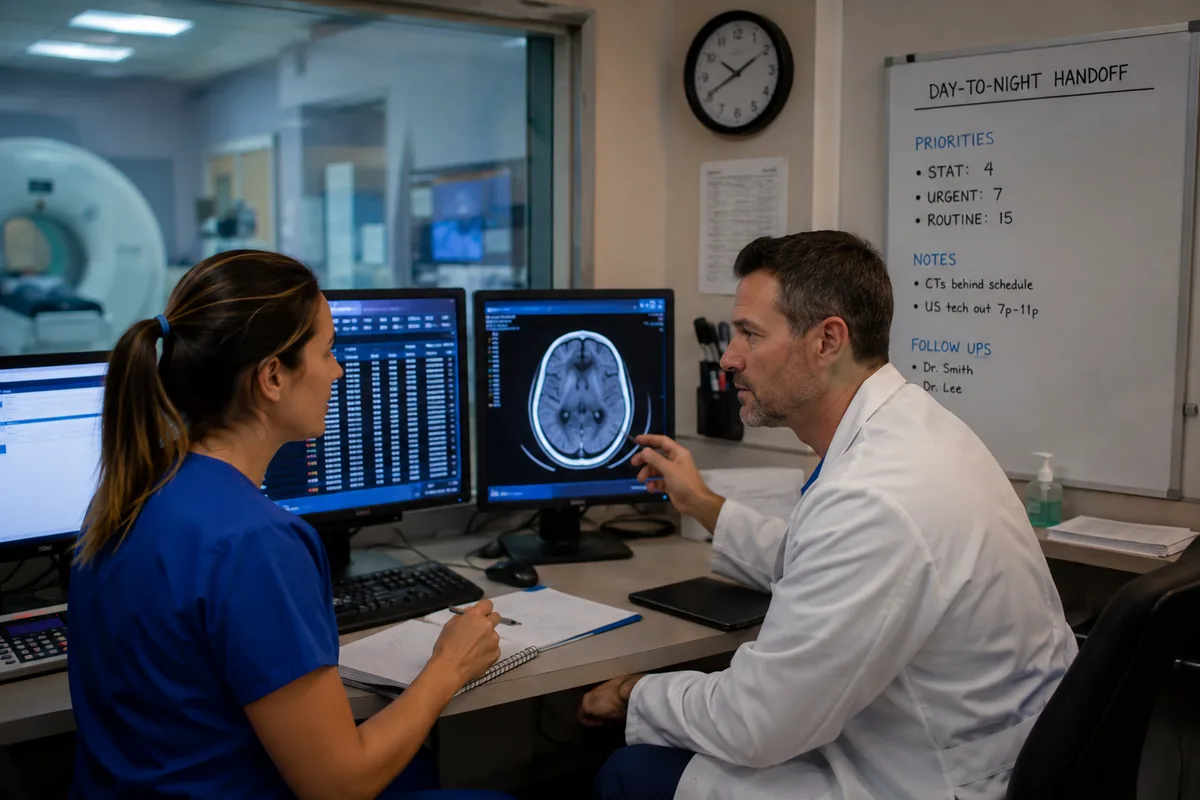
Radiologist and imaging professional reviewing medical imaging workflow and system integration during teleradiology onboarding.

Start by Mapping the Existing Imaging Workflow

Before configuring anything, the teleradiology provider needs to understand how imaging currently moves through the facility.

Where are studies performed? Which modalities require coverage? How are priorities assigned? Which examinations require subspecialty interpretation? Where should reports return? Who receives critical results?

A community hospital with an emergency department may have very different requirements from a multi-location imaging organization performing scheduled outpatient MRI and CT.

The onboarding team should document the process from image acquisition through final report delivery.

This allows the coverage model to fit the facility rather than requiring staff to adapt unnecessarily to an outside provider.

PACS and RIS Connectivity Must Be Tested in Real Conditions

Reliable remote interpretation depends on reliable access to images and information.

Modern diagnostic imaging relies heavily on established interoperability standards. Federal interoperability resources continue to identify DICOM as central to exchanges between imaging modalities and PACS environments, while current health IT initiatives are working toward better exchange among imaging systems, EHRs, and patient-facing applications.

For onboarding purposes, hospitals should test more than whether an image can technically reach a remote workstation.

  • Complete image sets arrive correctly.
  • Patient and examination information matches.
  • Study priority is preserved.
  • Relevant clinical history is available.
  • Prior examinations can be accessed when appropriate.
  • Reports return to the expected location.
  • Final report status displays properly.
  • Critical-result communication works as designed.

Testing multiple modalities and priority levels before go-live can reveal workflow problems while they are still easy to correct.

Define Worklist Routing Before Coverage Begins

One of the biggest opportunities in teleradiology is the ability to route work according to need.

A facility may require overnight emergency coverage, routine overflow support during the day, subspecialty interpretation for specific examinations, or several of these simultaneously.

Those pathways should be established during onboarding.

For example, a hospital may keep routine daytime examinations with its internal radiology group while automatically sending certain overnight studies to a Nighthawk service. Another facility may use remote radiologists when volume exceeds a defined threshold.

Routing can also account for modality and subspecialty expertise.

These decisions should be configured and tested before the first live shift.

Credentialing and Clinical Requirements Need Their Own Track

Technology can move quickly. Credentialing often involves a different timeline.

Hospitals should begin provider credentialing, privileges, licensing verification, and other required administrative processes early enough that they do not become the final barrier to launching coverage.

The clinical coverage model should also identify which radiologists can interpret the modalities and examination types expected from the facility.

This matters increasingly as radiology workforce pressure affects access to certain subspecialties. ACR’s 2026 workforce analysis found that although the overall radiologist population has grown, some subspecialty segments have faced more significant challenges. For example, the number of radiologists primarily practicing pediatric radiology declined from 2,190 in 2016 to 2,032 in 2023 in the research cited by ACR.

A remote model can help facilities access a larger physician network without needing every expertise represented physically at every location.

Establish Critical-Results Communication Before Go-Live

A critical finding should never trigger confusion over whom to call.

The ACR’s current Practice Parameter for Communication of Diagnostic Imaging Findings emphasizes the importance of effective systems for communicating imaging information.

During onboarding, the facility and teleradiology provider should define primary and backup contacts, approved communication methods, escalation procedures, and documentation expectations.

Those procedures should also account for nights, weekends, and holidays when the usual daytime contacts may be unavailable.

Run a Realistic Go-Live Test

A useful test should resemble the environment the system will actually encounter.

Send routine and urgent cases. Test multiple modalities. Verify that prior studies are available where expected. Confirm report return. Test the escalation process.

Then test failure scenarios.

What happens if connectivity drops? Who contacts whom if a study does not arrive? What happens when the teleradiology provider cannot access a prior examination? Is there a backup route for communicating critical findings?

These questions are easier to answer during a planned test than during a busy overnight shift.

New Technology Should Fit Into the Same Workflow

Radiology technology is evolving quickly. In May 2026, ACR approved its first-ever practice parameter specifically for imaging AI, emphasizing implementation, monitoring, and continuous quality improvement as parts of responsible clinical deployment.

That principle also illustrates an important point about implementation: technology creates the greatest value when it works inside the clinical process.

Vesta’s radiologist-led AI-assisted imaging support for select studies is designed around that concept, with advisory information incorporated into the radiologist’s workflow while the radiologist reviews the complete examination and remains responsible for the final interpretation.

Teleradiology Onboarding Should Make Work Easier

Successful implementation should leave the facility with a clear, repeatable workflow.

Vesta Teleradiology works with hospitals, imaging centers, urgent care organizations, and other healthcare facilities to establish customized 24/7 teleradiology, Nighthawk, overflow, and subspecialty coverage provided by U.S. board-certified radiologists.

Frequently Asked Questions

How long does teleradiology onboarding take?

Timelines vary according to credentialing, licensing, facility requirements, technical integration, modalities, and the complexity of the coverage model. Early coordination between clinical, administrative, and IT teams can help prevent unnecessary delays.

Does teleradiology require replacing a hospital’s PACS?

Teleradiology is generally designed to integrate with existing imaging workflows. The specific technical configuration depends on the facility’s PACS, RIS, EHR, security requirements, and desired report-delivery process.

What should hospitals test before teleradiology goes live?

Hospitals should verify study transmission, worklist routing, clinical information, priors, reporting, priority status, critical-results communication, user access, and downtime procedures across representative examination types.

Planning new radiology coverage? Contact Vesta Teleradiology to discuss a customized implementation and coverage strategy for your facility.

Sources

What Does a Strong Day-to-Night Radiology Handoff Look Like?

At 6:59 p.m., a hospital radiology department may appear to be operating normally. At 7:01, responsibility for dozens of imaging studies can begin shifting to a different team.

That transition deserves more attention than it often receives.

For hospitals using Nighthawk radiology coverage, the quality of the day-to-night handoff can influence how smoothly studies are routed, how quickly priority examinations are identified, how critical findings are communicated, and what the daytime team encounters the next morning.

The issue has broader significance as imaging demand continues to grow. In June 2026, American College of Radiology leadership described imaging demand as stronger than ever while the radiology workforce remains tight, with projections indicating imaging demand could grow at least as quickly as the available workforce.

That environment makes continuity between shifts increasingly important.

A Radiology Handoff Is More Than Changing Readers

Healthcare handoffs involve transferring information along with responsibility.

The Agency for Healthcare Research and Quality describes a handoff as a standardized process for transferring information, authority, and responsibility during transitions in care. AHRQ also highlights the opportunity for the receiving team to review information and ask questions.

In radiology, the transition may involve an internal evening team, an overnight radiologist, or an outside teleradiology service.

A strong transition establishes what is currently in the queue, what deserves immediate attention, which examinations are pending, and how communication will work for the remainder of the shift.

The Overnight Team Needs an Accurate View of the Worklist

The first requirement is visibility.

The incoming radiology team should be able to identify studies according to priority, modality, facility, and other applicable routing criteria.

Pending studies should not disappear between queues during the transition.

Facilities using a teleradiology service should verify which examinations automatically route to overnight coverage and which remain with the internal group. If different services cover CT, MRI, X-ray, ultrasound, or specialty examinations, those routing rules should be clear before the shift begins.

A predictable process reduces manual sorting and gives radiologists more time to focus on interpretation.

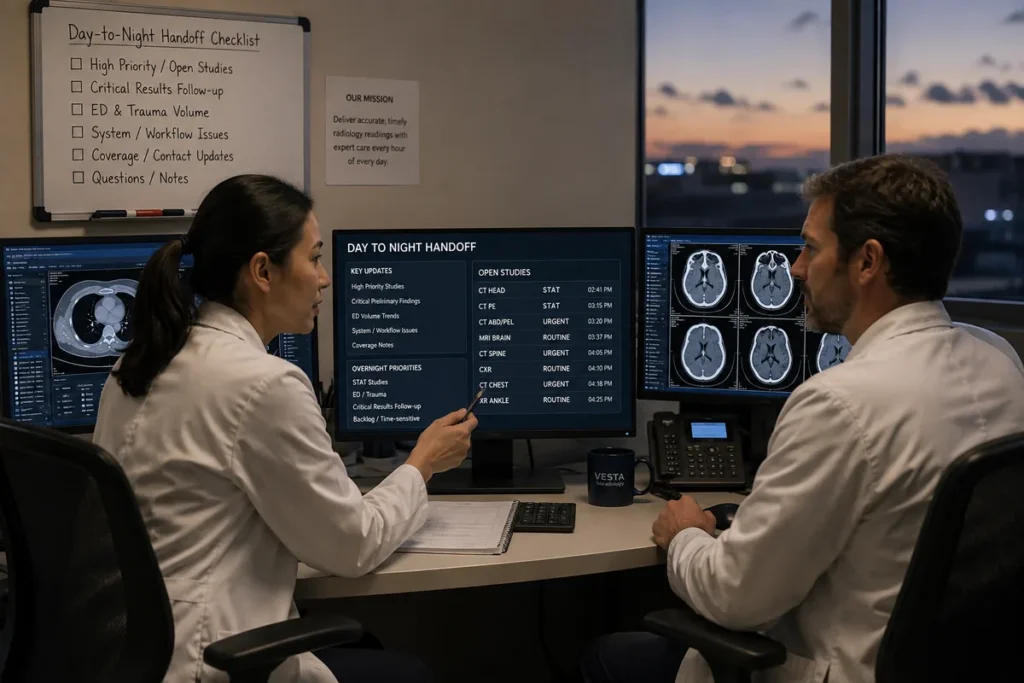
Radiologists reviewing open studies, priority cases, and workflow details during an evening radiology handoff.

Pending Cases Need Clear Ownership

One of the simplest questions during a handoff is also one of the most important: Who owns this study now?

A case may have been acquired before the overnight coverage window while still awaiting interpretation when the shift changes. Another study may already be opened by a daytime reader. An examination may require comparison with priors that have not yet arrived.

Defined ownership keeps these cases from sitting in an ambiguous middle ground.

Facilities can establish rules describing when responsibility transfers and how exceptions are communicated.

This becomes especially valuable during high-volume periods when dozens of studies may cross the shift boundary.

Critical-Result Communication Must Continue Seamlessly

Overnight radiology frequently supports emergency departments and inpatient services where time-sensitive findings are common.

The communication process therefore cannot depend on a daytime contact list that becomes obsolete after business hours.

The ACR Practice Parameter for Communication of Diagnostic Imaging Findings emphasizes that communication is only as effective as the system carrying the information. The guidance also recognizes responsibilities surrounding receipt and appropriate action on imaging results.

Hospitals using Nighthawk coverage should establish after-hours primary and backup contacts, escalation pathways, approved communication channels, and documentation procedures.

ACR also notes that certain critical imaging findings may require communication very rapidly after image review.

That makes overnight contact information part of the clinical workflow rather than an administrative detail.

Subspecialty Needs Should Be Visible Before They Become Bottlenecks

The overnight worklist does not always consist of straightforward emergency CT examinations.

Hospitals may encounter complex neurological studies, body imaging, musculoskeletal cases, pediatric studies, or other examinations that benefit from subspecialty expertise.

The current radiology workforce environment makes this particularly relevant. ACR’s 2026 workforce analysis reports that subspecialty availability varies and that imaging volumes have been growing faster than the number of radiologists.

Hospitals can use teleradiology networks to broaden access to subspecialty expertise, particularly when maintaining every specialty on site around the clock would be impractical.

Routing rules established in advance can help appropriate examinations reach radiologists with relevant expertise.

The Morning Handoff Matters Too

Good Nighthawk coverage should also prepare the daytime team for what comes next.

Hospitals should know which overnight studies were completed, whether any examinations remain pending, whether critical findings were communicated, and whether technical or workflow issues occurred.

For organizations using preliminary interpretations, the process should clearly define how finalization or discrepancy management occurs. Facilities using final overnight interpretations require a different morning workflow.

Either model benefits from clear documentation and visibility.

The goal is a morning worklist that reflects what actually happened overnight rather than requiring the daytime team to reconstruct the previous shift.

Build Around Volume Changes

Overnight demand is rarely identical every night.

Weekend activity, holidays, seasonal illness, emergency department surges, local events, staffing changes, and unexpected trauma can alter the worklist rapidly.

This is one reason flexible reading capacity can be valuable. Hospitals can combine scheduled Nighthawk coverage with overflow support so additional volume has somewhere to go when the primary worklist becomes strained.

The wider workforce picture suggests this flexibility will remain relevant. ACR’s current projections show sustained pressure as imaging demand and workforce capacity continue to evolve together.

Designing Better Overnight Radiology Coverage

A reliable day-to-night handoff combines technology, physician coverage, routing, communication, and defined accountability.

Vesta Teleradiology provides 24/7 nationwide radiology support, including Nighthawk coverage, overflow support, and subspecialty reads from U.S. board-certified radiologists. Coverage can be customized around a hospital’s volume, modalities, schedule, and workflow requirements.

Frequently Asked Questions

What is Nighthawk teleradiology?

Nighthawk teleradiology provides remote radiology interpretation during overnight or after-hours periods, helping hospitals maintain access to radiologists when their daytime teams are unavailable or require additional support.

What should be included in a radiology shift handoff?

A facility should establish clear study ownership, worklist routing, priority identification, pending-study procedures, critical-results communication, escalation contacts, subspecialty routing, and morning follow-up processes.

Can Nighthawk services provide final radiology reports?

Coverage structures vary by facility and provider arrangement. Hospitals should define whether overnight studies receive preliminary or final interpretations during contracting and onboarding and build the handoff process accordingly.

Need more dependable overnight radiology coverage? Contact Vesta Teleradiology to discuss Nighthawk, overflow, and customized 24/7 support for your facility.

Sources

Full-Service Radiology Coverage for Rural Hospitals: Supporting CT, MRI, Mammography, Nuclear Medicine, and Overnight Reads

Why broader coverage matters in rural settings

Rural hospitals are asked to do a great deal with limited staff, tight budgets, and uneven access to specialty care. Imaging is part of that pressure every day. A smaller hospital may not need the same staffing model as a large urban system, but it still needs dependable support for a wide range of studies, including CT, MRI, mammography, nuclear medicine, and emergency overnight work.

A full-service radiology model helps close that gap. The issue is rarely just finding someone to read studies after hours. More often, hospital leaders are trying to build coverage that fits real volumes, supports multiple modalities, and gives clinicians timely answers when the case is urgent.

The challenge is continuity, not just coverage

That distinction is becoming more important. In an April 2026 discussion on rural radiology, the American Hospital Association highlighted the need for partnerships that help hospitals keep care local and avoid disruptions tied to staffing instability, retirements, and shifting group coverage. For rural facilities, continuity matters. The reading group has to feel like part of the care team, not a disconnected overnight vendor.

In practical terms, that means asking whether a radiology partner can support the hospital across the full imaging landscape. CT and MRI are central to that conversation because advanced imaging demand continues to grow. Vizient has pointed to continued expansion in CT and PET volume and sustained growth in outpatient and hospital-based imaging demand, which means small hospitals cannot afford to think only about today’s schedule.

A better fit for low-volume overnight needs

Many rural hospitals sit in an in-between category. They may not have the volume to justify round-the-clock in-house subspecialty staffing, yet they still treat stroke symptoms, trauma, abdominal pain, oncology patients, and other cases that require timely reads. Low-volume overnight coverage is where a flexible partner can make the biggest difference.

The right model supports overnight preliminary or final reads without forcing a hospital into an arrangement built for a much larger facility. It should also account for modality mix. A hospital that depends on CT after midnight has different needs than one that is mainly handling basic X-ray work.

Why modality depth and subspecialty access matter

Mammography and nuclear medicine deserve attention here as well. These are not side considerations for many community facilities. They often involve more scheduling coordination, tighter reporting expectations, and a stronger need for specialized interpretation. When hospitals rely on patchwork coverage, the first stress points often show up in the studies that require deeper expertise or more reliable workflow.

That is why radiology directors and hospital administrators should look beyond simple turnaround promises. The better questions are whether the group can read across modalities, whether subspecialty support is available when the case calls for it, and whether communication is strong enough to support real clinical decision-making.

Planning for a tighter workforce environment

The workforce backdrop makes this even more relevant. The American College of Radiology reported in 2026 that radiologist attrition rates more than doubled from 2014 to 2022, with higher attrition in practices serving rural sites. That does not mean rural hospitals are out of options. It does mean they benefit from partners built for stability, flexible coverage, and long-term relationships.

For hospitals under 100 beds, full-service radiology coverage is often less about having every radiologist on site and more about having the right structure in place. A combination of on-site and remote support, broader modality coverage, overnight availability, and dependable communication can help protect local access without overextending internal teams.

What hospital leaders should look for

The hospitals that navigate this well usually move beyond the question of who can cover nights. They look for a radiology partner that can support the service line as a whole. That includes advanced modalities, low-volume overnight reads, subspecialty access, and a workflow that fits the hospital’s day-to-day reality.

For rural hospitals trying to keep care close to home, that kind of partnership can make a meaningful difference.

FAQs

What does full-service radiology coverage mean for a rural hospital? It usually means support across multiple modalities and workflows, which may include on-site and remote coverage, overnight reads, subspecialty access, and interpretation beyond basic X-ray and ultrasound.

Why is low-volume overnight coverage important? Even hospitals with modest overnight volume still face urgent clinical decisions. Timely imaging interpretation can support emergency care, admissions, transfers, and treatment planning.

Which modalities should hospitals consider when evaluating a radiology partner? Many facilities should look beyond X-ray and ultrasound and ask about support for CT, MRI, mammography, and nuclear medicine based on their patient mix and service lines.


Why Rural Hospitals Partner With Vesta Teleradiology

For rural hospitals working to maintain access, improve turnaround times, and support a wider range of imaging needs, the right radiology partner can help create a more stable path forward. Vesta Teleradiology supports rural hospitals in key markets including Texas, California, Florida, Georgia, Illinois, Ohio, North Carolina, and Kentucky, providing full-service radiology coverage for CT, MRI, mammography, nuclear medicine, X-ray, ultrasound, and overnight reads. With flexible on-site and remote support, Vesta helps hospitals strengthen coverage without overextending internal teams.

Sources

https://www.aha.org/member-knowledge-exchange/2026-04-23/keeping-care-local-radiology-as-catalyst-rural-transformation

https://www.aha.org/system/files/media/file/2026/04/ke-radiology-group-closing-the-digital-divide.pdf

https://www.vizientinc.com/insights/reports/diagnostic-imaging/the-growing-demand-for-imaging-services-key-trends-shaping-the-future

https://www.acr.org/Clinical-Resources/Publications-and-Research/ACR-Bulletin/2026/radiologist-shortage-work-force-update

MSK Teleradiology in 2026: How Hospitals Can Reduce MRI Backlogs Without Slowing Ortho and ED Throughput


Overview

  • RSNA’s 2025 MSK trends spotlight rising complexity: opportunistic imaging, body composition, AI use, and advancing MSK applications.
  • For hospitals, the pain point is practical: MSK MRI backlogs delay ortho decision-making and clog scheduling.
  • Workforce strain remains a headwind, with the ACR describing ongoing supply–demand imbalance.
  • The fix is operational: tighter protocol discipline, realistic SLAs, and subspecialty coverage that protects peak windows.
  • MSK teleradiology works best when it’s service-line aligned (ortho + ED) and measured (TAT, discrepancy tracking, escalation).

Why MSK MRI feels harder lately

MSK imaging is not “just knee MRIs” anymore. RSNA’s 2025 MSK coverage highlights how rapidly the field is evolving, including opportunistic imaging and body composition analysis showing up in routine workstreams, plus expanding AI utilization. Even when your department isn’t formally reporting every opportunistic metric, the trend reflects an underlying reality: MSK studies increasingly carry higher expectations for nuance, consistency, and clinical usefulness.

At the same time, staffing constraints haven’t loosened. The ACR’s workforce update describes a persistent shortage environment where the system doesn’t automatically “bounce back” without deliberate changes. That’s why backlogs can appear suddenly: one vacancy, one vacation block, one surge week in sports medicine referrals—and your TAT drifts.

The downstream cost of MSK delays

MRI backlog isn’t just a radiology KPI. It hits:

  • Orthopedics and sports medicine: delayed surgical planning, delayed injections, delayed PT pathways.
  • ED throughput: delayed disposition when MRI is needed to rule out spinal cord or occult injury.
  • Patient satisfaction: scheduling delays and repeat calls escalate quickly.
  • Clinician trust: inconsistent report quality drives more phone calls and “curbside reads.”

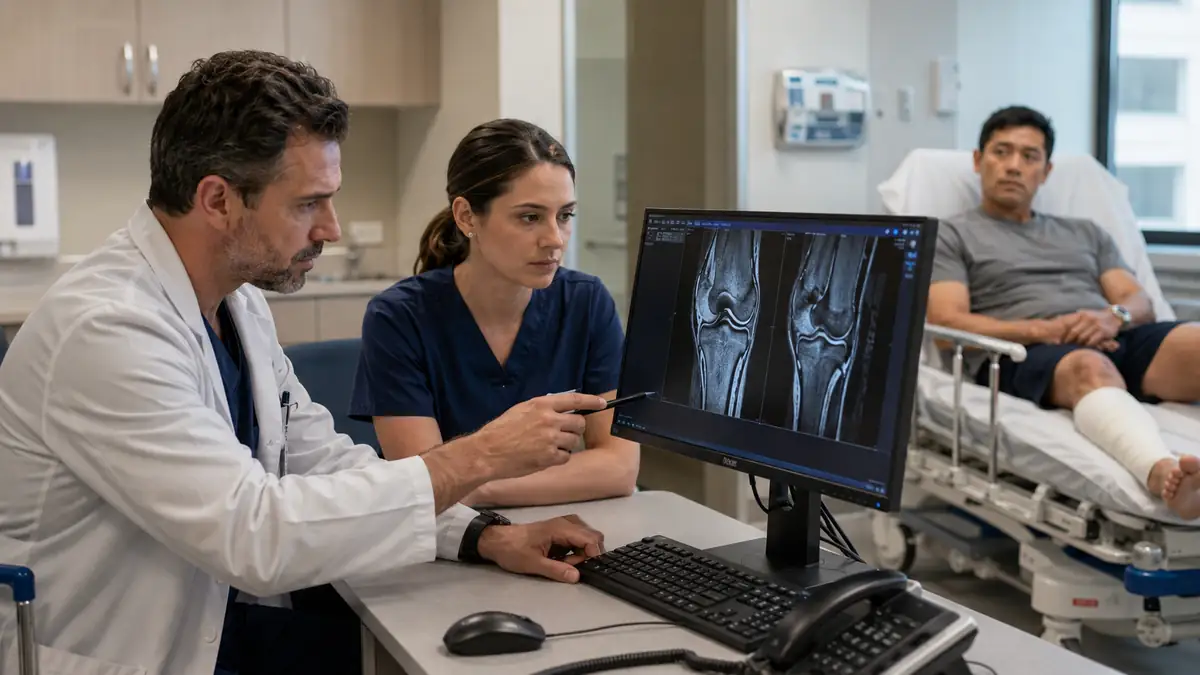
Clinical team reviewing musculoskeletal MRI results while a patient waits nearby, illustrating the downstream cost of MSK delays

What an MSK backlog reduction plan looks like (that doesn’t burn out your team)

1) Separate “needs MSK subspecialty” from “can be safely generalized”

Not every MSK study is equal. Create a simple classification:

  • Tier A (MSK subspecialty preferred): complex post-op, tumor, infection, cartilage, multi-ligament injuries, nuanced shoulder/hip.
  • Tier B (standard MSK): high-volume bread-and-butter (meniscus, ACL, simple rotator cuff).
  • Tier C (general): studies where general radiology reads are appropriate by policy.

This prevents the common mistake of routing everything to the same limited pool.

2) Align SLAs to the ortho service line calendar

Ortho doesn’t spike randomly. It spikes around:

  • Clinic days
  • OR block schedules
  • Weekend injury surges
  • Sports seasons

Build coverage to protect those windows. An MSK teleradiology partner can be most valuable as a predictable buffer during peak days rather than as “panic coverage” after the backlog is already visible.

3) Standardize MSK protocols to reduce rework

Rework is hidden backlog. Common causes:

  • Wrong sequence sets
  • Inconsistent contrast usage
  • Missing views for certain joints
  • Post-op artifacts without mitigation sequences

Your best backlog reduction lever is often “less repeat scanning,” not “faster reading.”

4) Use quality signals, not just speed

If you only optimize TAT, report quality often suffers, and calls increase. Use at least two quality metrics:

  • Discrepancy/peer review trend (by modality/type)
  • Clinician callback volume or addendum rate

5) Measure the right time intervals

Instead of one TAT number, track:

  • scan complete → read started
  • read started → signed
  • signed → critical communicated (when applicable)

That reveals whether your bottleneck is worklist management, staffing, or reporting.

Where MSK teleradiology fits best

MSK teleradiology is most effective when it’s positioned as:

  • Subspecialty access for complex studies (Tier A)
  • Backlog prevention during predictable peaks
  • Nights/weekends coverage for ED MSK needs
  • Consistency for multi-site health systems

The goal isn’t to “outsource MSK.” It’s to stabilize the service line so ortho and ED leaders can trust the imaging pipeline.

FAQ 

How do you reduce MSK MRI backlog quickly?
Start by tiering studies, protecting peak windows with planned coverage, and removing rework from protocol inconsistencies.

Is AI the answer for MSK workload?
AI is expanding in MSK, but operational wins still come from workflow discipline and coverage design—especially while workforce constraints persist.

How Vesta fits


Vesta Teleradiology supports hospitals with MSK-capable reads, surge buffering, and SLA-driven throughput—built to protect ortho and ED decision-making when volume spikes. Contact Vesta today to learn more about our tailored radiology services.

Subspecialty Night & Weekend Coverage: A Redundancy Model for Neuro + Body Imaging Reads

Overview

  • Nights/weekends are where imaging systems “stress test” themselves—coverage gaps show up first in neuro and body.
  • ACR’s workforce update underscores sustained supply–demand pressure and rising attrition trends.
  • Vizient highlights continued imaging demand growth drivers that affect hospital capacity planning.
  • Redundancy isn’t just “more reads.” It’s minimum viable coverage, SLA tiers, and escalation rules that trigger backup automatically.
  • The best model blends onsite teams with subspecialty teleradiology as a structured backstop (not a last-minute scramble).

Why nights/weekends fail differently

During the day, you can usually see trouble coming—lists get longer, inboxes fill up, and someone calls a meeting. At night or on weekends, issues don’t announce themselves. They creep in, and the first sign is often a delay in care or a bottleneck in the Emergency Department.

  • delayed inpatient management decisions
  • missed or late critical communications
  • inconsistent subspecialty interpretation when generalists are stretched

Neuro and body imaging become the pressure points because they’re high-impact (stroke, hemorrhage, acute abdomen, PE) and high-volume (CT utilization doesn’t sleep).

Trend reality: demand up, staffing tight

The ACR describes a shortage environment that isn’t expected to resolve on its own without deliberate interventions, pointing to concerning attrition dynamics over recent years. At the same time, imaging demand growth continues to be a strategic planning topic for health systems, influenced by aging populations, shifting care settings, and technology-driven utilization.

This is why “we’ll figure it out on call” stops working. You need a model.

A redundancy model you can implement (without rebuilding your department)

1) Define minimum viable coverage by shift

Write down what must be protected:

  • ED CT head + stroke pathway imaging (neuro)
  • CT A/P for acute abdomen, high-risk oncology complications (body)
  • CTA chest for suspected PE when it changes disposition
  • critical result communication expectations

This becomes the baseline against which you measure risk.

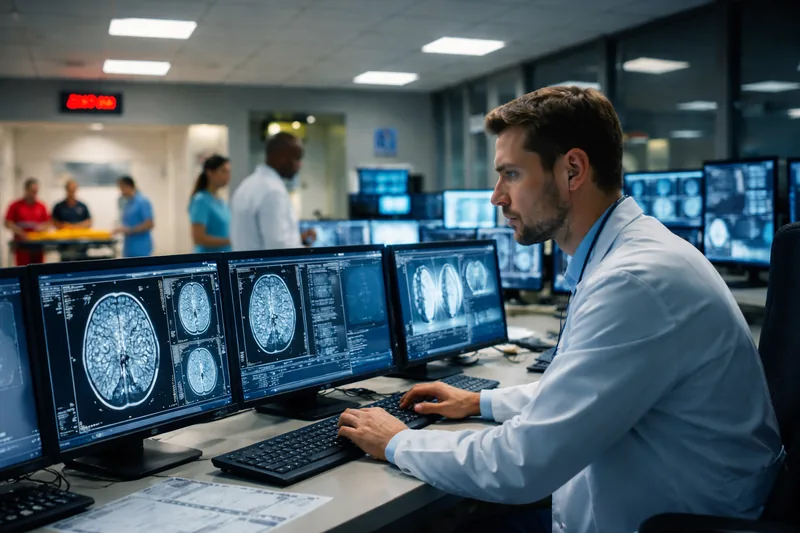
Radiologist reviewing ED CT head scans for stroke pathway imaging on dual monitors to support rapid diagnosis and treatment decisions.2) Build priority tiers that match clinical urgency


Example structure:

  • Priority 1: stroke activation, suspected hemorrhage, PE, acute abdomen with sepsis concern
  • Priority 2: urgent inpatient/ED studies that guide immediate treatment
  • Priority 3: routine reads that can safely phase in

Then attach SLAs to each tier.

3) Put escalation into policy (not personality)

A strong escalation plan answers:

  • What is the trigger? (minutes past SLA, volume threshold, or specific study types)
  • Who is the backup? (named role, not “someone”)
  • How is the handoff documented?
  • How do critical findings get communicated if systems are stressed?

If escalation depends on a single person noticing a problem, you don’t have redundancy—you have hope.

4) Use subspecialty teleradiology as “coverage insurance” for the riskiest windows

The riskiest windows are predictable:

  • 7 p.m.–2 a.m. ED spikes
  • weekend daytime when staffing is lean
  • holiday stretches
  • periods of planned PTO or vacancies

Build a standing model where neuro/body backup activates under defined conditions. That keeps your onsite team from being overloaded and protects quality.

5) Measure the outcome that leadership cares about

Beyond “radiology TAT,” track:

  • ED disposition time impacts (where possible)
  • percent of Priority 1 studies meeting SLA
  • critical results closed-loop compliance
  • discrepancy trends for high-risk study types

These translate into patient flow and risk reduction—language administrators understand.

FAQ

What’s the best overnight radiology coverage model?
For most hospitals, a hybrid model works: onsite general coverage plus defined subspecialty backup for neuro/body studies with strict SLAs and escalation triggers.

How do we justify redundancy spend?
Tie the model to ED throughput, avoided diversion, reduced overtime/burnout, and risk reduction—then measure Priority 1 SLA compliance.

How Vesta fits
Vesta Teleradiology supports continuity with subspecialty depth for neuro and body imaging, SLA-driven coverage, and escalation-ready redundancy designed for nights, weekends, and surge periods.


Radiologist Attrition Is Rising—And Subspecialty Coverage Feels It First


  • Attrition (radiologists leaving clinical practice) rose from 1.1% in 2014 to 2.5% in 2022 in a national analysis of 41,432 radiologists.
  • Subspecialists were more likely to exit than generalists (adjusted OR 1.37), which can widen gaps in high-demand service lines.
  • Rural-linked practices and nonacademic settings showed higher attrition signals—often where backup coverage is hardest to source.

What the new AJR study found (and why leaders should care)

A 2026 AJR study analyzed CMS National Downloadable Files (2014–2022) and linked them with claims datasets to identify when radiologists were no longer clinically active—i.e., attrition. The topline result is simple but operationally huge: radiologist attrition increased steadily over the period, reaching 2.5% by 2022 (unadjusted).

For imaging leaders, attrition isn’t just a workforce statistic. It shows up as:

  • Harder scheduling and more uncovered shifts
  • More frequent “thin coverage” windows (nights/weekends/holidays)
  • Longer turnaround time risk when volumes surge
  • Greater dependence on a smaller bench of subspecialty readers

The subspecialty problem: “more demand, fewer experts”

The study’s most concerning signal for many hospitals is who is leaving. After adjusting for multiple factors, subspecialists had higher odds of exiting than generalists (OR 1.37).

Why this matters: subspecialty reads aren’t evenly interchangeable. When the local bench thins, the first pain points tend to be:

  • Neuro (stroke pathways, head/neck CTA/CTP, complex MRI)
  • MSK (trauma MRI, occult fractures, postop complications)
  • Body (oncology staging, complex abdomen/pelvis CT/MR)
  • Chest/cardiothoracic (PE, ILD, oncology follow-up, CTA)

In practical terms, a smaller share of subspecialists can lead to more “general coverage” during peak times—and that often creates inconsistency in reporting, more clarification calls, and slower decision loops.

Attrition isn’t evenly distributed across settings

The AJR analysis also found higher adjusted odds of attrition for:

  • Nonacademic vs academic radiologists (OR 1.34)
  • Radiologists in practices with at least one rural site (OR 1.16)

That matters because rural and community facilities often have:

  • smaller groups,
  • fewer redundant subspecialists,
  • limited ability to recruit quickly,
  • and higher sensitivity to coverage gaps (one vacancy can shift everything).

Separately, the ACR’s workforce update highlights consolidation and changing practice structures as part of the broader environment imaging leaders are navigating.

Two radiologists reviewing imaging studies together at a workstation, illustrating collaboration to maintain subspecialty coverage amid workforce attrition.What hospitals can do now (short-term, operations-first)
A 2024 AJR paper on short-term strategies argues that no single fix solves supply vs demand—so leaders should combine workflow efficiency moves with coverage planning.

A hospital-ready approach often looks like this:

1) Protect “minimum viable coverage”

Define what must be covered to keep patient flow safe (ED CT, stroke imaging, critical inpatient STATs, weekend lists). Put it in writing so you can activate a plan quickly when staffing flexes.

2) Separate urgency tiers

If everything is “STAT,” nothing is. Clear categories + escalation paths reduce noise and protect turnaround time for truly time-sensitive studies.

3) Build redundancy for the riskiest windows

Overnights and weekends are where small cracks become big delays. Redundancy can be internal (cross-coverage) or external (a vetted partner).

4) Treat subspecialty access as a service line

If neuro/MSK/body reads are crucial to downstream programs (stroke center, ortho service, oncology), plan coverage like a core capability—not a nice-to-have.

Where Vesta Teleradiology fits

Vesta supports hospitals and imaging centers with reliable coverage and subspecialty-capable interpretation to reduce the operational risk that comes when local staffing gets stretched. When attrition disproportionately affects subspecialists, a flexible teleradiology partner can help you:

  • maintain consistent subspecialty reads,
  • protect night/weekend coverage,
  • stabilize turnaround time during spikes,
  • and keep clinical teams moving from imaging to decision without delay.

Learn more at vestarad.com.


When Radiology Groups Lose Capacity: How Hospitals Can Protect Coverage, Turnaround Times, and Patient Flow

The quiet risk hospitals don’t plan for: capacity collapse

Radiology coverage doesn’t always fail with a formal termination or an obvious “we’re done” message. More often, it erodes. A radiology group loses key radiologists, experiences unexpected attrition, can’t recruit fast enough, or faces scheduling strain that turns into missed commitments. The hospital still has the same ED demand, the same inpatient needs, and the same responsibility to keep care moving—yet turnaround times slip, subspecialty availability narrows, and internal teams get stretched thin.

From an operational standpoint, the impact can look like an “implosion,” even if the root cause is simply capacity mismatch.


What capacity loss looks like in real hospital workflows

When a radiology group is underwater, the warning signs typically show up as workflow symptoms before anyone names the problem:

  • Growing backlogs during evenings, nights, or weekends
  • Longer final-report turnaround times, especially for CT and MR
  • Reduced subspecialty coverage (neuro, MSK, body, breast)
  • More “wet reads,” delayed overreads, or inconsistent staffing patterns
  • Slower critical result communication and more escalations to leadership
  • Increasing reliance on a small number of radiologists to “save the shift”

None of these are just radiology issues. They affect ED throughput, length of stay, patient satisfaction, and clinician trust.


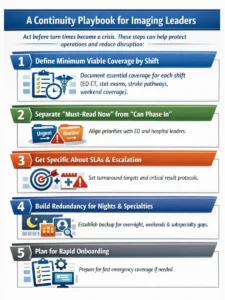
A continuity playbook for imaging leaders infographic with five steps: define minimum viable coverage by shift, separate must-read now from can phase in, set SLAs and escalation, build redundancy for nights/weekends/subspecialty reads, and plan rapid onboarding.

Hospitals are seeing pressure from multiple directions at once: staffing shortages, increasing exam complexity, heavier after-hours demand, and rising expectations for consistent turn times. One indicator the market is under strain: a Neiman Health Policy Institute analysis found that from 2014–2023, the number of practices with affiliated radiologists fell 14.7% while the number of radiologists grew 17.3%, reflecting ongoing consolidation and shifting coverage capacity.” When a group loses even a few radiologists—especially subspecialists—the coverage math can break quickly. Recruiting is rarely immediate, and internal coverage often becomes a patchwork of short-term fixes.


The important takeaway is this: a capacity disruption doesn’t require bad intent to create real clinical and operational risk. That’s why continuity planning matters.


A continuity playbook for imaging leaders

If you suspect your group is approaching a capacity shortfall, the best time to act is before turn times become a crisis. These steps can help protect operations and reduce disruption:

1) Define minimum viable coverage by shift

Document what must be covered on each shift to protect patient flow (e.g., ED CT, inpatient stat, stroke pathways, weekend coverage). This gives you a clear baseline if you need a stopgap plan.


2) Separate “must-read now” from “can phase in”

Not every study needs the same priority level. Align with ED and hospital leadership on what requires immediate final reads vs. what can be scheduled with acceptable delay.

3) Get specific about SLAs and escalation

If turn times are drifting, vague expectations won’t fix it. Define turnaround targets by priority category and document critical-result escalation pathways so the burden doesn’t land on one manager’s phone.

4) Build redundancy for nights, weekends, and subspecialty reads

Capacity collapses often reveal the weakest links first: overnight coverage, weekend staffing, and subspecialty depth. Even if you don’t outsource everything, having a backup partner for the riskiest windows can stabilize operations.

5) Plan for rapid onboarding before you need it

The fastest transitions happen when leadership has already identified what they’d need for an emergency coverage start: modality volumes, hours, PACS/RIS details, dictation preferences, and communication protocols.


How Vesta supports hospitals when coverage is strained or service is disrupted

When a radiology group can’t keep up, hospitals need dependable coverage that restores momentum—not another layer of complexity. Vesta Teleradiology helps facilities stabilize quickly with a continuity-first approach:

  • Scalable capacity to absorb surges and protect turn times
  • Subspecialty interpretation options aligned to case complexity
  • Clear expectations for turnaround and critical results communication
  • Rapid onboarding pathways designed for real hospital workflows

Whether you need temporary stabilization, overflow coverage, nights/weekends support, or a longer-term solution, we can tailor coverage so your imaging team isn’t forced into constant triage mode.


Every staffing disruption has context. The point isn’t to assign blame—it’s to protect continuity of care and keep clinical operations stable. If your facility is seeing warning signs of coverage strain, we can help you assess options and timelines without speculation about any third party.