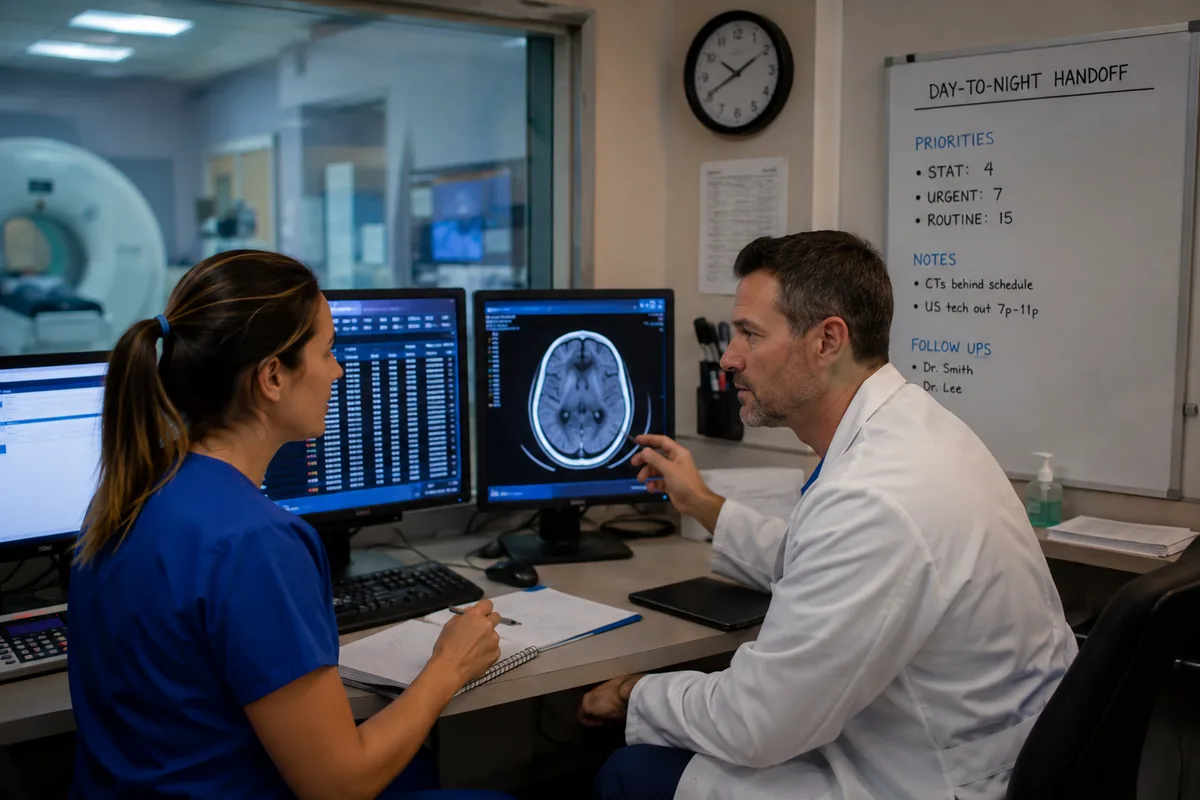
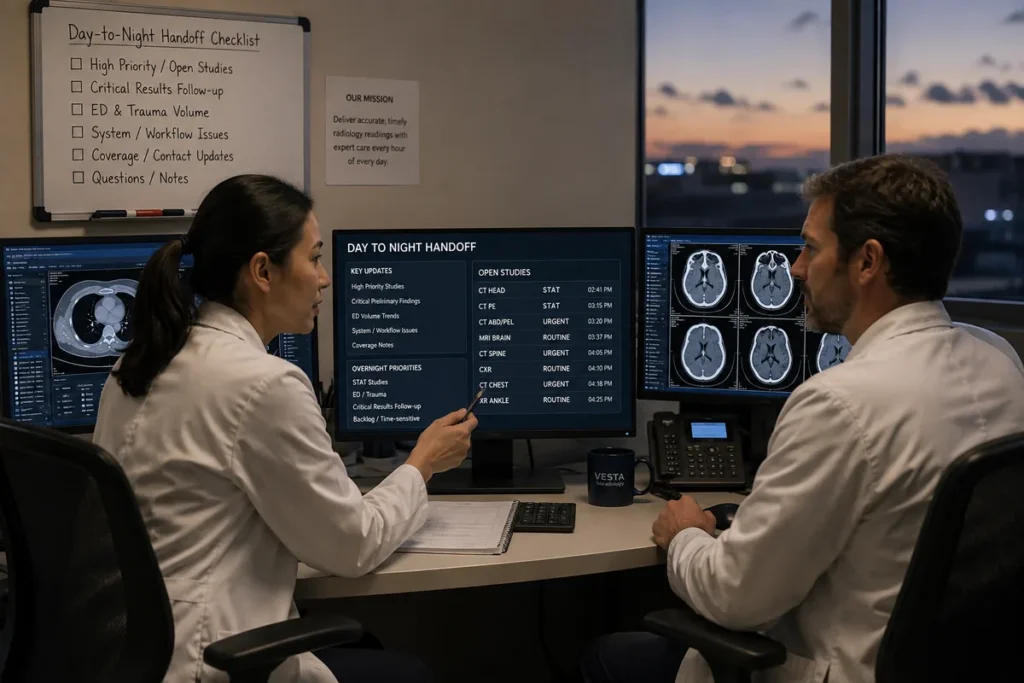
Choosing a teleradiology provider is only the beginning. The next challenge is connecting that provider to an active clinical environment without creating unnecessary work for technologists, physicians, IT teams, or hospital administrators.
A well-designed teleradiology onboarding process addresses far more than sending images from one system to another. Worklists, priorities, reports, clinical information, credentials, critical-results procedures, user access, and backup processes all need to function together.
The growing industry emphasis on interoperability underscores that point. The federal health IT community continues to address diagnostic imaging interoperability, including standards for exchanging imaging information and connecting imaging systems with EHR environments. The 2026 Interoperability Standards Advisory also continues to identify standards and implementation specifications designed to support healthcare data exchange.
For healthcare organizations adding remote radiology coverage, careful onboarding can turn that technical connectivity into a dependable clinical workflow.

Start by Mapping the Existing Imaging Workflow
Before configuring anything, the teleradiology provider needs to understand how imaging currently moves through the facility.
Where are studies performed? Which modalities require coverage? How are priorities assigned? Which examinations require subspecialty interpretation? Where should reports return? Who receives critical results?
A community hospital with an emergency department may have very different requirements from a multi-location imaging organization performing scheduled outpatient MRI and CT.
The onboarding team should document the process from image acquisition through final report delivery.
This allows the coverage model to fit the facility rather than requiring staff to adapt unnecessarily to an outside provider.
PACS and RIS Connectivity Must Be Tested in Real Conditions
Reliable remote interpretation depends on reliable access to images and information.
Modern diagnostic imaging relies heavily on established interoperability standards. Federal interoperability resources continue to identify DICOM as central to exchanges between imaging modalities and PACS environments, while current health IT initiatives are working toward better exchange among imaging systems, EHRs, and patient-facing applications.
For onboarding purposes, hospitals should test more than whether an image can technically reach a remote workstation.
- Complete image sets arrive correctly.
- Patient and examination information matches.
- Study priority is preserved.
- Relevant clinical history is available.
- Prior examinations can be accessed when appropriate.
- Reports return to the expected location.
- Final report status displays properly.
- Critical-result communication works as designed.
Testing multiple modalities and priority levels before go-live can reveal workflow problems while they are still easy to correct.
Define Worklist Routing Before Coverage Begins
One of the biggest opportunities in teleradiology is the ability to route work according to need.
A facility may require overnight emergency coverage, routine overflow support during the day, subspecialty interpretation for specific examinations, or several of these simultaneously.
Those pathways should be established during onboarding.
For example, a hospital may keep routine daytime examinations with its internal radiology group while automatically sending certain overnight studies to a Nighthawk service. Another facility may use remote radiologists when volume exceeds a defined threshold.
Routing can also account for modality and subspecialty expertise.
These decisions should be configured and tested before the first live shift.
Credentialing and Clinical Requirements Need Their Own Track
Technology can move quickly. Credentialing often involves a different timeline.
Hospitals should begin provider credentialing, privileges, licensing verification, and other required administrative processes early enough that they do not become the final barrier to launching coverage.
The clinical coverage model should also identify which radiologists can interpret the modalities and examination types expected from the facility.
This matters increasingly as radiology workforce pressure affects access to certain subspecialties. ACR’s 2026 workforce analysis found that although the overall radiologist population has grown, some subspecialty segments have faced more significant challenges. For example, the number of radiologists primarily practicing pediatric radiology declined from 2,190 in 2016 to 2,032 in 2023 in the research cited by ACR.
A remote model can help facilities access a larger physician network without needing every expertise represented physically at every location.
Establish Critical-Results Communication Before Go-Live
A critical finding should never trigger confusion over whom to call.
The ACR’s current Practice Parameter for Communication of Diagnostic Imaging Findings emphasizes the importance of effective systems for communicating imaging information.
During onboarding, the facility and teleradiology provider should define primary and backup contacts, approved communication methods, escalation procedures, and documentation expectations.
Those procedures should also account for nights, weekends, and holidays when the usual daytime contacts may be unavailable.
Run a Realistic Go-Live Test
A useful test should resemble the environment the system will actually encounter.
Send routine and urgent cases. Test multiple modalities. Verify that prior studies are available where expected. Confirm report return. Test the escalation process.
Then test failure scenarios.
What happens if connectivity drops? Who contacts whom if a study does not arrive? What happens when the teleradiology provider cannot access a prior examination? Is there a backup route for communicating critical findings?
These questions are easier to answer during a planned test than during a busy overnight shift.
New Technology Should Fit Into the Same Workflow
Radiology technology is evolving quickly. In May 2026, ACR approved its first-ever practice parameter specifically for imaging AI, emphasizing implementation, monitoring, and continuous quality improvement as parts of responsible clinical deployment.
That principle also illustrates an important point about implementation: technology creates the greatest value when it works inside the clinical process.
Vesta’s radiologist-led AI-assisted imaging support for select studies is designed around that concept, with advisory information incorporated into the radiologist’s workflow while the radiologist reviews the complete examination and remains responsible for the final interpretation.
Teleradiology Onboarding Should Make Work Easier
Successful implementation should leave the facility with a clear, repeatable workflow.
Vesta Teleradiology works with hospitals, imaging centers, urgent care organizations, and other healthcare facilities to establish customized 24/7 teleradiology, Nighthawk, overflow, and subspecialty coverage provided by U.S. board-certified radiologists.
Frequently Asked Questions
How long does teleradiology onboarding take?
Timelines vary according to credentialing, licensing, facility requirements, technical integration, modalities, and the complexity of the coverage model. Early coordination between clinical, administrative, and IT teams can help prevent unnecessary delays.
Does teleradiology require replacing a hospital’s PACS?
Teleradiology is generally designed to integrate with existing imaging workflows. The specific technical configuration depends on the facility’s PACS, RIS, EHR, security requirements, and desired report-delivery process.
What should hospitals test before teleradiology goes live?
Hospitals should verify study transmission, worklist routing, clinical information, priors, reporting, priority status, critical-results communication, user access, and downtime procedures across representative examination types.
Planning new radiology coverage? Contact Vesta Teleradiology to discuss a customized implementation and coverage strategy for your facility.
Sources
- HealthIT.gov — Diagnostic Imaging Interoperability Standards and Certification
- ONC Interoperability Standards Advisory 2026
- American College of Radiology — Radiologist Shortage Workforce Update
- ACR Practice Parameter for Communication of Diagnostic Imaging Findings
- American College of Radiology — First Practice Parameter for Imaging AI