Radiology Turnaround Time SLAs: What Hospitals Should Expect for STAT, Urgent, and Routine Reads

When hospital leaders evaluate radiology coverage, turnaround time is often one of the first numbers discussed. Yet a single promised turnaround time tells only part of the story.

An effective radiology turnaround time SLA should define how studies are prioritized, what happens when volume rises unexpectedly, how critical findings are communicated, and how performance is measured over time.

Those questions are becoming increasingly important as imaging demand continues to put pressure on radiology departments. In a 2026 workforce update, the American College of Radiology reported projections showing imaging demand continuing to rise alongside a radiologist workforce that may struggle to keep pace. ACR cited projected growth through 2055 of approximately 17% for MRI and 25% for CT, depending on modality and workforce assumptions.

More recently, ACR leadership reiterated in June 2026 that demand for imaging care remains strong and is expected to grow at least as fast as the radiology workforce.

For hospitals already managing busy emergency departments, overnight studies, subspecialty needs, and unpredictable surges, this makes thoughtful SLA design increasingly valuable.

STAT, Urgent, and Routine Studies Need Different Expectations

Treating every examination as equally urgent can create workflow problems of its own. A useful SLA establishes clearly defined study priorities.

STAT studies typically involve situations where clinicians need a rapid interpretation to make an immediate care decision. Emergency neurological imaging, trauma studies, suspected pulmonary embolism, and other time-sensitive examinations may fall into this category according to a facility’s protocols.

Urgent studies require expedited interpretation but may operate within a different turnaround window.

Routine studies often permit more flexibility and can be distributed across the worklist in a way that preserves capacity for genuinely time-sensitive cases.

The exact thresholds should be established between the healthcare organization and its radiology provider based on clinical requirements, available resources, service lines, and patient population.

The important point is clarity. Everyone involved should understand how an examination becomes STAT, how it enters the worklist, and what occurs when expected turnaround is at risk.
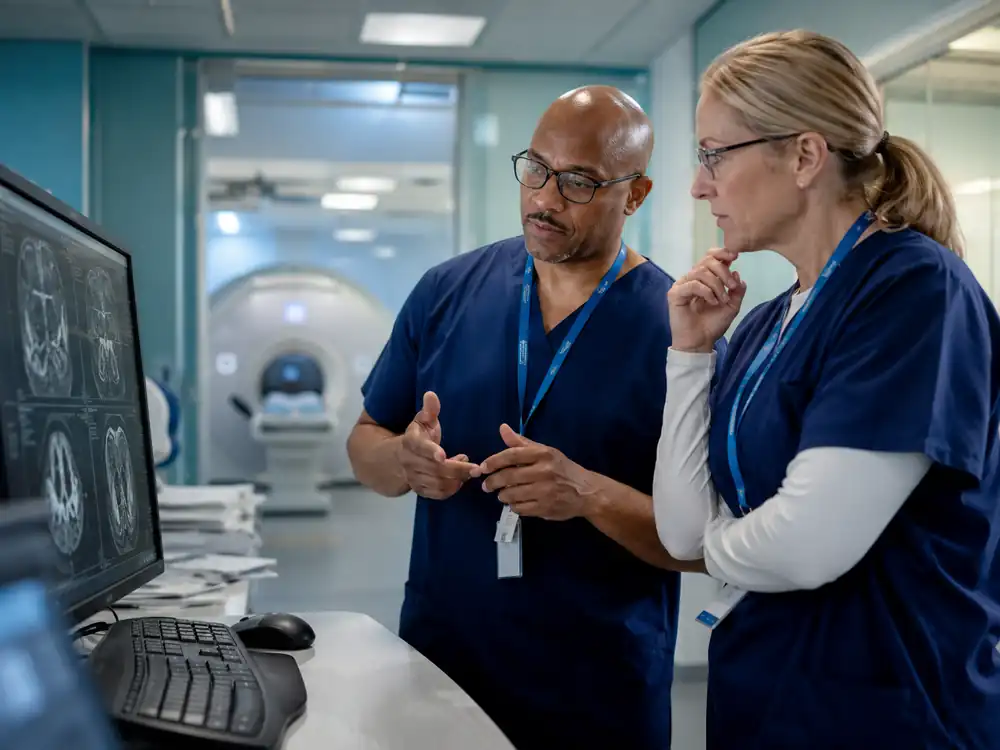
Hospital radiology workflow showing prioritized imaging studies and timely interpretation for STAT, urgent, and routine exams.

Turnaround Time Begins Before the Radiologist Opens the Study

Hospitals sometimes focus on interpretation time while overlooking delays elsewhere in the imaging chain.

A study can be slowed by incomplete transmission, missing prior examinations, incorrect routing, insufficient clinical history, connectivity problems, or a worklist configuration that sends the examination to the wrong queue.

This is why a strong SLA should consider the entire radiology workflow.

  • How are incoming studies prioritized and routed?
  • Can studies be assigned according to modality or subspecialty?
  • What happens during an unexpected volume surge?
  • How are delayed studies identified?
  • Who receives an escalation when turnaround expectations are threatened?
  • How are technical problems handled overnight?
  • How frequently is performance reviewed?

These questions reveal considerably more about operational reliability than a single advertised turnaround number.

Critical Findings Require a Communication Process

Fast interpretation has limited value if an important finding does not reach the right clinician.

The ACR Practice Parameter for Communication of Diagnostic Imaging Findings emphasizes that effective communication depends on the system through which information is conveyed and recognizes shared responsibilities surrounding the receipt and appropriate handling of imaging results.

That makes critical-result communication an important component of an SLA.

Hospitals should establish who must be contacted, which communication channels are approved, how receipt is documented, when escalation occurs, and who serves as the backup contact.

This becomes particularly important overnight, when daytime department leaders may be unavailable and clinical teams are working with smaller staffs.

Capacity Planning Belongs in the SLA Discussion

A turnaround commitment made during normal volume tells hospital administrators little about what will happen during a surge.

Emergency department demand can change rapidly. Seasonal illness, trauma, staffing vacancies, radiologist PTO, equipment expansion, and new service lines can all increase the reading workload.

Recent ACR analysis of radiology workforce economics described practices dealing with uneven subspecialty coverage and chronic backlogs. In one example, redesigning coverage around capability and centralized subspecialty pools generated an additional 10% of effective capacity without adding headcount.

The broader lesson for hospitals is straightforward: workflow design matters.

A teleradiology arrangement can provide additional flexibility through overflow coverage, Nighthawk coverage, subspecialty reading support, or combinations of these services.

Instead of waiting for the worklist to become unmanageable, facilities can establish thresholds for activating additional reading capacity.

Measure More Than the Average

Average turnaround time can conceal operational problems.

Imagine that 95 examinations are reported rapidly while five high-priority studies experience significant delays. The overall average may still look excellent.

Useful performance reviews can examine SLA compliance by priority level, modality, shift, facility, or service line. Administrators can also look at outliers and escalation events rather than relying solely on averages.

The objective is to understand where workflow pressure develops and address it before isolated delays become recurring problems.

Building a More Reliable Radiology Coverage Model

A strong radiology SLA connects clinical priorities with operational reality.

For hospitals, community facilities, imaging centers, and urgent care organizations, that means considering volume patterns, operating hours, modality mix, subspecialty requirements, after-hours demand, and escalation procedures when establishing coverage.

Vesta Teleradiology provides 24/7 nationwide teleradiology services, including Nighthawk, overflow, and subspecialty interpretation by U.S. board-certified radiologists. Coverage can be structured around the workflow and requirements of each facility.

Frequently Asked Questions

What is a radiology turnaround time SLA?

A radiology turnaround time SLA defines agreed-upon service expectations between a healthcare organization and its radiology provider. It may include turnaround targets by study priority, communication procedures, escalation processes, coverage hours, and performance reporting.

Should STAT and routine imaging have the same turnaround target?

Generally, facilities establish different priorities according to clinical urgency. The specific turnaround expectations should reflect the hospital’s protocols, patient population, staffing model, and clinical requirements.

Can teleradiology help hospitals manage turnaround times during volume surges?

Teleradiology can provide supplemental reading capacity when internal teams face increased volume, overnight demand, vacancies, or unexpected staffing constraints. Overflow arrangements can be customized around a facility’s needs.

Need to strengthen radiology coverage or prepare for changing imaging volume? Contact Vesta Teleradiology to discuss a coverage model built around your facility’s workflow.

Sources
MSK Teleradiology in 2026: How Hospitals Can Reduce MRI Backlogs Without Slowing Ortho and ED Throughput


Overview

  • RSNA’s 2025 MSK trends spotlight rising complexity: opportunistic imaging, body composition, AI use, and advancing MSK applications.
  • For hospitals, the pain point is practical: MSK MRI backlogs delay ortho decision-making and clog scheduling.
  • Workforce strain remains a headwind, with the ACR describing ongoing supply–demand imbalance.
  • The fix is operational: tighter protocol discipline, realistic SLAs, and subspecialty coverage that protects peak windows.
  • MSK teleradiology works best when it’s service-line aligned (ortho + ED) and measured (TAT, discrepancy tracking, escalation).

Why MSK MRI feels harder lately

MSK imaging is not “just knee MRIs” anymore. RSNA’s 2025 MSK coverage highlights how rapidly the field is evolving, including opportunistic imaging and body composition analysis showing up in routine workstreams, plus expanding AI utilization. Even when your department isn’t formally reporting every opportunistic metric, the trend reflects an underlying reality: MSK studies increasingly carry higher expectations for nuance, consistency, and clinical usefulness.

At the same time, staffing constraints haven’t loosened. The ACR’s workforce update describes a persistent shortage environment where the system doesn’t automatically “bounce back” without deliberate changes. That’s why backlogs can appear suddenly: one vacancy, one vacation block, one surge week in sports medicine referrals—and your TAT drifts.

The downstream cost of MSK delays

MRI backlog isn’t just a radiology KPI. It hits:

  • Orthopedics and sports medicine: delayed surgical planning, delayed injections, delayed PT pathways.
  • ED throughput: delayed disposition when MRI is needed to rule out spinal cord or occult injury.
  • Patient satisfaction: scheduling delays and repeat calls escalate quickly.
  • Clinician trust: inconsistent report quality drives more phone calls and “curbside reads.”

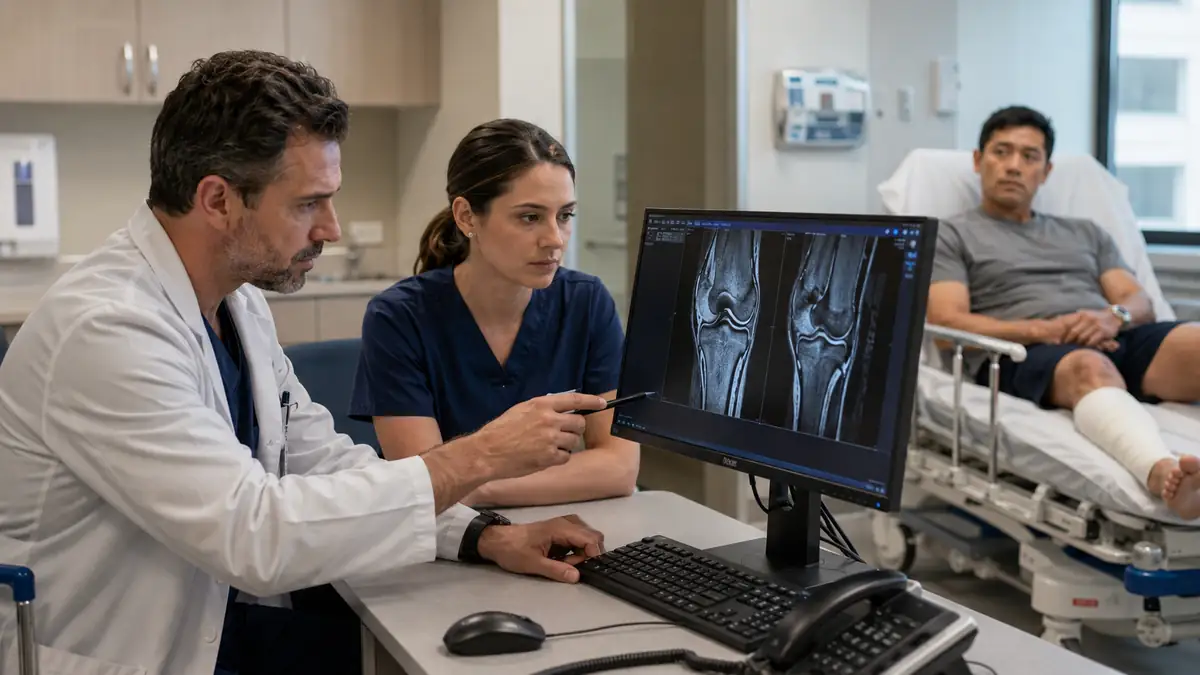
Clinical team reviewing musculoskeletal MRI results while a patient waits nearby, illustrating the downstream cost of MSK delays

What an MSK backlog reduction plan looks like (that doesn’t burn out your team)

1) Separate “needs MSK subspecialty” from “can be safely generalized”

Not every MSK study is equal. Create a simple classification:

  • Tier A (MSK subspecialty preferred): complex post-op, tumor, infection, cartilage, multi-ligament injuries, nuanced shoulder/hip.
  • Tier B (standard MSK): high-volume bread-and-butter (meniscus, ACL, simple rotator cuff).
  • Tier C (general): studies where general radiology reads are appropriate by policy.

This prevents the common mistake of routing everything to the same limited pool.

2) Align SLAs to the ortho service line calendar

Ortho doesn’t spike randomly. It spikes around:

  • Clinic days
  • OR block schedules
  • Weekend injury surges
  • Sports seasons

Build coverage to protect those windows. An MSK teleradiology partner can be most valuable as a predictable buffer during peak days rather than as “panic coverage” after the backlog is already visible.

3) Standardize MSK protocols to reduce rework

Rework is hidden backlog. Common causes:

  • Wrong sequence sets
  • Inconsistent contrast usage
  • Missing views for certain joints
  • Post-op artifacts without mitigation sequences

Your best backlog reduction lever is often “less repeat scanning,” not “faster reading.”

4) Use quality signals, not just speed

If you only optimize TAT, report quality often suffers, and calls increase. Use at least two quality metrics:

  • Discrepancy/peer review trend (by modality/type)
  • Clinician callback volume or addendum rate

5) Measure the right time intervals

Instead of one TAT number, track:

  • scan complete → read started
  • read started → signed
  • signed → critical communicated (when applicable)

That reveals whether your bottleneck is worklist management, staffing, or reporting.

Where MSK teleradiology fits best

MSK teleradiology is most effective when it’s positioned as:

  • Subspecialty access for complex studies (Tier A)
  • Backlog prevention during predictable peaks
  • Nights/weekends coverage for ED MSK needs
  • Consistency for multi-site health systems

The goal isn’t to “outsource MSK.” It’s to stabilize the service line so ortho and ED leaders can trust the imaging pipeline.

FAQ 

How do you reduce MSK MRI backlog quickly?
Start by tiering studies, protecting peak windows with planned coverage, and removing rework from protocol inconsistencies.

Is AI the answer for MSK workload?
AI is expanding in MSK, but operational wins still come from workflow discipline and coverage design—especially while workforce constraints persist.

How Vesta fits


Vesta Teleradiology supports hospitals with MSK-capable reads, surge buffering, and SLA-driven throughput—built to protect ortho and ED decision-making when volume spikes. Contact Vesta today to learn more about our tailored radiology services.

Powering Quality and Efficiency Through AI

Elevating Radiology. Expanding Access. Enhancing Care.

Vesta Teleradiology is redefining radiology delivery by integrating artificial intelligence (AI) into our diagnostic and operational workflows – helping hospitals of every size achieve higher quality, faster turnaround, and greater consistency in patient care.

Through our newly launched partnerships with Qure.ai and Carpl.ai, Vesta is bringing the benefits of AI assisted imaging to both large health systems and rural or underserved communities across the nation. This innovation enhances the speed, accuracy, and accessibility of radiology services – ensuring clinical excellence reaches every patient, everywhere.

AI Partnerships Driving Clinical Quality and Efficiency

Vesta now integrates Qure.ai’s FDA cleared AI solutions directly into our reading workflow to support both CT and X-ray imaging. For CT Brain (Non-Contrast), the AI automatically detects intracranial hemorrhages, fractures, and mass effect to improve triage and accelerate emergency response times. For Chest X-rays, it identifies nodules, effusions, and acute pulmonary findings to strengthen diagnostic consistency and enable earlier intervention. These tools work as a co-pilot for radiologists – helping prioritize critical studies, standardize interpretations, and deliver higher-quality reports with precision and speed.

Vesta also leverages Carpl.ai’s enterprise grade AI platform for musculoskeletal (MSK) fracture detection, enabling faster identification of subtle skeletal injuries that are often missed under high volume workloads. This integration enhances both radiologist efficiency and patient safety by improving consistency, turnaround times, and workflow throughput.

Expanding AI Across Vesta’s Clinical and Operational Ecosystem

In addition to our partnerships with Qure.ai and Carpl.ai, Vesta continues to implement AI across the organization to enhance both clinical quality and operational efficiency. Through RadPair, Vesta improves dictation accuracy, peer review workflows, and reporting analytics for radiologists – driving consistency and precision across the reading process.

On the operations side, Vesta has developed and launched an AI based support platform that allows staff to instantly retrieve internal protocols, radiologist schedules, credentialing data, and study specialty details from a centralized location. These tools streamline communication, improve turnaround time, and strengthen coordination across departments – supporting faster, more efficient service for clients and radiologists alike.

AI with a Purpose: Clinical Quality Care for All

Vesta’s mission has always been clear – to combine technology, compassion, and clinical excellence to improve access to quality radiology care. By implementing these AI partnerships and innovations, we’re ensuring faster turnaround for emergent and high acuity studies, improved diagnostic accuracy through validated AI support, greater access for rural and underserved hospitals, and consistent quality across every facility, 24/7/365.

These advancements reaffirm Vesta’s leadership as a trusted partner in AI driven radiology innovation, bringing cutting edge technology to the frontlines of patient care while optimizing the systems that support it.

About Vesta Teleradiology

Vesta Teleradiology is a Joint Commission-Accredited, 24/7/365 radiology provider serving hospitals, imaging centers, and healthcare systems nationwide. Our team of board-certified radiologists delivers timely, accurate, and secure interpretations – now further enhanced by AI technology to support faster decisions, higher quality, and better outcomes.

Interested in learning how Vesta’s AI powered radiology can support your hospital or health system?
Contact us at info@vestarad.com or visit www.vestarad.com/contact to schedule a demo or consultation.

Attribution:
Vesta Teleradiology integrates third party AI technologies through collaborations with Qure.ai, Carpl.ai, and RadPair. Descriptions of imaging and workflow capabilities in this publication are based on publicly available clinical use cases and are provided for informational purposes only. All content and messaging on this page are original to Vesta Teleradiology.