How AI-Assisted Teleradiology Supports Smarter Workflows

Healthcare organizations are managing increasing imaging demand while facing radiologist shortages, after-hours coverage needs, changing patient volumes, and continued pressure to deliver timely reports.

Artificial intelligence has emerged as one resource that may help radiology teams manage these demands more efficiently.

The greatest value often comes from using AI for focused workflow assistance. Within teleradiology, this can include helping prioritize select studies, surfacing potentially important findings, and supporting consistency during high-volume reading periods.

At Vesta Teleradiology, AI-assisted imaging support operates within a radiologist-led model. Technology provides advisory information, while U.S. board-certified radiologists review the complete study, apply clinical judgment, and finalize every report.

What Is AI-Assisted Teleradiology?

AI-assisted teleradiology combines remote radiology interpretation with software designed to analyze select medical images.

Depending on the type of study and authorized use of the technology, an AI tool may:

  • Highlight a region that may require closer review
  • Flag a study that could contain a time-sensitive finding
  • Help organize or prioritize the reading worklist
  • Provide an additional layer of workflow support
  • Assist with consistency during periods of high imaging volume

The output serves as advisory information for the radiologist.

The American College of Radiology’s imaging AI practice parameter emphasizes qualified physician involvement, appropriate validation, user training, performance monitoring, and quality assurance when AI is incorporated into clinical imaging.

How AI Can Support Worklist Prioritization

A radiologist’s worklist may contain studies from emergency departments, inpatient units, urgent care facilities, imaging centers, and outpatient practices.

During busy periods, several urgent and routine studies can arrive within a short time. Traditional priority designations remain important, and AI-assisted analysis may offer another signal that helps bring select studies to a radiologist’s attention.

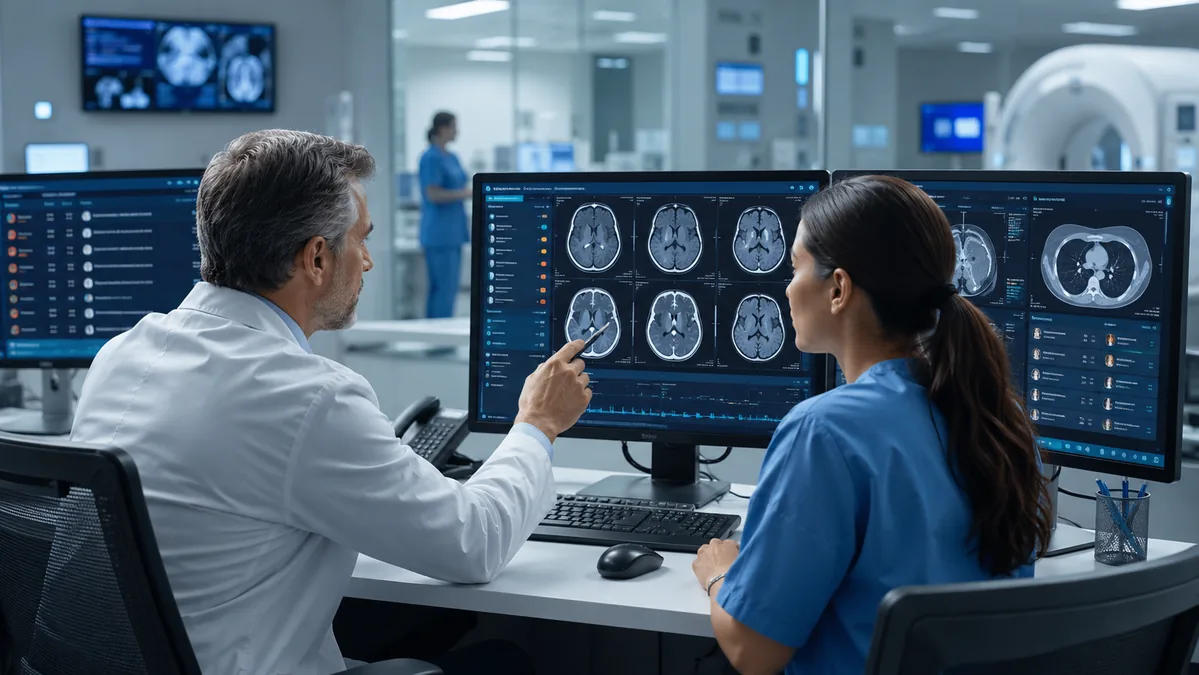
For example, an AI-assisted tool may flag a non-contrast CT brain study containing features associated with a potentially urgent finding. The study can then receive earlier visibility within the workflow.

The radiologist evaluates the complete examination, reviews the patient’s available clinical information, considers other possible findings, and provides the final report.

This structure combines computational assistance with the context, experience, and judgment of a physician.

Current Areas of AI-Assisted Support at Vesta

Vesta has introduced AI-assisted support for select studies in three high-impact areas.

Non-Contrast CT Brain

Within Vesta’s collaboration with Qure.ai, AI-assisted support is used for select non-contrast CT brain workflows, including the identification and prioritization of suspected intracranial hemorrhage.

The technology provides advisory information that may help bring a potentially urgent examination to earlier attention. The Vesta radiologist reviews the complete study, evaluates all relevant and incidental findings, and issues the final report.

Qure.ai’s FDA-cleared head CT technology includes applications involving intracranial bleeding, mass effect, midline shift, and cranial fractures. Vesta’s specific implementation should only describe the capabilities that are currently approved and active within Vesta’s workflow.


Chest X-Ray

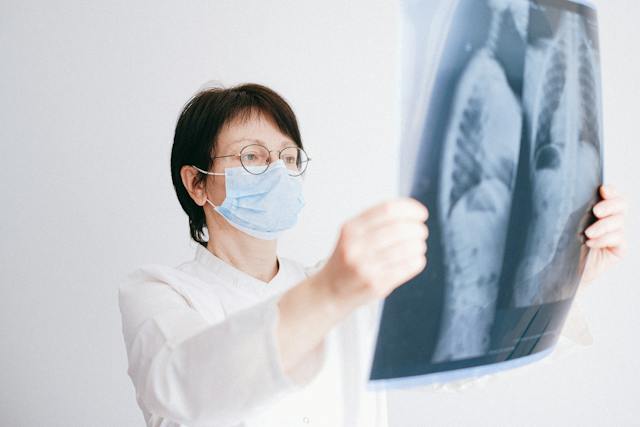
Chest X-rays represent a significant portion of imaging volume across hospitals, urgent care centers, physician offices, and outpatient imaging facilities.

AI-assisted analysis can help surface select chest findings for radiologist review and support prioritization within a busy worklist.

Within Vesta’s collaboration with Qure.ai, chest X-ray support includes select findings such as pleural effusion, pneumonia, and other applicable chest abnormalities. These outputs are advisory and are reviewed alongside the complete examination by a Vesta radiologist.

Qure.ai has received FDA clearances for multiple chest X-ray applications designed to identify, highlight, categorize, or prioritize select findings for healthcare professionals. Its cleared applications include support involving pleural effusion and pneumothorax, and Qure.ai announced additional chest X-ray indications in 2026

The radiologist remains responsible for evaluating the complete image, considering available clinical information, and providing the final interpretation.


Musculoskeletal X-Ray Fracture Support

Suspected fractures are common in emergency departments, urgent care clinics, orthopedic practices, and outpatient imaging centers.

AI-assisted fracture support can highlight areas that may deserve additional attention. The radiologist reviews the complete image set and determines the findings included in the final interpretation.

Why Workflow Integration Matters

A capable AI tool can still create operational problems when it sits outside the normal reading process.

Separate viewers, additional passwords, new worklists, and disconnected alerts may increase complexity for radiologists and technical teams. They can also make adoption more difficult across a large or distributed radiology practice.

Vesta’s AI-assisted tools are embedded into the existing reading environment for select studies. This approach is designed to avoid unnecessary changes for client facilities.

Healthcare organizations continue receiving reports through their established delivery process. Vesta radiologists receive the available AI-assisted information within their clinical workflow.

The result is a more practical form of implementation that supports innovation while limiting disruption.

Radiologist-Led Interpretation Remains Essential

Medical images contain complex patterns that must be interpreted within the broader clinical picture.

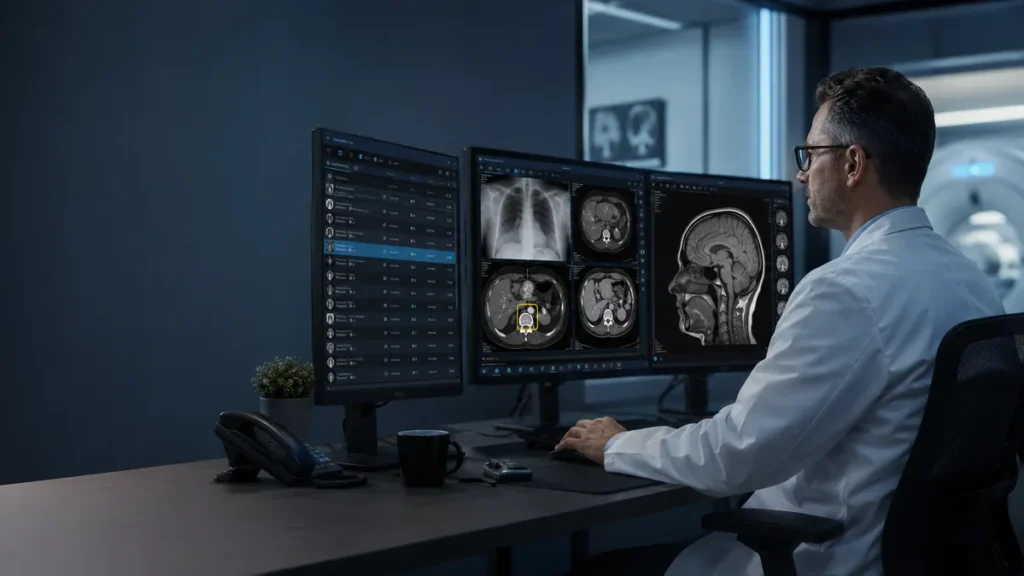
AI can analyze designated features within an image, while the radiologist evaluates the entire examination. The radiologist also considers patient history, prior imaging, technical image quality, clinical indications, incidental findings, and possible alternative explanations.

This is why Vesta keeps physician oversight at the center of every AI-assisted case.

The Joint Commission and the Coalition for Health AI have also emphasized responsible governance, safety, transparency, monitoring, and accountability when healthcare organizations adopt AI.

A successful AI strategy should reinforce established clinical responsibility.

Questions Facilities Should Ask About Imaging AI

Hospitals and imaging organizations evaluating AI-assisted radiology services should consider several practical questions:

  1. Does the technology address a meaningful clinical or operational need?
  2. Has the tool been evaluated for the intended imaging use?
  3. How does the AI output appear within the radiologist’s workflow?
  4. Who remains responsible for the final interpretation?
  5. How is performance monitored after implementation?
  6. Will the facility need new viewers, logins, or reporting processes?
  7. How will clinicians and operational leaders provide feedback?
  8. What quality oversight processes are in place?

These questions help separate meaningful implementation from technology that adds complexity without solving a clear workflow problem.
Radiologist-Led AI Workflow SupportBuilding AI Around Real Healthcare Needs

Vesta’s AI Innovation Roadmap is centered on practical use cases that can support quality, prioritization, consistency, and workflow efficiency.

The technology works alongside Vesta’s U.S. board-certified radiologists, 24/7 nationwide coverage, Nighthawk services, subspecialty reads, and customized overflow support. Vesta’s Joint Commission accreditation further reflects its commitment to quality-focused processes and dependable service.

As capabilities expand, client feedback will continue to guide Vesta’s priorities.

Facilities are encouraged to share their experiences with report quality, turnaround times, communication, clinical workflow, and other imaging areas where additional AI-assisted support could provide value.

By combining thoughtful technology adoption with experienced radiologists and strong clinical oversight, Vesta is building an AI-assisted teleradiology model designed for the realities of modern imaging operations.

Explore a practical, radiologist-led approach to AI

Learn how Vesta can support worklist prioritization and workflow efficiency while fitting into your existing imaging processes.

Discuss AI-assisted teleradiology with Vesta.

Sources

National Doctors’ Day: How Teleradiology Supports Physicians Behind the Scenes

Every year on March 30, National Doctors’ Day recognizes the skill, commitment, and daily impact of physicians across the country. The American Medical Association describes it as an annual observance honoring physicians’ dedication to delivering high-quality care. In 2026, that recognition feels especially important as hospitals and health systems continue to manage physician shortages, growing imaging demand, and the pressure to maintain fast, high-quality care across every hour of the day.

When people think about physicians on the front lines, they often picture emergency medicine doctors, hospitalists, surgeons, and specialists seeing patients in person. But radiologists are physicians too, and behind the scenes, they play a major role in helping those care teams move patient care forward. Through teleradiology, that expertise can reach hospitals, imaging centers, and providers whenever it is needed most.

fda-cleared xray

For many hospitals, especially those needing overnight, weekend, holiday, or subspecialty coverage, teleradiology is one of the support systems that helps physicians make timely decisions with greater confidence. Vesta Teleradiology positions itself as a Joint Commission-accredited, 24/7/365 provider serving hospitals, imaging centers, and health systems nationwide with U.S. board-certified radiologists and subspecialty support.

Helping Physicians Get Answers Faster

For emergency physicians and inpatient teams, waiting on an imaging interpretation can slow down patient flow, delay treatment decisions, and add pressure to an already demanding shift. That is one reason teleradiology matters so much behind the scenes. The right partner helps make sure studies are read promptly, critical findings are surfaced quickly, and referring physicians have the information they need when they need it.

This support is even more meaningful today because physician workforce strain is not easing. AAMC says the United States is projected to face a physician shortage of between 13,500 and 86,000 physicians by 2036, and ACR recently highlighted radiology workforce shortages and rising imaging volumes as a continuing challenge for the field.

Supporting Physicians Beyond After-Hours Coverage

Modern teleradiology is about more than reading cases at night. Hospitals increasingly need dependable coverage models that support physician teams around the clock, fill subspecialty gaps, and integrate smoothly into existing operations. That can mean helping a hospitalist get a faster final interpretation, supporting an ED physician with urgent reads overnight, or giving a facility access to subspecialty expertise that may not be available locally. RSNA has noted that radiology demand continues to outpace radiologist capacity, which adds to the importance of scalable support models.

Vesta’s service positioning reflects that broader support role. The company highlights 24/7 coverage, subspecialty interpretations, support for hospitals and imaging centers, and service across all 50 states.

Why This Matters for Rural and Underserved Communities

National Doctors’ Day is also a good time to recognize the physicians serving rural and underserved communities, where access challenges can be even more severe. Federal telehealth guidance continues to emphasize how telehealth can expand access in rural settings, and HRSA’s telehealth office exists specifically to improve access to quality care through integrated telehealth services.

For imaging, that can translate into meaningful operational support. Teleradiology can help hospitals maintain coverage when local recruiting is difficult, when internal teams need backup, or when subspecialty interpretation is not available onsite. Vesta also specifically connects its AI-assisted imaging strategy to benefits for both large health systems and rural or underserved communities.

The 2026 Angle: AI as a Support Tool, Not a Substitute

Another meaningful part of this discussion is the growing role of AI in helping physicians and radiologists manage workload. In 2026, hospital leaders are asking more practical questions about AI: Can it help prioritize worklists? Can it support faster review? Can it improve workflow without compromising physician oversight?

Powering Quality and Efficiency Through AI

That is the right way to approach it. AI is most useful when it works in support of physicians rather than trying to replace clinical judgment


A Good Time to Recognize the Physicians Behind the Images

Doctors’ Day is not only about the physicians patients see face-to-face. It is also a reminder to appreciate the many physicians working behind the scenes to help every care decision happen. Radiologists, subspecialists, and the teleradiology teams supporting hospital operations are part of that story.

For hospitals in 2026, one of the most practical ways to support physicians is to strengthen the systems around them. Reliable teleradiology coverage, subspecialty access, and AI-enhanced workflow can help reduce bottlenecks, improve responsiveness, and make it easier for physicians to focus on patient care. On National Doctors’ Day, that is a worthwhile reminder: supporting doctors does not only mean celebrating them. It also means giving them the tools, coverage, and partnerships that help them do their jobs well.


Powering Quality and Efficiency Through AI

Elevating Radiology. Expanding Access. Enhancing Care.

Vesta Teleradiology is redefining radiology delivery by integrating artificial intelligence (AI) into our diagnostic and operational workflows – helping hospitals of every size achieve higher quality, faster turnaround, and greater consistency in patient care.

Through our newly launched partnerships with Qure.ai and Carpl.ai, Vesta is bringing the benefits of AI assisted imaging to both large health systems and rural or underserved communities across the nation. This innovation enhances the speed, accuracy, and accessibility of radiology services – ensuring clinical excellence reaches every patient, everywhere.

AI Partnerships Driving Clinical Quality and Efficiency

Vesta now integrates Qure.ai’s FDA cleared AI solutions directly into our reading workflow to support both CT and X-ray imaging. For CT Brain (Non-Contrast), the AI automatically detects intracranial hemorrhages, fractures, and mass effect to improve triage and accelerate emergency response times. For Chest X-rays, it identifies nodules, effusions, and acute pulmonary findings to strengthen diagnostic consistency and enable earlier intervention. These tools work as a co-pilot for radiologists – helping prioritize critical studies, standardize interpretations, and deliver higher-quality reports with precision and speed.

Vesta also leverages Carpl.ai’s enterprise grade AI platform for musculoskeletal (MSK) fracture detection, enabling faster identification of subtle skeletal injuries that are often missed under high volume workloads. This integration enhances both radiologist efficiency and patient safety by improving consistency, turnaround times, and workflow throughput.

Expanding AI Across Vesta’s Clinical and Operational Ecosystem

In addition to our partnerships with Qure.ai and Carpl.ai, Vesta continues to implement AI across the organization to enhance both clinical quality and operational efficiency. Through RadPair, Vesta improves dictation accuracy, peer review workflows, and reporting analytics for radiologists – driving consistency and precision across the reading process.

On the operations side, Vesta has developed and launched an AI based support platform that allows staff to instantly retrieve internal protocols, radiologist schedules, credentialing data, and study specialty details from a centralized location. These tools streamline communication, improve turnaround time, and strengthen coordination across departments – supporting faster, more efficient service for clients and radiologists alike.

AI with a Purpose: Clinical Quality Care for All

Vesta’s mission has always been clear – to combine technology, compassion, and clinical excellence to improve access to quality radiology care. By implementing these AI partnerships and innovations, we’re ensuring faster turnaround for emergent and high acuity studies, improved diagnostic accuracy through validated AI support, greater access for rural and underserved hospitals, and consistent quality across every facility, 24/7/365.

These advancements reaffirm Vesta’s leadership as a trusted partner in AI driven radiology innovation, bringing cutting edge technology to the frontlines of patient care while optimizing the systems that support it.

About Vesta Teleradiology

Vesta Teleradiology is a Joint Commission-Accredited, 24/7/365 radiology provider serving hospitals, imaging centers, and healthcare systems nationwide. Our team of board-certified radiologists delivers timely, accurate, and secure interpretations – now further enhanced by AI technology to support faster decisions, higher quality, and better outcomes.

Interested in learning how Vesta’s AI powered radiology can support your hospital or health system?
Contact us at info@vestarad.com or visit www.vestarad.com/contact to schedule a demo or consultation.

Attribution:
Vesta Teleradiology integrates third party AI technologies through collaborations with Qure.ai, Carpl.ai, and RadPair. Descriptions of imaging and workflow capabilities in this publication are based on publicly available clinical use cases and are provided for informational purposes only. All content and messaging on this page are original to Vesta Teleradiology.