What Hospital Imaging Leaders Should Be Thinking About Before AHRA 2026

AHRA is close enough now that many hospital imaging leaders are shifting from broad planning to sharper questions about the second half of the year. The annual meeting runs July 12 through 15 in Orlando and brings together imaging management professionals who are dealing with many of the same issues at home: rising demand, staffing pressure, broader modality mix, and growing expectations around efficiency. In that environment, the most useful preparation rarely revolves around a single product or a single staffing opening. It usually starts with a harder look at whether the department’s current structure still fits the work coming through the door.

That question matters because imaging growth has become both a volume story and a complexity story. Vizient has pointed to continued long-term growth in imaging demand, with advanced imaging projected to outpace standard outpatient imaging over the next decade. CT and PET are among the categories drawing particular attention, but the larger takeaway for hospital leaders is broader than one modality. When imaging demand expands, scheduling pressure tends to rise, report turnaround becomes harder to protect, and service lines that once felt manageable can start to strain around the edges.

1. Decide whether your coverage model still matches your modality mix

Many imaging departments carry forward a coverage structure that made sense a few years ago, then discover that the modality mix has changed faster than the support model around it. Growth in CT, MRI, mammography, nuclear medicine, or subspecialty-heavy studies can reshape workflow long before the schedule officially breaks. A department may still be functioning, but leaders often start to see subtle warning signs first: more frequent workarounds, more follow-up calls, more pressure around evenings, and less confidence that the current setup can absorb another jump in volume.

Before AHRA, leaders should take inventory of where the real strain is showing up. Is the pressure concentrated around advanced imaging? Are nights and weekends becoming harder to stabilize? Are subspecialty reads harder to secure when the schedule gets tight? Those questions usually lead to a more honest view of whether the department needs broader support, a different coverage design, or a radiology partner that can help carry a wider range of studies without disrupting the workflow already in place.

2. Treat staffing pressure as an operational issue, not just a recruiting issue

Staffing remains one of the biggest planning issues heading into this summer. The American College of Radiology’s 2026 workforce update reported continued concern around radiologist supply and highlighted higher attrition in practices with rural sites. That finding carries weight even for departments outside rural markets. Coverage instability in one part of the system often ripples outward through call schedules, reading availability, and access to subspecialty support.

For imaging leaders, the practical question goes beyond whether open positions exist. The more useful question is how staffing pressure is already affecting throughput, quality, or service consistency. In many departments, the challenge shows up as heavier call burden, slower reads during peak periods, or too much dependence on a narrow group of radiologists to cover complex studies. Looking at staffing through that operational lens often leads to stronger conversations about flexibility, overnight structure, and how to protect performance as volumes keep moving upward.
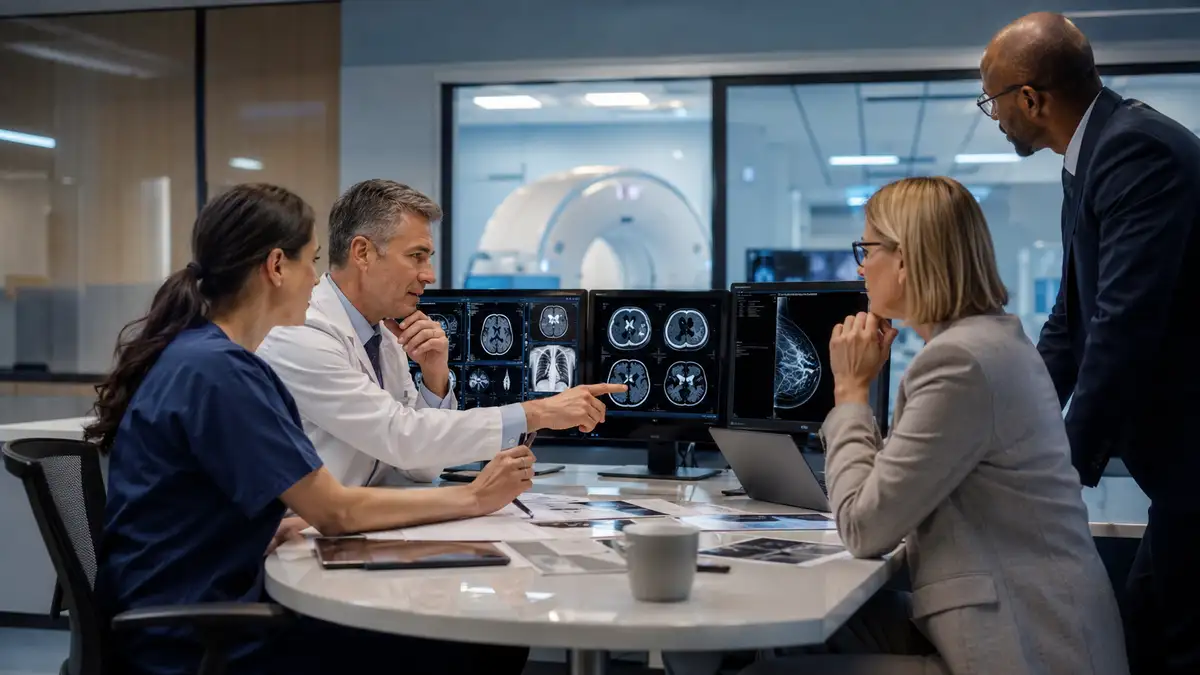
Imaging leadership team discussing modality expansion, workflow, and coverage strategy in a hospital setting

3. Focus on workflow improvement that actually reduces friction

A department can have capable radiologists and still fight avoidable bottlenecks. That is one reason workflow has become such a major leadership topic. Imaging teams are under pressure to prioritize urgent studies well, communicate clearly, and move work through the system with fewer handoff problems. Coverage matters, but coverage alone does not guarantee a smooth operation.

This is where AI keeps entering the conversation. The FDA’s public list of AI-enabled medical devices continues to expand, and radiology remains one of the most active categories. For hospital imaging leaders, that trend opens the door to useful questions. Does a tool help surface time-sensitive studies sooner? Does it fit the existing reading workflow? Does it support radiologists rather than create one more screen, one more login, or one more step? The departments getting the most value from workflow technology are usually the ones that stay disciplined about practical fit instead of chasing novelty.

4. Plan for steadiness, not just speed

Turnaround time will always matter, but leadership conversations have moved past speed alone. Imaging departments also need consistency. That includes dependable overnight coverage, clear communication pathways, stable reporting quality, and enough flexibility to handle high-volume periods without rewriting the playbook every few months. Leaders preparing for AHRA should think carefully about whether their current model supports steadiness across ordinary days and difficult ones alike.

That kind of steadiness often depends on partnership strategy as much as staffing strategy. A radiology support model should strengthen the department across growth, overflow, and modality expansion. It should help the team absorb complexity with less disruption, not more. Heading into AHRA, the most productive mindset may be this: look honestly at where pressure is building, identify which workflow and coverage issues carry the most operational cost, and use that clarity to guide the next round of decisions.

FAQs

What is AHRA 2026? AHRA’s 2026 Annual Meeting is scheduled for July 12 through 15 in Orlando and is designed for medical imaging management professionals.

Why does modality mix matter so much right now? As advanced imaging volume grows, departments often need broader reading support, stronger subspecialty access, and a workflow that can handle more complex studies without adding friction.

Why are imaging leaders paying close attention to workflow tools? Because efficiency gains only matter when the tools fit the existing reading environment and help teams prioritize work without complicating the process.

Sources

  https://ahra.org/education-events/upcoming-events/annual-meeting

  https://ahra2026.eventscribe.net/

 https://www.acr.org/Clinical-Resources/Publications-and-Research/ACR-Bulletin/2026/radiologist-shortage-work-force-update

 https://www.fda.gov/medical-devices/software-medical-device-samd/artificial-intelligence-enabled-medical-devices

 https://www.vizientinc.com/insights/reports/diagnostic-imaging/the-growing-demand-for-imaging-services-key-trends-shaping-the-future

https://vizientinc-delivery.sitecorecontenthub.cloud/api/public/content/08120908acee435984d854d55a2e6a19


What Hospitals Risk When Subspecialty Radiology Reads Are Not Available After Hours

After-hours radiology coverage is about more than getting a study read overnight. For many hospitals, the bigger challenge is making sure the right expertise is available when a complex case comes in.

The American College of Radiology notes that teleradiology has become an important part of care delivery, especially where access to radiology expertise is limited. The ACR’s teleradiology guidance supports the value of expanding access to radiology expertise across care settings. When subspecialty radiology reads are not available after hours, hospitals can face workflow, quality, and care coordination risks that extend beyond the radiology department.

Why after-hours subspecialty access matters

Not every imaging study carries the same level of complexity. A routine case may be manageable with general coverage, but some exams benefit from deeper expertise in areas such as neuroradiology, musculoskeletal imaging, body imaging, or emergency radiology.

That matters at night, on weekends, and during holidays because urgent clinical decisions still need to be made. Hospitals may be managing possible stroke, trauma, subtle fractures, postoperative complications, or complex abdominal findings long after regular business hours. When the available after-hours read lacks subspecialty depth, the hospital may still get an interpretation, but it may lose confidence, speed, or both.
What hospitals risk without after-hours subspecialty reads

Slower decision-making for complex cases

When clinicians are waiting on a more definitive interpretation, treatment decisions can slow down. That can affect emergency department throughput, transfers, admissions, and follow-up planning.

Greater dependence on callbacks or next-day review

If a complex study needs another look in the morning, the overnight read may function more like a temporary bridge than a complete answer. That can create inefficiency for both the care team and the radiology department.

a radiology reviews head x-ray

More strain on internal radiologists

Without dependable subspecialty support after hours, hospitals may rely heavily on internal radiologists to take more call, review edge cases, or resolve uncertainty the next day. Over time, that can add pressure to staffing and scheduling.

Reduced confidence in high-acuity moments

Hospitals want consistency when cases are urgent. The Joint Commission’s hospital safety framework emphasizes timely reporting of critical results of tests and diagnostic procedures, including defining who reports them and how quickly they must be communicated. If expertise is limited after hours, confidence in that process can weaken at the exact time it matters most.

The operational impact goes beyond radiology

A gap in after-hours subspecialty access does not stay isolated in imaging. It can affect:

  • emergency department flow
  • inpatient care coordination
  • communication between clinicians
  • overnight treatment planning
  • next-day workload for radiology teams

In other words, this is not only a radiologist staffing issue. It is a hospital operations issue.

That is one reason many facilities look for a teleradiology partner that can provide after-hours coverage backed by subspecialty expertise, not just general availability.

How teleradiology helps reduce the risk

A strong teleradiology model helps hospitals maintain access to the right expertise when internal coverage is limited. This can support:

  • more confident overnight interpretations
  • stronger continuity between after-hours and daytime workflow
  • less pressure on internal teams
  • better support for complex imaging cases
  • more reliable communication on urgent findings


For hospitals that need overnight support, the goal is not simply to keep reads moving. It is to keep the quality and level of support aligned with the clinical demands of the case.

What to look for in an after-hours radiology partner

Are subspecialty reads available after hours?

Not every provider offers the same depth of expertise overnight.

Are radiologists U.S. board-certified?

Credentials and hospital readiness matter.

Is critical-results communication clearly defined?

Hospitals need dependable processes, especially overnight.

Does the provider fit into the existing workflow?

Smooth implementation matters if the service is going to support operations rather than complicate them.

FAQ

Why are subspecialty radiology reads important after hours? Some imaging studies are more complex and benefit from expertise in a specific area of radiology. After hours, that expertise can help support faster and more confident clinical decisions.

What can happen if a hospital only has general overnight coverage?
The hospital may still receive a read, but complex cases may require additional review, create uncertainty, or slow treatment and workflow decisions.

Does this mainly affect emergency departments?

No. It can also affect inpatient care, overnight coordination, next-day radiology workload, and broader hospital operations.

How does teleradiology help with subspecialty gaps?

Teleradiology can give hospitals access to subspecialty-trained radiologists after hours, helping extend expertise beyond what is available on site overnight.

Strengthen after-hours coverage with the right expertise

When subspecialty radiology reads are not available after hours, hospitals risk slower decisions, more workflow friction, and added strain on internal teams. Vesta helps hospitals strengthen after-hours imaging support with 24/7 nationwide teleradiology, U.S. board-certified radiologists, and subspecialty reads designed to support real hospital workflows. If your facility needs a more dependable radiology partner for nights, weekends, holidays, or overflow volume, contact Vesta to learn how we can help.

No. It can also affect inpatient care, overnight coordination, next-day radiology workload, and broader hospital operations.

How does teleradiology help with subspecialty gaps?
Teleradiology can give hospitals access to subspecialty-trained radiologists after hours, helping extend expertise beyond what is available on site overnight.

Strengthen after-hours coverage with the right expertise

When subspecialty radiology reads are not available after hours, hospitals risk slower decisions, more workflow friction, and added strain on internal teams. Vesta helps hospitals strengthen after-hours imaging support with 24/7 nationwide teleradiology, U.S. board-certified radiologists, and subspecialty reads designed to support real hospital workflows. If your facility needs a more dependable radiology partner for nights, weekends, holidays, or overflow volume, contact Vesta to learn how we can help.

Radiology AI in 2026: From “Cool Tools” to Governance, Workflow & Quality

In 2026, the radiology AI conversation is shifting from “Which algorithm is best?” to “How do we run AI in production without creating new risks or new bottlenecks?” Hospitals and imaging leaders are under pressure to improve turnaround times, reduce backlogs, and keep quality consistent—yet everyone knows that technology layered onto an already complex workflow can backfire if it isn’t governed properly.

The most successful AI programs aren’t defined by a single tool. They’re defined by governance, interoperability, and measurable performance—and by a workflow design that supports radiologists rather than fragmenting their attention.

Why AI success looks different in 2026

Early AI adoption often focused on point solutions: a triage tool here, a detection aid there. Today, organizations want outcomes: faster reads, fewer misses, more consistent reporting, and fewer operational disruptions. That’s why governance is taking center stage. The American College of Radiology (ACR) has emphasized the need for formal AI governance and oversight structures to keep patient safety and reliability at the forefront.

At the same time, the industry is pushing hard on interoperability—making sure AI tools integrate into PACS/RIS and clinical communication rather than living in “yet another dashboard.” RSNA has showcased how workflow integration and standards can reduce friction points and help AI support real clinical scenarios.

The 2026 AI governance checklist (simple, practical, usable)

Whether you’re adopting your first tool or scaling across modalities, governance doesn’t need to be complicated—but it does need to be real. A strong governance model typically includes:

1) Clear clinical ownership

AI cannot be “owned by IT.” Radiology leaders should define:

  • Where AI is allowed to influence priority or interpretation

  • When radiologists can override AI outputs (and how overrides are documented)

  • What happens when AI and clinical suspicion conflict

2) Validation before scale

Before broad rollout, validate performance in your setting:

  • Scanner/protocol differences

  • Patient population differences

  • Volume and study mix differences

Even a great algorithm can underperform when protocols change or volumes surge.

3) Ongoing monitoring for drift

AI isn’t “install and forget.” Real-world performance changes over time—new scanners, new protocols, and shifting patient demographics can all cause drift. That’s why long-term monitoring is a growing focus in radiology AI standards efforts. For example, ACR has discussed practice parameters and programs aimed at integrating AI safely into clinical practice.

4) Operational metrics that matter

Track the metrics your hospital actually feels:

  • ED and inpatient turnaround time (TAT)

  • Backlog hours by modality

  • Discrepancy rates and peer-review signals

  • Percentage of cases escalated via triage

  • Radiologist interruption load (alerts, worklist reshuffles)

If AI improves one metric by harming another, it’s not a net win.

Where Vesta fits: AI + subspecialty reads + QA

For many hospitals, the most practical 2026 strategy isn’t “AI replaces humans.” It’s AI improves routing and prioritization, while subspecialty radiologists deliver the interpretation quality that clinical teams depend on.

A common best-practice workflow looks like this:

  • AI supports triage and worklist prioritization (especially for time-sensitive pathways)

  • Subspecialty radiologists provide consistent, high-confidence reads

  • QA processes (peer review, discrepancy tracking, feedback loops) ensure reliability over time

That combination is how you get the real goal: speed and confidence together—not speed at the expense of quality.

What to do next

If you’re building or refining an AI program in 2026, start with your workflow map—then add tools where they reduce friction. And make sure governance is designed before adoption accelerates.

If your team needs scalable subspecialty coverage to support operational goals (nights/weekends, overflow, or targeted service lines), Vesta Teleradiology can help you build a coverage model that keeps reads moving without sacrificing consistency. Learn more at https://vestarad.com.

Imaging the Individual — In the Trenches: AI, Personalization & Equity at RSNA 2025

RSNA’s 2025 theme, Imaging the Individual, isn’t just about futuristic science—it’s about doing the basics better for each patient, every day. The official Trending Topics preview highlights three threads cutting across subspecialties: AI you can deploy, personalized care you can operationalize, and equity you can measure. This guide translates those themes into practical checkpoints hospitals and imaging centers can use right now. RSNA

1) AI that graduates from pilot to practice

This year’s agenda emphasizes real outcomes over proofs of concept: reader-in-the-loop tools, bias monitoring, and governance. In breast imaging alone, RSNA previews spotlight external validation for image-only risk models and integration of MRI signals into multimodal AI—clear signals that “personalization” is landing in routine workflows. Bring vendor questions that force specifics: external validation cohorts, drift detection, and how metrics (TAT, recalls, rework) appear in your dashboard. RSNA

What to set up before RSNA: define 3–5 outcome metrics and insist every demo shows pre/post performance tied to those measures. Use QIBA concepts to push for standardized inputs/outputs so results are reproducible across scanners and sites. QIBA Wiki

2) Personalization that reaches the reading room

Personalization isn’t only radiogenomics. RSNA’s preview points to risk-stratified pathways you can actually run: e.g., image-only 5-year breast cancer risk at the point of screening to route patients into annual vs. short-interval follow-up or supplemental imaging (CEM/MRI). That pairs well with updated U.S. recommendations: screening beginning at age 40 for average-risk women, then adjusting based on risk and local policy. Build routing rules, templates, and letters now, so RSNA demos can plug into your plan.

Operational checklist:

  • Map risk thresholds → next steps (annual vs. short-interval, CEM/MRI).
  • Standardize templates so risk outputs appear consistently in reports and patient letters.
  • Decide who reviews outlier risk flags and how quickly (SLA).

3) Equity you can instrument—not just endorse

RSNA is foregrounding health equity, with sessions on encoding equity in AI and addressing access gaps for underserved communities. Equity becomes real when you can see it in your data: turnaround times by language, missed-appointment patterns by zip code, recall rates by screening site, and AI performance by subgroup. Build those slices into your analytics now; then ask vendors to show subgroup performance in their dashboards.

Practical moves:

  • Add demographic and language filters to your TAT and recall reports.
  • Require AI vendors to show calibration and error analysis by subgroup.
  • Stand up multilingual patient letter templates to support new screening starts at 40. USPSTF

4) CEM/MRI momentum: choose the lever that fits your service line

RSNA coverage calls out CEM as an increasingly practical adjunct—especially useful for dense-breast populations and diagnostic workups where capacity or cost limits MRI. The RACER trial reported higher accuracy and efficiency for CEM as the primary exam for recalled women vs. conventional imaging—evidence that can justify protocol changes and equipment planning. Meanwhile, MRI retains the sensitivity crown, with renewed attention on background parenchymal enhancement (BPE) as a signal worth documenting consistently.


Action items:

  • Decide where CEM fits: diagnostic recall pathway, dense-breast supplemental strategy, or both.
  • Add BPE level to structured MRI reports and trend it during therapy response clinics.

5) Governance, not guesswork

If personalization is the “what,” governance is the “how.” Use QIBA ideas—claim definitions, acquisition standards, and profile adherence—to control variability across devices and shifts. Tie RSNA learnings to a written governance plan with three parts: 1) protocol book (who owns it, update cadence), 2) quality book (metrics, subgroup views), and 3) AI book (approval process, monitoring, rollback).

6) Where teleradiology extends your capacity

Personalization increases complexity at peaks (recalls, dense-breast seasons, MR backlogs). A teleradiology partner helps you keep individualized pathways moving: standardized templates, subspecialty over-reads, and after-hours coverage that adheres to your risk rules and equity metrics—so “Imaging the Individual” doesn’t stop at 5 p.m.

Headed to RSNA?


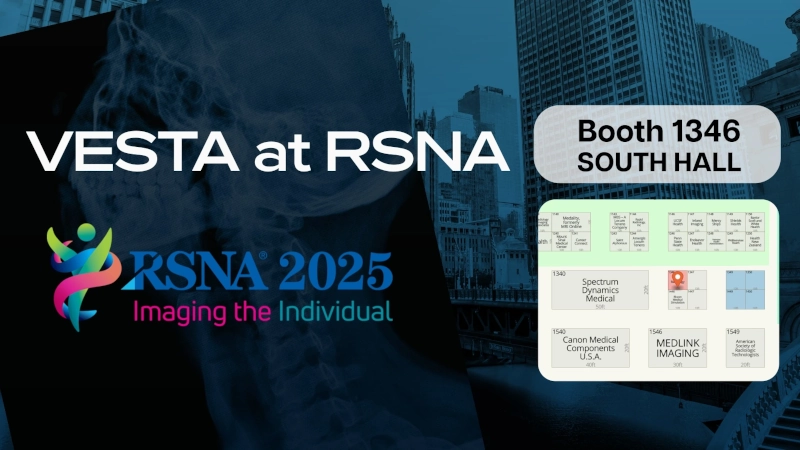
Visit Vesta at Booth 1346 (South Hall) to see how we make “Imaging the Individual” work in real clinics—then enter to win a 1-year Medality CME subscription. Don’t wait: email “RSNA CME Entry” to info@vestarad.com now for a reserved entry, and show your confirmation at the booth for a bonus entry.

Powering Quality and Efficiency Through AI

Elevating Radiology. Expanding Access. Enhancing Care.

Vesta Teleradiology is redefining radiology delivery by integrating artificial intelligence (AI) into our diagnostic and operational workflows – helping hospitals of every size achieve higher quality, faster turnaround, and greater consistency in patient care.

Through our newly launched partnerships with Qure.ai and Carpl.ai, Vesta is bringing the benefits of AI assisted imaging to both large health systems and rural or underserved communities across the nation. This innovation enhances the speed, accuracy, and accessibility of radiology services – ensuring clinical excellence reaches every patient, everywhere.

AI Partnerships Driving Clinical Quality and Efficiency

Vesta now integrates Qure.ai’s FDA cleared AI solutions directly into our reading workflow to support both CT and X-ray imaging. For CT Brain (Non-Contrast), the AI automatically detects intracranial hemorrhages, fractures, and mass effect to improve triage and accelerate emergency response times. For Chest X-rays, it identifies nodules, effusions, and acute pulmonary findings to strengthen diagnostic consistency and enable earlier intervention. These tools work as a co-pilot for radiologists – helping prioritize critical studies, standardize interpretations, and deliver higher-quality reports with precision and speed.

Vesta also leverages Carpl.ai’s enterprise grade AI platform for musculoskeletal (MSK) fracture detection, enabling faster identification of subtle skeletal injuries that are often missed under high volume workloads. This integration enhances both radiologist efficiency and patient safety by improving consistency, turnaround times, and workflow throughput.

Expanding AI Across Vesta’s Clinical and Operational Ecosystem

In addition to our partnerships with Qure.ai and Carpl.ai, Vesta continues to implement AI across the organization to enhance both clinical quality and operational efficiency. Through RadPair, Vesta improves dictation accuracy, peer review workflows, and reporting analytics for radiologists – driving consistency and precision across the reading process.

On the operations side, Vesta has developed and launched an AI based support platform that allows staff to instantly retrieve internal protocols, radiologist schedules, credentialing data, and study specialty details from a centralized location. These tools streamline communication, improve turnaround time, and strengthen coordination across departments – supporting faster, more efficient service for clients and radiologists alike.

AI with a Purpose: Clinical Quality Care for All

Vesta’s mission has always been clear – to combine technology, compassion, and clinical excellence to improve access to quality radiology care. By implementing these AI partnerships and innovations, we’re ensuring faster turnaround for emergent and high acuity studies, improved diagnostic accuracy through validated AI support, greater access for rural and underserved hospitals, and consistent quality across every facility, 24/7/365.

These advancements reaffirm Vesta’s leadership as a trusted partner in AI driven radiology innovation, bringing cutting edge technology to the frontlines of patient care while optimizing the systems that support it.

About Vesta Teleradiology

Vesta Teleradiology is a Joint Commission-Accredited, 24/7/365 radiology provider serving hospitals, imaging centers, and healthcare systems nationwide. Our team of board-certified radiologists delivers timely, accurate, and secure interpretations – now further enhanced by AI technology to support faster decisions, higher quality, and better outcomes.

Interested in learning how Vesta’s AI powered radiology can support your hospital or health system?
Contact us at info@vestarad.com or visit www.vestarad.com/contact to schedule a demo or consultation.

Attribution:
Vesta Teleradiology integrates third party AI technologies through collaborations with Qure.ai, Carpl.ai, and RadPair. Descriptions of imaging and workflow capabilities in this publication are based on publicly available clinical use cases and are provided for informational purposes only. All content and messaging on this page are original to Vesta Teleradiology.

Vesta Teleradiology Heads to RSNA 2025: AI + Expertise = Faster, Smarter Imaging Coverage


Every year, the Radiological Society of North America (RSNA) brings together innovators shaping the future of medical imaging. This November 30–December 3, 2025, the Vesta Teleradiology team is proud to join that community at RSNA 2025 in Chicago — showcasing how AI and human expertise combine to deliver faster, smarter imaging coverage for hospitals and imaging centers nationwide.

Meet Vesta at Booth 1346 — South Hall

At Booth 1346, attendees can discover how Vesta helps healthcare facilities overcome some of today’s biggest radiology challenges — from staffing shortages to increasing imaging volumes — without compromising patient care.

Vesta’s solutions are designed to help your organization:

  • Gain 24/7 radiology coverage without the burnout
  • Access fellowship-trained subspecialists across all modalities
  • Deliver faster turnaround times with AI-assisted workflow tools
  • Scale imaging services without adding staff
  • Rely on dependable IT services and seamless PACS integration

How Vesta Combines AI + Human Expertise

Teleradiology isn’t just about remote reads — it’s about precision, speed, and collaboration. Vesta’s radiologists use advanced AI-assisted workflow technology to prioritize cases, enhance diagnostic consistency, and streamline communication with hospitals and imaging centers.

AI tools don’t replace radiologists; they empower them. By automating repetitive tasks and highlighting critical findings faster, AI allows Vesta’s board-certified radiologists to focus where their expertise matters most — delivering accurate interpretations and improving patient outcomes around the clock.

Dependable Excellence, Every Time

Since its founding, Vesta has remained committed to providing dependable, high-quality radiology coverage that healthcare organizations can trust. Whether you need overnight support, overflow assistance, or full departmental coverage, Vesta’s network of U.S.-based, fellowship-trained subspecialists ensures that every scan gets the attention it deserves — anytime, anywhere.

Join Us in Chicago

If you’re attending RSNA 2025, we’d love to meet you in person. Stop by Booth 1346 in the South Hall to see how Vesta’s combination of human insight and artificial intelligence is helping healthcare facilities achieve diagnostic excellence — without adding to their workload.

RSNA 2025 — Chicago, IL
November 30 – December 3, 2025
VESTARAD.COM

Vizamyl’s New PET Label: Quantify & Monitor Amyloid—What It Means for Imaging Teams


What changed—and why it matters

The FDA has expanded the label for flutemetamol F 18 (Vizamyl), enabling quantification of amyloid plaque burden and long-term therapy monitoring in Alzheimer’s disease. This shift moves amyloid PET beyond a qualitative “positive/negative” decision toward objective, longitudinal assessment that can inform treatment choice, dose intervals, and discontinuation decisions. Business Wire

Professional groups report the update aligns amyloid PET with the clinical era of disease-modifying anti-amyloid therapies (e.g., lecanemab, donanemab), clarifying roles for baseline confirmation, on-treatment monitoring, and response tracking in routine care. Notably, SNMMI stated the FDA granted supplemental indications—including quantitative measurement and use for therapy monitoring—to three amyloid PET agents (flutemetamol F-18/Vizamyl, florbetapir F-18, and florbetaben F-18). SNMMI

Operational updates for radiology leaders

  • Protocols & quant pipelines: Build or validate a quant workflow (SUVr or comparable metrics) that’s scanner-calibrated and reproducible across sites. If you operate multi-vendor fleets, document harmonization steps in your SOPs.
  • Structured reports: Add fields for quantified burden at baseline, change from baseline, and interpretive guidance tied to therapeutic decisions (initiation, continuation, or discontinuation).
  • Scheduling & throughput: Expect rising referral volume from neurology and geriatrics as therapy monitoring enters routine practice; protect access with extended hours or overflow capacity.
  • Quality & governance: Define thresholds for biologically meaningful change, reader training for quant review, and reconciliation rules when quant and visual impressions diverge.

For additional context, trade coverage underscores that the updated label formally removes previous limitations around therapy monitoring and permits quant analysis in routine reporting. Empr

How Vesta Teleradiology helps

Vesta’s subspecialty neuro and nuclear medicine radiologists provide:

  • Amyloid PET expertise: Visual+quant reads with structured templates aligned to your therapy pathway.
  • Coverage when you need it: After-hours, weekends, or daytime overflow—without sacrificing turnaround time.
  • Interoperability: Seamless delivery to your PACS/RIS and EMR; clear flags for therapy decisions and recall intervals.
  • QA you can see: Peer review, consistency checks across readers, and optional double-reads during program ramp-up.

If you’re standing up or scaling amyloid PET services, we can supply immediate subspecialty coverage and templates tuned to your neurologists’ needs.


FDA’s 2025 AI Draft Guidance: A Buyer’s Checklist for Imaging Leaders

In January 2025, the U.S. Food and Drug Administration released a draft guidance for AI-enabled medical devices that lays out expectations across the total product life cycle—design, validation, bias mitigation, transparency, documentation, and post-market performance monitoring. For imaging leaders, it’s a clear signal to tighten procurement criteria and operational guardrails before piloting AI in CT, MRI, mammo, ultrasound, or PET.

As teams lock in Q4 budgets and head into RSNA season, the FDA’s AI lifecycle draft (Jan 2025) and the now-final PCCP (Dec 2024) have reset what buyers should expect from AI in imaging—devices, software, and workflows. Vendors are updating claims and governance; this issue distills a practical buyer’s checklist—multisite validation with subgroup results, drift monitoring and version control, clear in-viewer transparency—and how pairing those tools with Vesta’s subspecialty coverage and QA turns promise into measurable gains across CT/MRI/US/mammography.

A practical buyer’s checklist

Use this when evaluating AI for your service lines:

  1. Intended use fit: Verify indications, inputs/outputs, and claims match your pathway and patient mix.
  2. Validation depth: Prefer multisite, diverse datasets; stratified results; pre-specified endpoints; documented data lineage and splits.
  3. Bias mitigation: Demand subgroup performance (sex, age, race/ethnicity when available), scanner/vendor variability analyses, and site-transfer testing.
  4. TPLC plan: Require drift monitoring, retraining triggers, versioning, and how updates are communicated.
  5. Human factors & transparency: Ensure limitations, failure modes, and interpretable outputs are presented in-viewer without slowing reads.
  6. Security & support: Patch cadence, vulnerability disclosure, SOC2/ISO posture, uptime SLAs, and rollback paths for version issues.
  7. Governance: Define metrics owners, review cadence, and thresholds to pause or roll back a model.

Implementation playbook: pilot → scale without disruption

Start with a 60–90 day pilot in one high-impact line (e.g., ED stroke CT or mammography triage) and lock in baselines: median TAT, positive/negative agreement, recall rate, PPV/NPV, and discrepancy rate. Set guardrails—when to auto-triage vs. force human review—and document escalation paths for model failures. Require case-level confidence and structured outputs your radiologists can verify quickly. Stand up a model governance huddle (modality lead, QA, IT security, and your teleradiology partner) that meets biweekly to review drift signals, subgroup performance, and near-misses. Bake in a rollback plan (version pinning) and a quiet-hours change window so updates don’t collide with peak volumes. As results stabilize, scale by cohort (e.g., expand to non-contrast head CT, then CTA) and keep training “micro-bursts” for techs/readers—short videos or checklists in-workflow. Tie vendor SLAs to uptime, support response, and clinical KPIs so the AI program stays accountable to operational value.

Where teleradiology fits

AI only delivers when it’s welded to coverage, quality, and speed. A teleradiology partner should provide:

  • 24/7 subspecialty + surge capacity: Vesta absorbs volume peaks so AI never becomes a bottleneck.
  • QA you can see: We benchmark pre/post-AI performance, add targeted second looks for edge cases, and feed variance data back to your team.
  • Standardized outputs: Structured reports that integrate model outputs with radiologist findings—no black-box surprises.
  • Smooth rollout: Pilot by service line (stroke CT, mammo triage, PE workups), then scale with tracked KPIs (TAT, PPV, recalls).
  • Interoperability & security: Seamless PACS/RIS/EMR integration with strict access controls, audit trails, and support for change-controlled updates.

Bottom line: Pairing AI with Vesta Teleradiology gives you round-the-clock subspecialty reads, measurable QA, and operational breathing room while you pilot and scale responsibly. If you’re mapping your AI roadmap under the FDA’s 2025 draft guidance, we’ll be your coverage and quality backbone—so your clinicians see faster answers and your patients see safer care. Visit vestarad.com to get started.


Summer 2025 Imaging Roundup: AI, New Modalities & Trends

The summer of 2025 has been packed with advancements in diagnostic imaging, from cutting-edge AI systems improving detection rates to emerging modalities pushing the boundaries of precision and speed. Here’s a look back at the most important developments from June through August that are shaping the future of radiology.

AI Is Reshaping Radiology Workflows

Generative AI Productivity Boost

In June, Northwestern Medicine unveiled a generative AI system capable of reducing radiologist reading time by up to 40% while identifying life-threatening conditions in milliseconds. This tool not only improves workflow efficiency but also offers a potential solution to the ongoing radiologist shortage (Northwestern Medicine).

ProFound AI for Mammography

A peer-reviewed study confirmed that iCAD’s ProFound AI significantly increases cancer detection rates, boosts diagnostic accuracy, and improves workflow for mammography screenings (ITN Online).

Aidoc’s $150M Expansion

July saw AI platform Aidoc raise $150 million in funding, led by NVIDIA and other major investors, aimed at expanding its reach into more hospitals and imaging centers globally (Aidoc).

Emerging Imaging Modalities and Research

Top Content Trends

Radiology publications in July spotlighted rising interest in abbreviated breast MRI, MRI-guided ultrasound for Parkinson’s disease, and dual-energy CT for understanding Long COVID-related lung changes (Diagnostic Imaging).

Photon-Counting CT and Whole-Body MRI

Photon-counting CT continues to gain attention for its ability to deliver higher resolution at lower doses, while whole-body MRI is increasingly used for cancer staging and early detection in high-risk populations (Radiology Business).

Multimodality Imaging at ACC.25

Cardiologists and radiologists at the ACC.25 conference explored how quantitative CT, functional cardiac MRI, and AI-enhanced echocardiography can bridge the gap between diagnostics and real-time therapy planning (American College of Cardiology).

August: A Month of Imaging Breakthroughs

AI-Native Imaging Viewers

Tech company New Lantern launched AI-native viewer modes for mammography and PET/CT, delivering sub-second load times and workflow automation (TMCNet).

Digital Radiography Gets Smarter

Advances in digital radiography are enhancing precision and speed, with newer systems providing better image quality at lower radiation doses (USA News).

ProCUSNet Ultrasound AI

Researchers at Stanford developed ProCUSNet, an AI tool that improved lesion detection by 44% and caught 82% of clinically significant prostate cancers on ultrasound—outperforming human interpretation (Becker’s Hospital Review).

DiffUS for Intraoperative Imaging

A new AI-based technique called DiffUS can create realistic ultrasound images from 3D MRI data, aiding in surgical planning and intraoperative navigation (arXiv).

Next-Gen PET Tracer

A novel PET tracer, Ga-68 Trivehexin, has shown promise in more accurately detecting breast cancer lesions and fibrotic lung tissue compared to traditional tracers (Journal of Nuclear Medicine).

Looking Ahead

The pace of innovation in diagnostic imaging this summer reinforces a clear trend: AI is no longer just an assistive tool—it’s becoming deeply embedded in clinical workflows. Coupled with emerging modalities like photon-counting CT and new PET tracers, radiology is entering an era of higher precision, speed, and accessibility.

AI-Enabled Ultrasound: Transforming Imaging at the Point of Care


In today’s fast-paced healthcare environment, ultrasound is increasingly recognized not just for prenatal or cardiac assessment, but as a versatile diagnostic tool across specialties. Now, artificial intelligence (AI) is accelerating ultrasound’s impact — reducing operator dependency, improving diagnostic confidence, and enabling faster bedside care. For imaging leaders, especially in rural or underserved settings, AI-powered ultrasound technology paired with teleradiology support offers a compelling path for enhanced access and precision.

Innovations in AI-Ultrasound You Should Know

  1. FDA Clearance for AI Thyroid Ultrasound
    In 2024, See-Mode Technologies received FDA clearance for an AI-powered thyroid ultrasound system that can detect and classify nodules using the ACR TI-RADS scale. It has shown promising results in standardizing reporting and reducing unnecessary biopsies and follow-ups.
    Source: https://www.auntminnie.com
  2. Projected Market Growth
    The global AI ultrasound market is projected to grow at a compound annual growth rate (CAGR) of 22% through 2029. This rapid growth is fueled by the rising burden of chronic disease, limited radiologist availability, and the push for faster, more accessible diagnostics.

    Source: https://www.pharmiweb.com/

  3. Rural Potential with Point-of-Care AI
    A JAMA Cardiology viewpoint outlines how AI-assisted point-of-care ultrasound (POCUS) can enable more accurate cardiovascular assessments even when performed by generalists—especially valuable in remote areas without imaging specialists.
    Source: https://jamanetwork.com
  4. Clinician Enthusiasm and Challenges
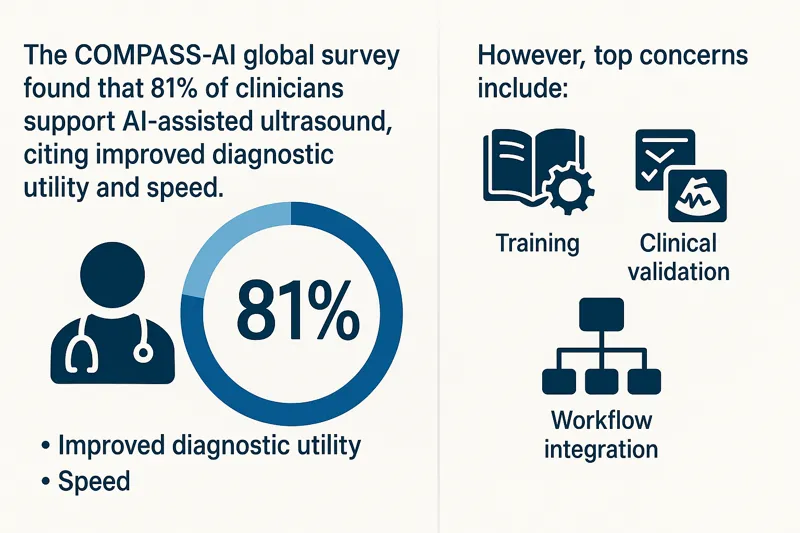
    The COMPASS-AI global survey found that 81% of clinicians support AI-assisted ultrasound, citing improved diagnostic utility and speed. However, top concerns include training, clinical validation, and workflow integration.

    Source: https://theultrasoundjournal.springeropen.com/

Infographic showing COMPASS-AI survey results on clinician support for AI-enabled ultrasound, benefits, and concernsWhy It Matters for Facilities and Radiology Teams

  • Reduces staffing burden: AI ultrasound reduces variability among operators, ideal for high-turnover or remote settings.
  • Speeds up decision-making: Frontline providers can quickly gather meaningful imaging data, while teleradiologists handle the interpretation.
  • Expands imaging reach: Portable, AI-powered ultrasound extends diagnostic capabilities to underserved regions.
  • Supports standardization: AI helps standardize image acquisition and reporting, improving overall workflow efficiency.

How Vesta Teleradiology Enhances AI-Ultrasound Value

While AI augments imaging workflows, expert interpretation is still essential. Vesta provides:

  • Subspecialty reads across thyroid, vascular, MSK, and more
  • 24/7 coverage with fast turnaround times
  • Seamless PACS/RIS integration for AI-acquired ultrasound data

Our radiologists help bridge the gap between frontline imaging and specialist analysis—ensuring that every AI-enabled ultrasound scan contributes to timely, confident patient care.

Bringing AI and Teleradiology Together

Whether you’re running a rural health center, a large outpatient clinic, or an emergency department, AI ultrasound paired with expert teleradiology interpretation helps:

  • Increase imaging access without compromising accuracy
  • Alleviate staffing constraints
  • Deliver faster diagnoses
  • Improve patient outcomes

AI in ultrasound is not replacing radiologists — it’s helping them focus on what matters most. With Vesta’s support, healthcare organizations can embrace innovation while maintaining high-quality, consistent imaging interpretation.