Emergency Room X-Ray Overread Services: Building Reliable Coverage Beyond Business Hours

Emergency rooms operate around the clock, and imaging demand does not slow down just because the daytime radiology schedule has ended.

A patient may arrive late at night with a suspected fracture, chest pain, shortness of breath, or another condition that requires imaging. Whether the facility is a hospital-affiliated emergency department or a freestanding emergency room, the care team needs dependable access to radiology interpretation without creating delays or unnecessary backlogs.

That is where emergency room X-ray overread and teleradiology services can become an important part of the imaging workflow.

Why After-Hours Emergency Radiology Coverage Matters

Emergency imaging volume can change quickly. Nights, weekends, holidays, trauma cases, respiratory illness, local events, and unexpected surges can all increase demand.

The broader radiology environment is also under pressure. In September 2026, the American College of Radiology noted that imaging utilization continues to grow and that simply asking radiologists to interpret more studies faster is reaching practical limits.

For emergency departments, that makes dependable access to interpreting physicians increasingly important. Remote radiology can provide additional capacity without requiring every facility to maintain full onsite radiology staffing around the clock.

What Is an X-Ray Overread Service?

An X-ray overread service provides physician interpretation of imaging performed at another clinical location. In emergency settings, the model can be structured in several ways.

A facility may need final reads for all X-rays performed overnight. Another may use remote radiology only during certain shifts. A hospital system may rely on teleradiology to support multiple emergency departments, while a freestanding emergency room may use remote coverage as a core part of its imaging model.

The right setup depends on operating hours, modality mix, staffing, volume, and clinical needs. The goal is to create a dependable path from image acquisition to radiologist interpretation, report delivery, and communication back to the treating team.

Coverage Should Match the Reality of Emergency Care

Emergency departments cannot rely on a traditional 9-to-5 radiology model. Imaging demand continues through evenings, overnight shifts, weekends, and holidays.

Vesta Teleradiology provides 24/7 nationwide teleradiology coverage, giving emergency departments access to U.S. board-certified radiologists during nights, weekends, holidays, and periods of increased demand.

That flexibility can be especially useful for health systems with multiple emergency departments as well as freestanding emergency rooms that need dependable interpretation without maintaining a full onsite radiology team at every location.

Multi-Site Emergency Coverage Requires Consistency

Hospital systems may operate several emergency departments across a region, while freestanding emergency room groups may manage multiple locations with different staffing and imaging volumes.

Without a centralized reading strategy, each site can develop its own process for routing studies, receiving reports, and handling communication.

A teleradiology model can help standardize those steps across locations. That may include:

  • Consistent report delivery
  • Centralized access to radiologists
  • Defined turnaround expectations
  • Standard escalation procedures
  • Coverage across multiple emergency locations
  • Flexible reading capacity during volume spikes

Consistency becomes increasingly important as emergency networks grow.
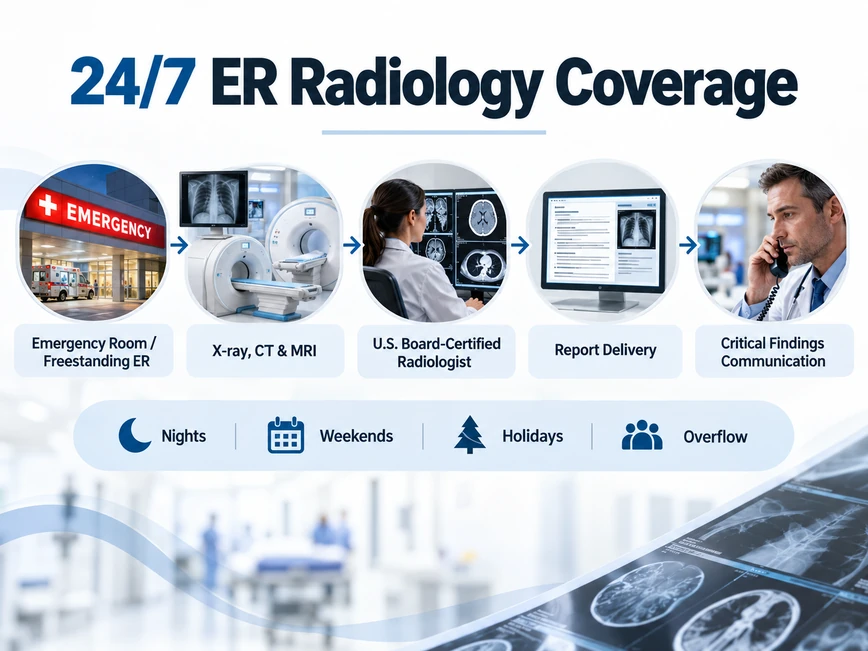
24/7 emergency radiology workflow for hospital and freestanding emergency rooms

Workflow Integration Matters Just as Much as Coverage

The interpretation itself is only one part of the process. Images need to move reliably from the emergency department to the radiologist, and reports need to return to the appropriate clinical system without creating another disconnected workflow.

Federal health IT initiatives continue to emphasize this issue. In its 2026 standards bulletin, the Office of the National Coordinator for Health Information Technology highlighted the importance of exchanging imaging references so clinicians can access relevant imaging and connect clinical systems with studies stored in PACS environments.

For emergency departments, the practical takeaway is straightforward: remote radiology should fit into the existing imaging and reporting workflow rather than create additional steps for clinical staff.

What About More Complex or Critical Findings?

Emergency imaging frequently involves findings that may require timely communication back to the treating team.

A fracture, pneumothorax, pneumonia, intracranial abnormality, bowel obstruction, or other clinically significant finding may need more than routine report delivery.

That is why emergency departments should evaluate more than turnaround time. They should also ask:

  • How are critical and important findings communicated?
  • Who is contacted after normal business hours?
  • What happens when an emergency physician needs to speak directly with the radiologist?
  • How are reports returned to the facility?
  • Can coverage scale when emergency imaging volume increases?

Those answers help determine whether the service truly supports emergency care rather than simply generating reports.

A Flexible Option for Freestanding and Hospital-Affiliated Emergency Rooms

Not every emergency department needs the same coverage model. Some facilities need overnight support. Others need full-time interpretation, weekend and holiday coverage, overflow capacity, backup coverage, or access to additional subspecialty expertise.

A flexible model allows radiology support to match the actual workload.

Vesta Teleradiology provides 24/7 nationwide coverage, Nighthawk services, overflow support, and subspecialty radiology services from U.S. board-certified radiologists, with workflows tailored to the needs of both hospital-affiliated emergency departments and freestanding emergency rooms.

Frequently Asked Questions

What is an emergency room X-ray overread?

An X-ray overread is a physician interpretation of an imaging study performed in an emergency department or freestanding emergency room. Depending on the coverage model, the radiologist may provide a final interpretation or another agreed-upon form of reporting.

Can teleradiology cover emergency departments overnight?

Yes. Teleradiology can be structured to provide overnight, weekend, holiday, overflow, backup, or continuous 24/7 coverage depending on the facility’s needs.

Can one teleradiology provider support multiple emergency room locations?

Yes. A centralized reading model can support multiple hospital-affiliated or freestanding emergency locations while helping standardize reporting, communication, and coverage procedures across the organization.

Can teleradiology support more than X-rays in theEmergency room patient being prepared for a CT scan during after-hours imaging emergency department?
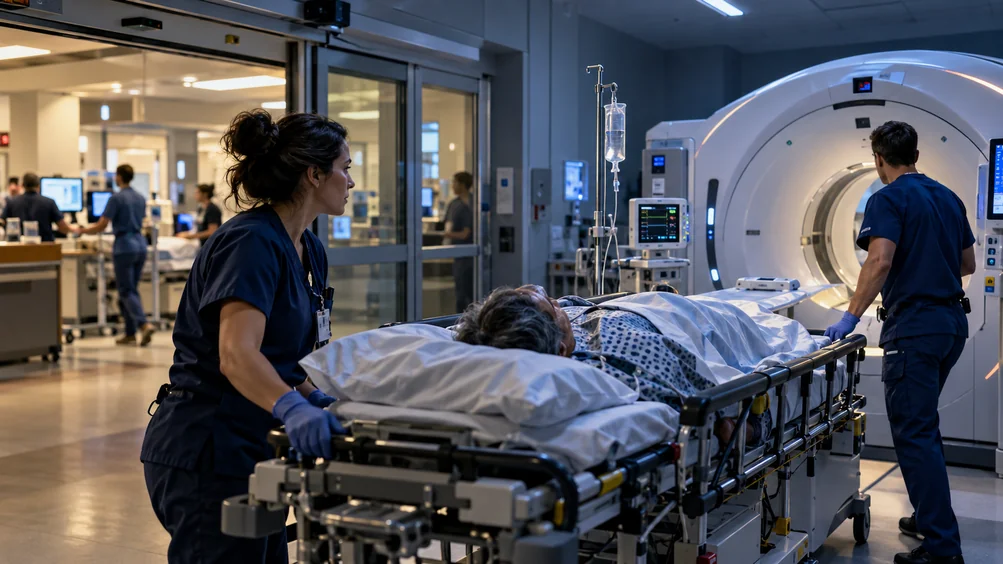
Yes. Depending on the facility’s coverage model, teleradiology can support CT, MRI, X-ray, and other imaging modalities as well as access to subspecialty interpretation.

Need dependable radiology coverage for your emergency department or freestanding ER? Contact Vesta Teleradiology to discuss 24/7, Nighthawk, overflow, and customized radiology support.


Sources

Teleradiology Credentialing and Privileging: What Hospitals Should Expect From a Radiology Partner

One of the first questions hospitals often ask when evaluating remote radiology coverage is practical: How quickly can the radiologists actually begin reading for us?

Technology may be ready quickly, but physician credentialing and privileging require their own process. For hospitals, understanding that process early can help prevent an avoidable delay between selecting a teleradiology partner and beginning clinical coverage.

Credentialing and Privileging Are Not the Same Thing

The two terms are often used together, but they serve different purposes. Credentialing generally involves verifying a physician’s qualifications, education, training, licensure, board status, work history, and other professional information.

Privileging involves determining which clinical services that physician is authorized to perform for a particular healthcare organization. A radiologist may be highly qualified and fully licensed but still require hospital-specific privileges before interpreting studies for that facility.

That is why credentialing needs to be considered part of implementation planning rather than something addressed at the very end.

Why Teleradiology Makes Organization Important

A teleradiology group may support hospitals in several states and use multiple radiologists across different specialties. That can create significant administrative complexity if documentation is not organized.

Hospitals may need information related to:

  • State medical licensure
  • Board certification
  • Education and residency
  • Fellowship training
  • Professional references
  • Malpractice history
  • Work history
  • Continuing education
  • Primary-source verification
  • Hospital privileges
  • Subspecialty qualifications

A strong teleradiology partner should be prepared to coordinate these requirements efficiently with the hospital’s medical staff office.

Accreditation Does Not Replace Hospital Credentialing

Vesta Teleradiology is Joint Commission accredited, which provides another layer of quality oversight and organizational accountability. It is important, however, not to confuse accreditation with hospital-specific credentialing.

Each healthcare organization retains its own responsibilities around medical staff qualifications and privileges.

The Joint Commission has continued to update its accreditation framework throughout 2026. Its National Performance Goals became effective January 1 for hospitals and critical access hospitals, with measurable priorities focused on high-quality care and patient safety.

The organization has also introduced Accreditation 360, part of a broader effort to streamline standards while maintaining an emphasis on quality and safety.

For hospitals evaluating an external radiology partner, accreditation can therefore be viewed as supporting evidence of an established quality infrastructure, rather than a substitute for their own credentialing obligations.

Start Credentialing Early

Credentialing becomes much easier to manage when it begins in parallel with the technical implementation process. While the IT team works on connectivity and workflow, the medical staff office can begin physician verification and privileging.

This is particularly important when the hospital is launching:

  • Nighthawk coverage
  • Overflow support
  • A new subspecialty service
  • Emergency backup coverage
  • Additional modality coverage

Waiting until technical testing is finished before starting credentialing can unnecessarily extend the timeline. A coordinated implementation plan keeps both tracks moving at the same time.

Match Radiologist Qualifications to the Actual Coverage Need

Hospitals should also think carefully about what they are credentialing physicians to interpret.

A facility may need general overnight coverage but also require access to neuroradiology, musculoskeletal, body, cardiac, pediatric, or other subspecialty expertise.

The physician roster should reflect the actual study mix. That becomes particularly relevant for smaller and rural hospitals, where maintaining every specialty onsite may not be practical.

Remote radiology allows organizations to extend access to a larger physician network, but only if appropriate radiologists have been credentialed and privileged before those cases arrive.

Credentialing Is Also a Continuity Issue

Credentialing should not stop once initial coverage begins. Licenses expire. Privileges require renewal. Physician rosters change.

A dependable teleradiology relationship therefore requires ongoing tracking rather than one-time document collection. Hospitals should understand how their partner manages:

  • License renewals
  • Expiring credentials
  • Physician roster updates
  • New radiologist onboarding
  • Changes in subspecialty coverage
  • Quality review and physician performance monitoring

Good administrative processes are rarely the most visible part of radiology coverage, but they are essential to keeping that coverage uninterrupted.

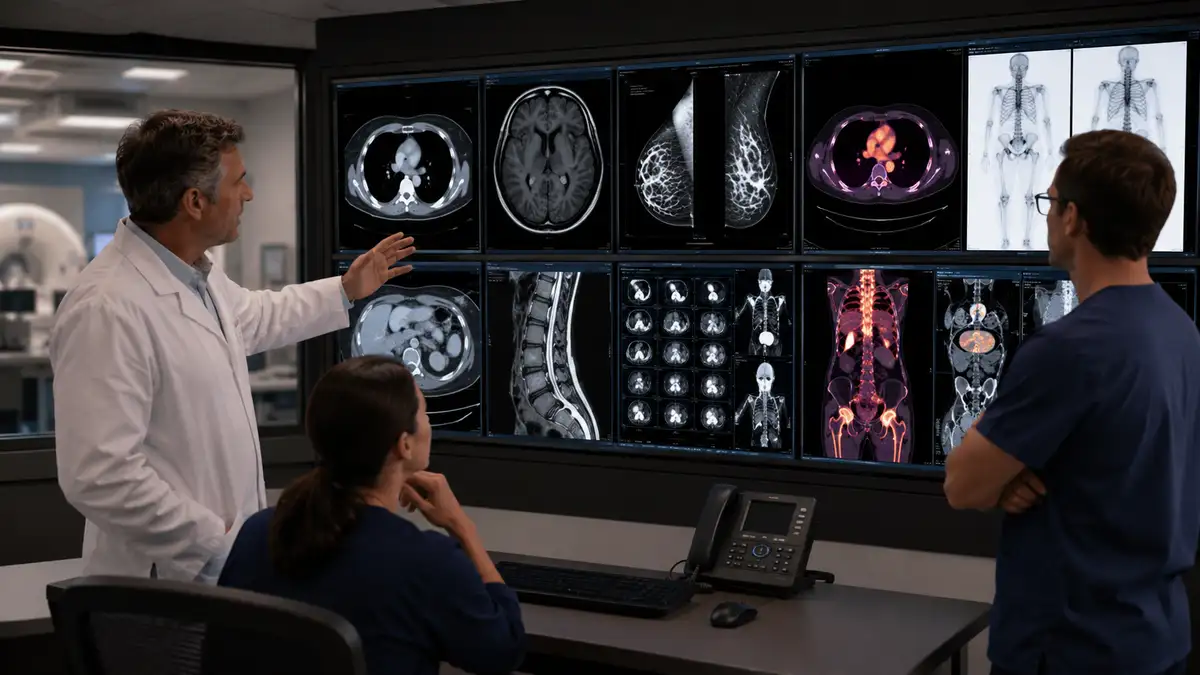
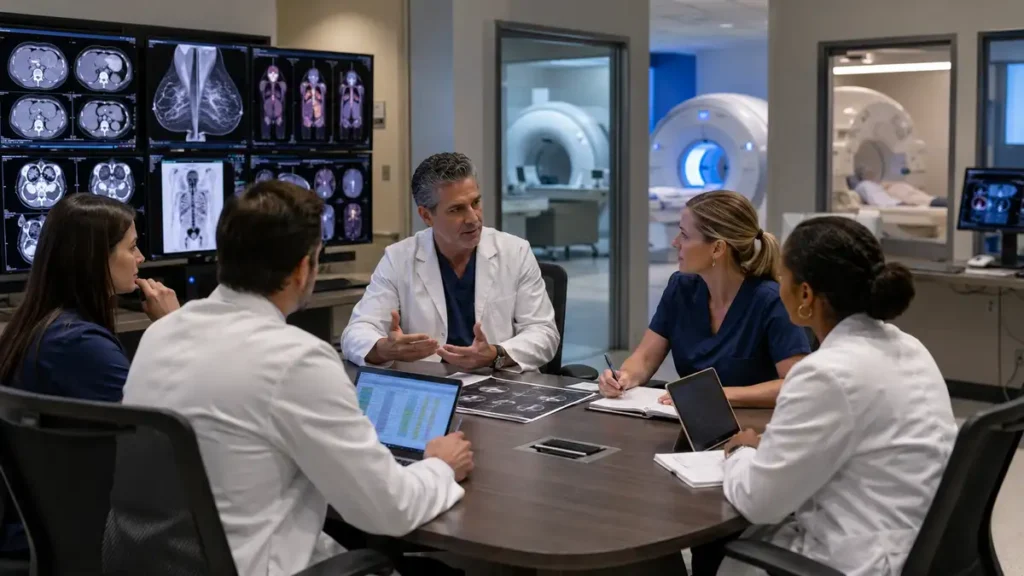
Hospital radiology team reviewing physician credentialing and privileging requirements2026 Is Putting More Attention on Measurable Quality
Healthcare accreditation is also moving toward greater emphasis on measurable outcomes and continuous improvement. In 2026, The Joint Commission announced new outcomes-driven certification initiatives designed to place greater focus on real-world clinical results rather than process compliance alone.

That specific certification program is not a teleradiology credentialing requirement, but it reflects a broader direction in healthcare quality: organizations are being asked to demonstrate not only that systems exist, but that those systems support safe, reliable care.

For teleradiology buyers, that makes questions about credentialing, physician oversight, quality processes, and accreditation increasingly relevant.

Look Beyond the Physician List

A long roster of radiologists may look impressive. What matters more is whether the organization behind those physicians has the infrastructure to place the appropriate radiologist into the appropriate workflow reliably.

Vesta Teleradiology provides 24/7 nationwide coverage through U.S. board-certified radiologists, including Nighthawk, overflow, and subspecialty interpretation. Our team works with hospitals through credentialing, technical setup, testing, and ongoing coverage planning.

Frequently Asked Questions

Do teleradiologists need hospital privileges?

Hospitals generally establish credentialing and privileging requirements for physicians interpreting studies for their organization. Specific requirements vary according to facility policies and applicable regulations.

Does Joint Commission accreditation replace credentialing?

No. Accreditation evaluates an organization against applicable quality and safety standards. Hospitals still maintain their own medical staff credentialing and privileging responsibilities.

When should credentialing begin during teleradiology implementation?

Ideally, credentialing begins early and runs alongside technical integration, workflow planning, and testing so administrative requirements do not unnecessarily delay the go-live date.

Planning new radiology coverage? Contact Vesta Teleradiology to discuss credentialing, implementation, and a coverage model tailored to your facility.

Sources

When Modality Expansion Starts Straining Coverage: What Radiology Directors Should Plan for Next

Growth in imaging services usually looks positive on paper. More referrals, broader service lines, and greater modality depth can all signal momentum. The operational picture gets more complicated once that growth starts stretching reading coverage, scheduling coordination, and subspecialty access. For radiology directors, that is often the point where planning needs to shift from volume management to infrastructure strategy. As hospitals and imaging centers expand into more advanced imaging, the effects reach far beyond scanner utilization. CT, MRI, mammography, nuclear medicine, and PET each bring their own workflow patterns, staffing implications, and interpretation needs.

Coverage models can drift out of sync with the modality mix

This is where radiology directors often run into a hidden problem. The original coverage structure may have worked well for a simpler imaging environment, then slowly becomes less aligned with the department’s current reality. Turnaround pressure rises in certain modalities. Overnight support feels harder to balance. Reading assignments become more fragmented. Referring clinicians start asking for more subspecialty input. That usually means the coverage model was built for an earlier stage of growth.

Staffing pressure makes the gap more obvious

Recent workforce data has made that planning challenge even more urgent. The ACR’s 2026 workforce update pointed to continuing attrition pressures across radiology, while Neiman Health Policy Institute has also highlighted higher attrition among several radiologist subgroups and practice settings. For radiology directors, that reinforces a practical point: growth planning and coverage planning can no longer sit in separate conversations.

Subspecialty access becomes a bigger leadership issue

As modality mix broadens, subspecialty interpretation often becomes more important to both clinical quality and referrer confidence. That is especially true in departments where advanced neuro, MSK, breast imaging, or other specialized studies are becoming a larger part of the case mix. A department can continue moving studies through the system, yet still create downstream tension if clinical teams feel they are working without enough interpretive depth in key areas.

Workflow tools matter, but the fit matters more

Technology often enters the conversation at this stage too. The FDA’s public list of AI-enabled medical devices continues to grow, and radiology remains one of the leading categories in that landscape. At the same time, recent national reporting has underscored that AI’s value in radiology depends heavily on how it fits into real-world workflow rather than on novelty alone. Tools that help prioritize time-sensitive studies or streamline repetitive tasks can support busy departments. Tools that add friction tend to create more resistance than relief.

Recent leadership conversations point in the same direction

This broader operational shift has stayed visible in 2026 reporting. Becker’s has continued covering the radiology workforce and the way staffing strain intersects with AI adoption and access. Meanwhile, AHRA’s annual meeting this July will again bring imaging managers and department leaders together around the practical challenges of running imaging operations in a period of continued change.

Imaging leadership team discussing modality expansion, workflow, and coverage strategy in a hospital setting

A planning checklist for radiology directors

  • Compare the current coverage model against the department’s actual modality mix, including CT, MRI, breast imaging, nuclear medicine, and PET where applicable.
  •  Identify where turnaround pressure is clustering by modality, time of day, or service line.
  • Review whether overnight, overflow, and subspecialty support still match current operational demands.
  • Look for early signs of strain such as fragmented reading assignments, growing call burden, or repeated referrer requests for specialized review.
  • Evaluate whether workflow tools are reducing friction or adding another layer of complexity for staff and radiologists.

What radiology directors should plan for next

The planning conversation should start with a few grounded questions. Is the current coverage structure built for today’s modality mix? Are certain studies creating repeated bottlenecks? Does overnight or overflow support still fit the department’s service profile? Are referrers asking for more specialized reads than the current model can comfortably support? Those questions matter because modality expansion often creates pressure gradually. The early signs may look like minor workflow friction, growing call burden, or more scheduling complexity. Over time, those patterns can affect turnaround, staff experience, physician confidence, and the department’s ability to keep growing smoothly. The departments that handle this well usually plan ahead of the pain curve. They look closely at coverage structure, workflow fit, and interpretive depth before operational strain starts showing up everywhere else.

FAQs

Why does modality expansion strain coverage? Because broader imaging services often increase complexity in scheduling, reading assignments, subspecialty needs, and turnaround expectations, even when total volume growth feels manageable.

Why should radiology directors care about coverage alignment? A coverage model that fit a narrower service mix may create friction once advanced imaging becomes a larger share of the department’s work.

How does AI fit into this conversation? AI can support prioritization and efficiency when it fits naturally into workflow. Its value depends on practical implementation and continued clinical oversight.


How Vesta Can Help

As imaging departments expand into broader modality mixes, coverage strategy becomes more important to long-term stability. Vesta Teleradiology helps hospitals and imaging centers support growing demands across CT, MRI, mammography, nuclear medicine, X-ray, and ultrasound with flexible on-site and remote coverage models built around real operational needs. From overnight support and overflow coverage to subspecialty reads and radiologist-led workflow support, Vesta helps radiology leaders build a stronger foundation for growth without adding unnecessary disruption to existing processes.


Sources

https://www.vizientinc.com/insights/reports/diagnostic-imaging/the-growing-demand-for-imaging-services-key-trends-shaping-the-future

https://vizientinc-delivery.sitecorecontenthub.cloud/api/public/content/08120908acee435984d854d55a2e6a19

https://www.acr.org/Clinical-Resources/Publications-and-Research/ACR-Bulletin/2026/radiologist-shortage-work-force-update

https://www.neimanhpi.org/press-releases/attrition-from-the-radiology-workforce-is-higher-for-subspecialists-vs-generalists-and-nonacademic-vs-academic-radiologists/

https://www.fda.gov/medical-devices/software-medical-device-samd/artificial-intelligence-enabled-medical-devices

https://www.beckershospitalreview.com/radiology/radiology-in-2026-the-workforce-crisis-meets-the-ai-revolution/

https://www.beckershospitalreview.com/radiology/

https://www.washingtonpost.com/health/2025/04/05/ai-machine-learning-radiology-software/

https://www.businessinsider.com/radiology-embraces-generative-ai-to-streamline-productivity-2025-6


Vesta Teleradiology Heads to RSNA 2025: AI + Expertise = Faster, Smarter Imaging Coverage


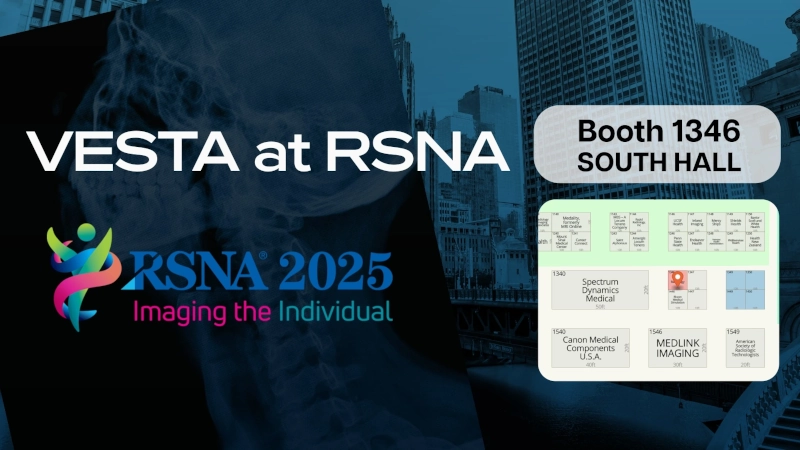
Every year, the Radiological Society of North America (RSNA) brings together innovators shaping the future of medical imaging. This November 30–December 3, 2025, the Vesta Teleradiology team is proud to join that community at RSNA 2025 in Chicago — showcasing how AI and human expertise combine to deliver faster, smarter imaging coverage for hospitals and imaging centers nationwide.

Meet Vesta at Booth 1346 — South Hall

At Booth 1346, attendees can discover how Vesta helps healthcare facilities overcome some of today’s biggest radiology challenges — from staffing shortages to increasing imaging volumes — without compromising patient care.

Vesta’s solutions are designed to help your organization:

  • ✅ Gain 24/7 radiology coverage without the burnout
  • ✅ Access fellowship-trained subspecialists across all modalities
  • ✅ Deliver faster turnaround times with AI-assisted workflow tools
  • ✅ Scale imaging services without adding staff
  • ✅ Rely on dependable IT services and seamless PACS integration

How Vesta Combines AI + Human Expertise

Teleradiology isn’t just about remote reads — it’s about precision, speed, and collaboration. Vesta’s radiologists use advanced AI-assisted workflow technology to prioritize cases, enhance diagnostic consistency, and streamline communication with hospitals and imaging centers.

AI tools don’t replace radiologists; they empower them. By automating repetitive tasks and highlighting critical findings faster, AI allows Vesta’s board-certified radiologists to focus where their expertise matters most — delivering accurate interpretations and improving patient outcomes around the clock.

Dependable Excellence, Every Time

Since its founding, Vesta has remained committed to providing dependable, high-quality radiology coverage that healthcare organizations can trust. Whether you need overnight support, overflow assistance, or full departmental coverage, Vesta’s network of U.S.-based, fellowship-trained subspecialists ensures that every scan gets the attention it deserves — anytime, anywhere.

Join Us in Chicago

If you’re attending RSNA 2025, we’d love to meet you in person. Stop by Booth 1346 in the South Hall to see how Vesta’s combination of human insight and artificial intelligence is helping healthcare facilities achieve diagnostic excellence — without adding to their workload.

RSNA 2025 — Chicago, IL
November 30 – December 3, 2025
VESTARAD.COM