
Overview
- Nights/weekends are where imaging systems “stress test” themselves—coverage gaps show up first in neuro and body.
- ACR’s workforce update underscores sustained supply–demand pressure and rising attrition trends.
- Vizient highlights continued imaging demand growth drivers that affect hospital capacity planning.
- Redundancy isn’t just “more reads.” It’s minimum viable coverage, SLA tiers, and escalation rules that trigger backup automatically.
- The best model blends onsite teams with subspecialty teleradiology as a structured backstop (not a last-minute scramble).
Why nights/weekends fail differently
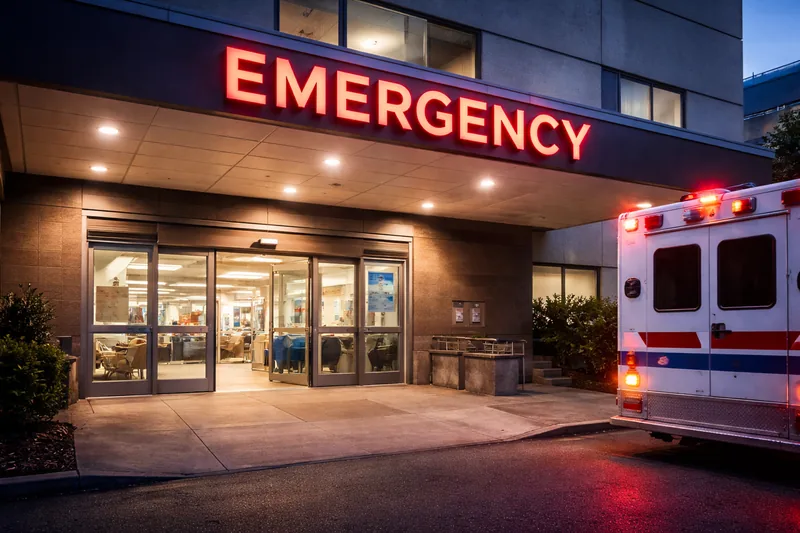
During the day, you can usually see trouble coming—lists get longer, inboxes fill up, and someone calls a meeting. At night or on weekends, issues don’t announce themselves. They creep in, and the first sign is often a delay in care or a bottleneck in the Emergency Department.
- delayed inpatient management decisions
- missed or late critical communications
- inconsistent subspecialty interpretation when generalists are stretched
Neuro and body imaging become the pressure points because they’re high-impact (stroke, hemorrhage, acute abdomen, PE) and high-volume (CT utilization doesn’t sleep).
Trend reality: demand up, staffing tight
The ACR describes a shortage environment that isn’t expected to resolve on its own without deliberate interventions, pointing to concerning attrition dynamics over recent years. At the same time, imaging demand growth continues to be a strategic planning topic for health systems, influenced by aging populations, shifting care settings, and technology-driven utilization.
This is why “we’ll figure it out on call” stops working. You need a model.
A redundancy model you can implement (without rebuilding your department)
1) Define minimum viable coverage by shift
Write down what must be protected:
- ED CT head + stroke pathway imaging (neuro)
- CT A/P for acute abdomen, high-risk oncology complications (body)
- CTA chest for suspected PE when it changes disposition
- critical result communication expectations
This becomes the baseline against which you measure risk.
 2) Build priority tiers that match clinical urgency
Example structure:
- Priority 1: stroke activation, suspected hemorrhage, PE, acute abdomen with sepsis concern
- Priority 2: urgent inpatient/ED studies that guide immediate treatment
- Priority 3: routine reads that can safely phase in
Then attach SLAs to each tier.
3) Put escalation into policy (not personality)
A strong escalation plan answers:
- What is the trigger? (minutes past SLA, volume threshold, or specific study types)
- Who is the backup? (named role, not “someone”)
- How is the handoff documented?
- How do critical findings get communicated if systems are stressed?
If escalation depends on a single person noticing a problem, you don’t have redundancy—you have hope.
4) Use subspecialty teleradiology as “coverage insurance” for the riskiest windows
The riskiest windows are predictable:
- 7 p.m.–2 a.m. ED spikes
- weekend daytime when staffing is lean
- holiday stretches
- periods of planned PTO or vacancies
Build a standing model where neuro/body backup activates under defined conditions. That keeps your onsite team from being overloaded and protects quality.
5) Measure the outcome that leadership cares about
Beyond “radiology TAT,” track:
- ED disposition time impacts (where possible)
- percent of Priority 1 studies meeting SLA
- critical results closed-loop compliance
- discrepancy trends for high-risk study types
These translate into patient flow and risk reduction—language administrators understand.
FAQ
What’s the best overnight radiology coverage model?
For most hospitals, a hybrid model works: onsite general coverage plus defined subspecialty backup for neuro/body studies with strict SLAs and escalation triggers.
How do we justify redundancy spend?
Tie the model to ED throughput, avoided diversion, reduced overtime/burnout, and risk reduction—then measure Priority 1 SLA compliance.
How Vesta fits
Vesta Teleradiology supports continuity with subspecialty depth for neuro and body imaging, SLA-driven coverage, and escalation-ready redundancy designed for nights, weekends, and surge periods.
