What to Expect at RSNA 2026: Speakers, AI Innovations, Exhibits, and More

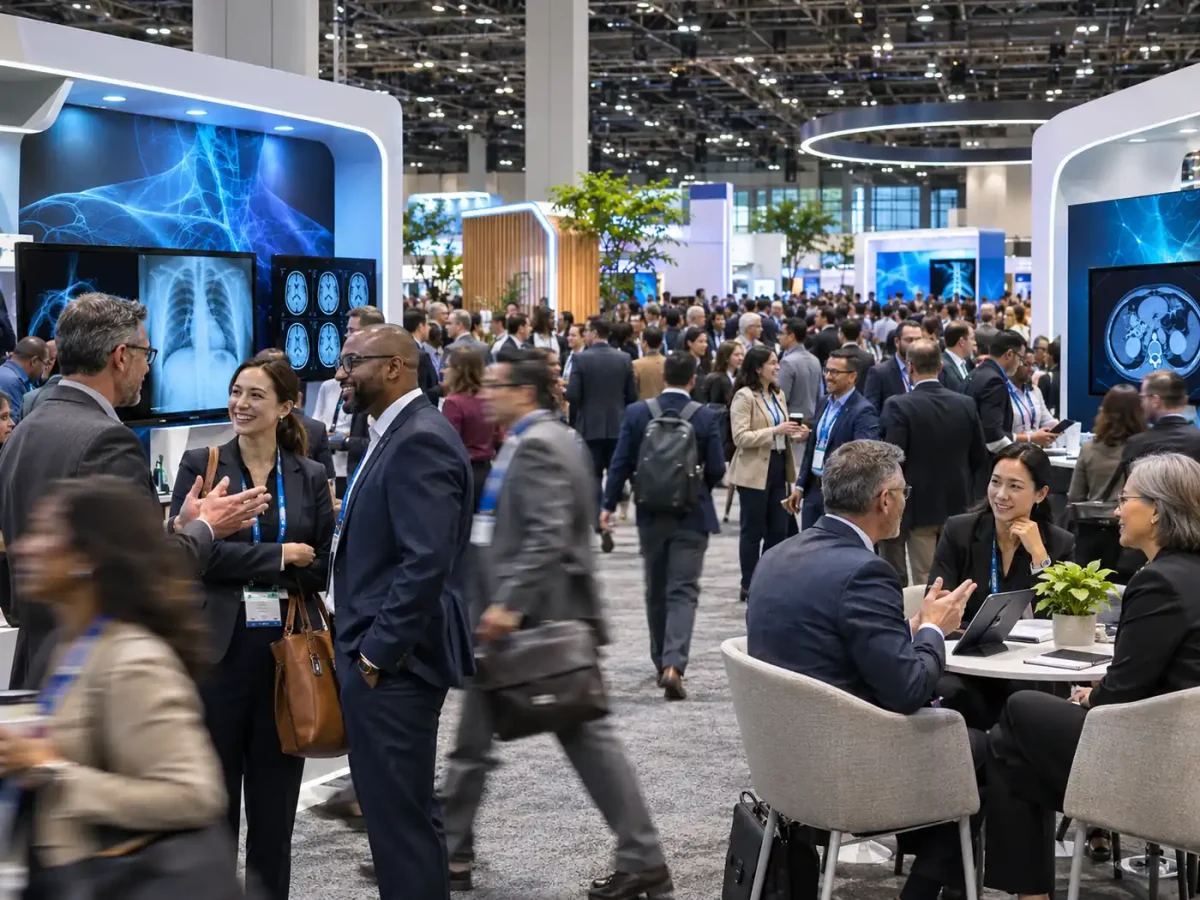
If you’re heading to Chicago for RSNA 2026, you’ll have plenty to explore, from emerging medical imaging technologies and artificial intelligence to educational sessions led by some of radiology’s most respected professionals. With hundreds of exhibitors and thousands of industry professionals gathering under one roof, deciding where to spend your time may be one of the biggest challenges.

RSNA 2026 takes place November 29 through December 3 at McCormick Place in Chicago. This year’s theme, At the Center of Care, highlights the important role radiology plays in diagnosis, treatment, and patient care.

Here’s a look at some of the speakers, programs, and innovations worth adding to your schedule.
RSNA 2026

More Than 700 Exhibitors Showcasing Radiology Technology

The Technical Exhibits are among the biggest attractions at RSNA, featuring more than 700 companies across approximately 421,000 square feet of exhibition space.

Attendees can explore advancements in CT, MRI, ultrasound, image processing, radiology reporting, and technologies designed to improve clinical operations. More than 120 first-time exhibitors are also expected, providing opportunities to discover newer companies and emerging solutions.

For hospital administrators and radiology directors, the exhibit floor offers a chance to compare technologies, meet service providers, and discuss how different solutions may integrate with existing imaging workflows.

Technical Exhibit Hours: November 29–December 2, 10 a.m.–5 p.m. CT.

AI Showcase and Emerging Imaging Technologies

Artificial intelligence continues to attract considerable attention in radiology, and RSNA 2026 will provide opportunities to explore how AI-assisted technologies are being developed and incorporated into clinical practice.

Located in South Hall A, the AI Showcase will feature companies demonstrating applications involving image analysis, workflow prioritization, reporting assistance, and other areas of diagnostic imaging.

Attendees can also visit Innovation Park, which includes a Startup Showcase, Innovation Theater, and First-Time Exhibitor Pavilion. These areas highlight emerging technologies and offer opportunities to meet developers working on new approaches to radiology.

Beyond the demonstrations, AI governance, clinical oversight, and system compatibility remain important considerations for healthcare organizations evaluating these technologies.

Notable Speakers at RSNA 2026

This year’s plenary sessions feature radiology leaders discussing clinical innovation, healthcare leadership, emergency preparedness, and patient-centered care.

Jeffrey S. Klein, MD — At the Center of Care

Sunday, November 29 | 4 p.m. CT

RSNA President Dr. Klein will deliver the President’s Address, exploring radiology’s evolving role in patient care, medical innovation, and multidisciplinary healthcare.

Jonathan S. Lewin, MD — Seeing Beyond the Image

Sunday, November 29 | Opening Session

Drawing on his experience as a radiologist and health system CEO, Dr. Lewin will discuss leadership lessons that extend from the reading room into healthcare administration.

Gwendolyn M. Bryant-Smith, MD — Breast Radiology at the Center of Care

Monday, November 30 | 11 a.m. CT

Dr. Bryant-Smith will examine advancements in breast imaging, multidisciplinary collaboration, and approaches to improving access to patient-centered care.

Mark P. Bernstein, MD — Mass Casualty Incidents: The Role of Radiology

Tuesday, December 1 | 11 a.m. CT

This presentation explores how radiology departments contribute during mass casualty incidents, including the challenges of coordinating emergency imaging services.

Janice M. Newsome, MD — From Pixels to People

Tuesday, December 1 | 1:30 p.m. CT

Dr. Newsome will discuss humanism, equity, and artificial intelligence in interventional radiology, examining how technological advancements intersect with patient care.

Interactive Sessions and Special Programs

Beyond the plenary presentations, RSNA 2026 includes interactive programs that allow attendees to test their diagnostic skills and explore complex clinical cases.

Image Interpretation Session — November 30

Moderated by Amy K. Patel, MD, this popular session challenges five imaging experts to interpret previously unseen cases across multiple radiology subspecialties.

RSNA/AAPM Symposium — December 1

From Concept to Clinic examines how collaboration between radiologists and medical physicists can advance musculoskeletal imaging.

It’s Complicated: Post-Treatment Cases — December 2

This returning game-show-style program features teams of radiologists competing to interpret challenging post-treatment cases, offering an engaging approach to diagnostic learning.

Networking and Radiology Workflow Discussions

RSNA also brings together radiologists, researchers, imaging technologists, hospital administrators, and healthcare technology professionals from around the world.

Alongside the educational sessions, attendees can participate in vendor workshops, industry presentations, and networking activities covering clinical workflows, imaging interoperability, radiologist availability, and operational efficiency.

For smaller hospitals and outpatient imaging centers, these discussions offer opportunities to explore practical approaches to managing imaging workloads and maintaining access to specialized expertise.

Visit Vesta Teleradiology at RSNA 2026!

Vesta Teleradiology is excited to join the radiology community in Chicago! As a nationwide provider of 24/7 teleradiology services, Vesta supports hospitals and imaging centers with Nighthawk coverage, overflow interpretations, subspecialty reads by U.S. board-certified radiologists, and radiologist-led AI-assisted imaging support.

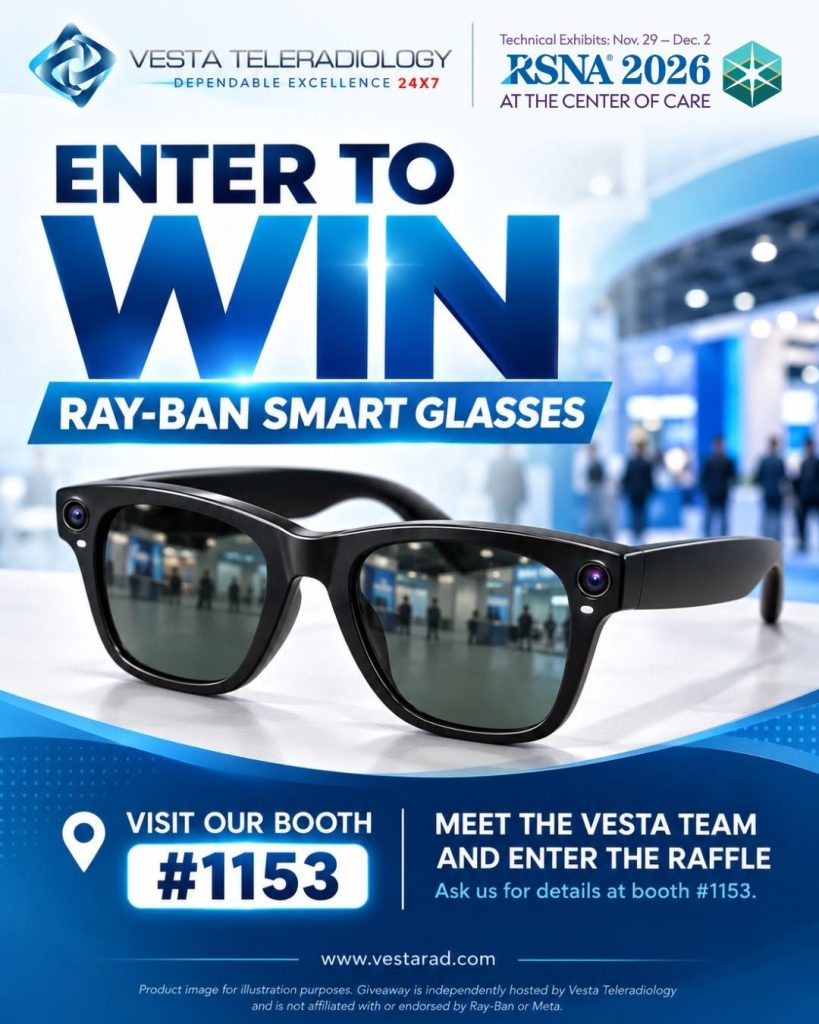
Stop by Booth #1153 to meet our team, learn about our services, and enter our Ray-Ban Meta glasses giveaway. Visit the booth and have your badge scanned to enter.

We look forward to seeing you at RSNA 2026!
Plan Your RSNA 2026 Visit

With so many sessions, exhibits, and networking opportunities available, reviewing the schedule ahead of time can help you make the most of your visit.

Visit the official RSNA 2026 Annual Meeting website for registration, program details, and updates.

Sources

  1. RSNA — 2026 Annual Meeting
  2. RSNA — 2026 Technical Exhibits
  3. RSNA — 2026 Plenary Speakers and Special Programs
  4. RSNA — Annual Meeting FAQs


Vesta Teleradiology Heads to RSNA 2026: Advancing AI and Radiology Workflows

November 29 – December 3, 2026 | McCormick Place, Chicago

Radiology departments are being asked to do more every day. Imaging volumes continue to grow, staffing remains a challenge, and clinical teams depend on timely reports and clear communication to keep patient care moving.

According to research published in the Journal of the American College of Radiology, U.S. imaging utilization is projected to increase approximately 17% to 27% by 2055 compared with 2023, assuming current per-person utilization remains stable.

For hospitals and imaging centers already balancing busy schedules, overnight coverage, and rising expectations, finding more efficient ways to work is increasingly important.

These challenges are helping shape the next chapter of innovation at Vesta Teleradiology.

We’re looking forward to attending RSNA 2026 in Chicago, where we’ll connect with hospital leaders, radiologists, and imaging professionals to discuss how AI-assisted technologies and intelligent automation can support more connected radiology workflows.

Bringing AI Into Everyday Radiology

Artificial intelligence is opening new possibilities throughout radiology, extending from imaging analysis to reporting, communication, and operational support.

At Vesta, we’re exploring how these technologies can help radiologists spend less time on repetitive tasks while improving the flow of information between reading teams and hospital partners.

Keeping clinical expertise at the center of these advancements remains essential.

In fact, an RSNA-published report on a survey of 518 mammography patients found that 71% preferred AI as a second reader alongside a radiologist, while fewer than 5% were comfortable with AI interpreting their mammograms independently.

Although this research focused specifically on breast imaging, it offers an interesting perspective on the importance patients place on physician involvement as AI becomes more common in medical imaging.

Vesta’s approach builds on this principle, integrating AI-assisted capabilities into existing workflows while keeping interpretation and final reporting in the hands of U.S. board-certified radiologists.

A Look at What’s New and What’s Ahead at Vesta

As part of our broader technology initiatives, we’re advancing several areas designed to improve efficiency, communication, and the overall teleradiology experience.

Smarter Case Assignment and Workflow Management

Getting the right study to the right radiologist is an important part of maintaining efficient turnaround times.

Vesta is developing intelligent case-assignment capabilities that consider radiologist credentials, availability, workload, and study urgency. These enhancements are designed to support more efficient study distribution, particularly when imaging volumes fluctuate or after-hours demands increase.

AI-Assisted Imaging and Reporting

Vesta continues to explore new applications for AI throughout the interpretation and reporting process.

Our current AI-assisted imaging support includes select CT Brain, Chest X-ray, and musculoskeletal X-ray studies, with additional reporting technologies under evaluation.

We’re also exploring intelligent dictation, structured reporting, automated consistency checks, and clinical reference tools that could help radiologists work more efficiently while maintaining reporting quality.

More Proactive Hospital Communication

Anyone working in a busy radiology department understands how important timely communication can be, especially when a critical result, missing information, or delayed report requires immediate attention.

Vesta is advancing communication workflows that help coordinate critical findings notifications, turnaround time updates, report addenda, and other important follow-ups.

These initiatives are intended to improve communication between Vesta’s teams and the hospital professionals who rely on our services.

Better Connectivity and Operational Visibility

Behind every radiology report is a network of systems, people, and processes that need to work together.

We’re investing in interoperability, infrastructure modernization, and operational analytics to support more reliable hospital connectivity and greater visibility into radiology performance.

This includes continued work involving EHR integrations, HL7/FHIR interfaces, DICOM connectivity, quality assurance, and turnaround time monitoring.

Supporting the People Behind Every Read

As imaging demands grow, finding ways to reduce unnecessary steps in the radiology workflow becomes increasingly valuable.

An intelligently routed study, a more streamlined report, or a timely communication update can help clinical teams stay focused on patient care.

These developments build on Vesta’s established 24/7 nationwide teleradiology services, including Nighthawk coverage, overflow support, and subspecialty interpretation by U.S. board-certified radiologists.

As a Joint Commission-accredited teleradiology provider, Vesta continues to invest in technology and services that support dependable coverage and strong hospital partnerships.

Let’s Connect at RSNA 2026

This year’s RSNA theme, “At the Center of Care,” highlights the important role radiologists play in connecting technology, clinical expertise, and patient care.

It’s a fitting opportunity for Vesta to share where we’re headed and hear directly from the hospital and imaging professionals we serve.

What would make your radiology workflows more efficient? Where could better communication help your clinical teams? Are there reporting challenges or new technologies you’d like to explore?

We’d welcome the opportunity to discuss these questions, share our latest initiatives, and learn more about your organization’s needs.

If you’re attending RSNA 2026, let’s connect in Chicago!

Visit Vesta at RSNA 2026 for a Chance to Win Ray-Ban Meta Smart Glasses! 🕶️

We’re adding a little extra excitement to RSNA 2026! Stop by Vesta Teleradiology at Booth #1153 for a chance to win a pair of Ray-Ban Meta smart glasses. To enter, simply visit our booth and have your attendee badge scanned by a member of our team. We’ll select one lucky winner during a drawing on December 3, the final day of the conference, and announce the winner afterward. While you’re there, meet our team, explore Vesta’s latest AI-assisted radiology innovations, and discover what’s ahead for our connected radiology services. We look forward to seeing you in Chicago!

Sources

  1. Journal of the American College of Radiology: Projected US Imaging Utilization, 2025 to 2055
  2. RSNA: Patients Support AI as Backup in Mammography Screening
  3. American College of Radiology: The Radiologist Shortage, A Workforce Update
  4. RSNA 2026 Annual Meeting